
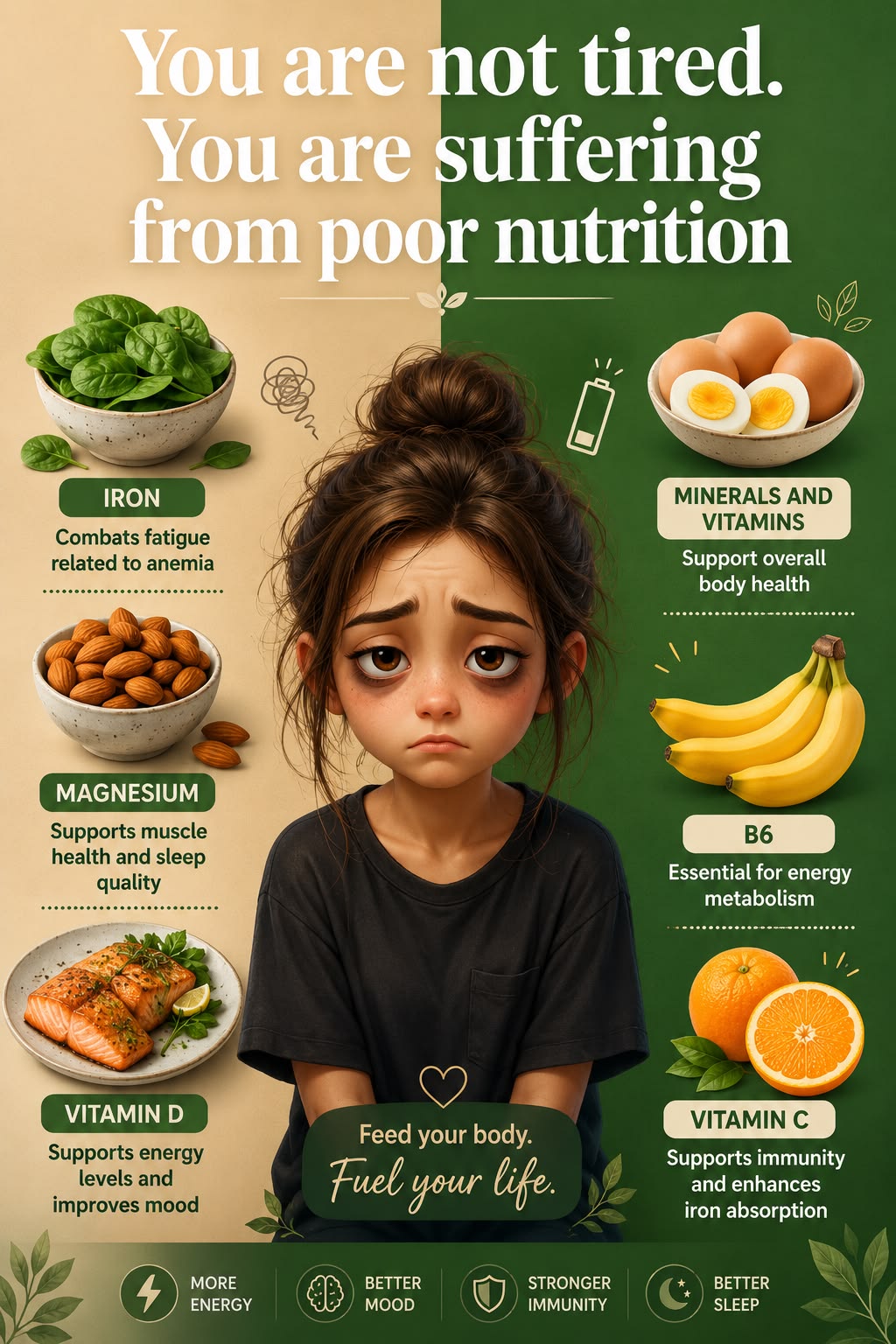
It is easy to blame a busy schedule or late bedtime when feeling constantly drained, but lingering exhaustion is often linked to key dietary gaps. Nutrients fuel cellular function, oxygen transport, and neurotransmitter balance, making proper nutrition vital for sustained daily energy.
The graphic above highlights six core nutrients that play a key role in fighting fatigue and restoring balance. Below is a breakdown of how these nutrients work and how to incorporate them safely.
Key Nutrients That Combat Fatigue
+---------------+-----------------------+---------------------------------------+
| Nutrient      | Featured Food Source  | Key Health Function                   |
+---------------+-----------------------+---------------------------------------+
| Iron          | Spinach               | Combats fatigue related to anemia     |
| Magnesium     | Almonds               | Supports muscle health & sleep quality|
| Vitamin D     | Salmon                | Supports energy levels & improves mood|
| Minerals & Vits| Eggs                 | Support overall body health           |
| Vitamin B6    | Bananas               | Essential for energy metabolism       |
| Vitamin C     | Oranges               | Supports immunity & iron absorption   |
+---------------+-----------------------+---------------------------------------+
1. Iron & Oxygen Transport
-
Role: Iron is essential for producing hemoglobin, a protein that carries oxygen to tissues throughout the body. Low iron levels lead to anemia, causing persistent lethargy and brain fog.
-
Dietary Sources: Dark leafy greens like spinach, red meat, legumes, and seeds.
2. Magnesium & Sleep Quality
-
Role: Magnesium helps regulate muscle contractions, nervous system balance, and melatonin production, promoting deeper, more restorative sleep.
-
Dietary Sources: Nuts (such as almonds), seeds, whole grains, and dark chocolate.
3. Vitamin D & Mood Regulation
-
Role: Vitamin D receptors exist throughout the brain and body. Deficiencies are frequently linked to low energy, muscle weakness, and seasonal mood slumps.
-
Dietary Sources: Fatty fish (like salmon), fortified dairy or plant milks, and egg yolks, alongside moderate sunlight exposure.
4. Vitamin B6 & Energy Metabolism
-
Role: Vitamin B6 acts as a cofactor in converting proteins, carbohydrates, and fats into usable cellular energy.
-
Dietary Sources: Bananas, poultry, potatoes, and chickpeas.
5. Vitamin C & Immunity
-
Role: Beyond supporting immune defenses, Vitamin C enhances non-heme iron absorption from plant foods, ensuring your body effectively utilizes the iron you consume.
-
Dietary Sources: Citrus fruits (oranges, lemons), bell peppers, and berries.
Practical Steps to Boost Daily Energy
-
Pair Iron with Vitamin C: Eating spinach alongside citrus or bell peppers boosts iron absorption significantly.
-
Prioritize Whole Foods: Focus on nutrient-dense whole foods rather than relying solely on processed snacks.
-
Consult a Doctor Before Supplementing: High doses of certain vitamins and minerals (like iron or vitamin D) can accumulate in the body. Always get blood work done to confirm actual deficiencies.
Frequently Asked Questions (FAQ)
Can poor diet cause fatigue even if I sleep 8 hours a night?
Yes. If your body lacks essential cofactors like iron, vitamin D, or B vitamins, cellular energy production remains sluggish regardless of how long you sleep.
How long does it take to recover from a nutrient deficiency?
It depends on the specific deficiency and severity. Dietary changes and targeted supplementation typically show noticeable improvements in energy within 2 to 6 weeks under medical supervision.
