
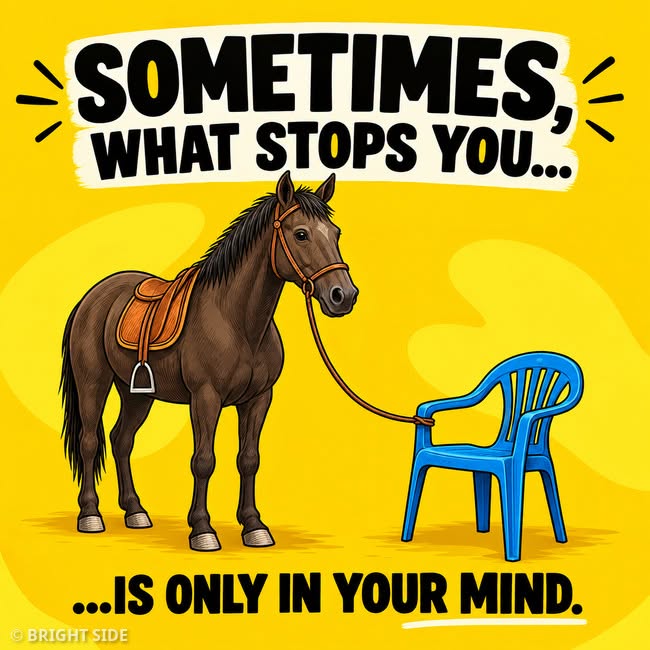
Visual metaphors often communicate deep psychological truths far better than long speeches. A classic illustration that circulates online features a majestic, powerful horse standing perfectly still, calmly tethered by its reins to a lightweight, plastic lawn chair.
Though the horse possesses enough muscular power to easily drag or break away from the flimsy chair with a single step, it remains completely stationary. The reason isn’t physical restraint—it’s mental conditioning.
This simple image serves as a profound allegory for how imaginary barriers, past conditioning, and self-limiting beliefs keep people from reaching their true potential.
Step-by-Step Breakdown: Understanding Psychological Restraint
Why does a powerful animal allow a flimsy object to hold it back? The answer lies in psychology and behavioral conditioning:
1. Learned Helplessness and Conditioning
-
Past Associations: When horses are young, they are tied to sturdy, unyielding posts or heavy hitching rings. They learn early on that feeling tension on their reins means they cannot move forward.
-
Perceived Reality: Over time, the sensation of being tied becomes synonymous with an unbreakable boundary—regardless of what object the rope is actually attached to.
2. The Comfort of Familiar Boundaries
-
Avoiding Conflict: Animals, like humans, default to familiar rules to feel safe. Questioning whether a barrier is real requires testing boundaries, which creates temporary tension or uncertainty.
3. Human Parallels: Self-Imposed Limits
-
Imaginary Obstacles: Many adults remain trapped in unfulfilling routines, fear of failure, or self-doubt simply because past experiences taught them that success was impossible.
-
Invisible Chairs: Often, the “chairs” holding us back are outdated fears, negative self-talk, or artificial societal expectations that carry no real physical weight.
Why Inspirational Metaphors Drive High Engagement
-
Universal Relatability: Everyone has experienced moments where fear or self-doubt held them back from taking a necessary leap.
-
Simple Visual Impact: Combining a strong animal with a weak object creates an instant, memorable contrast that requires no translation.
-
Encourages Reflection: Audiences natural engage by sharing their personal stories of overcoming self-limiting beliefs.
Conclusion
The horse tied to a plastic chair reminds us to regularly evaluate what is truly holding us in place. When you feel stuck, step back and examine your obstacles—you might find that the barrier stopping you exists only in your mind.
Frequently Asked Questions (FAQ)
What is “learned helplessness” in psychology?
Learned helplessness is a mental state where an individual continuously faces negative or uncontrollable situations and eventually stops trying to change or escape, even when opportunities to do so become available.
How can you break free from self-limiting beliefs?
Identify the root cause of your fear, challenge the logic behind the belief, take small incremental risks to test your boundaries, and reframe failure as a learning experience.
