
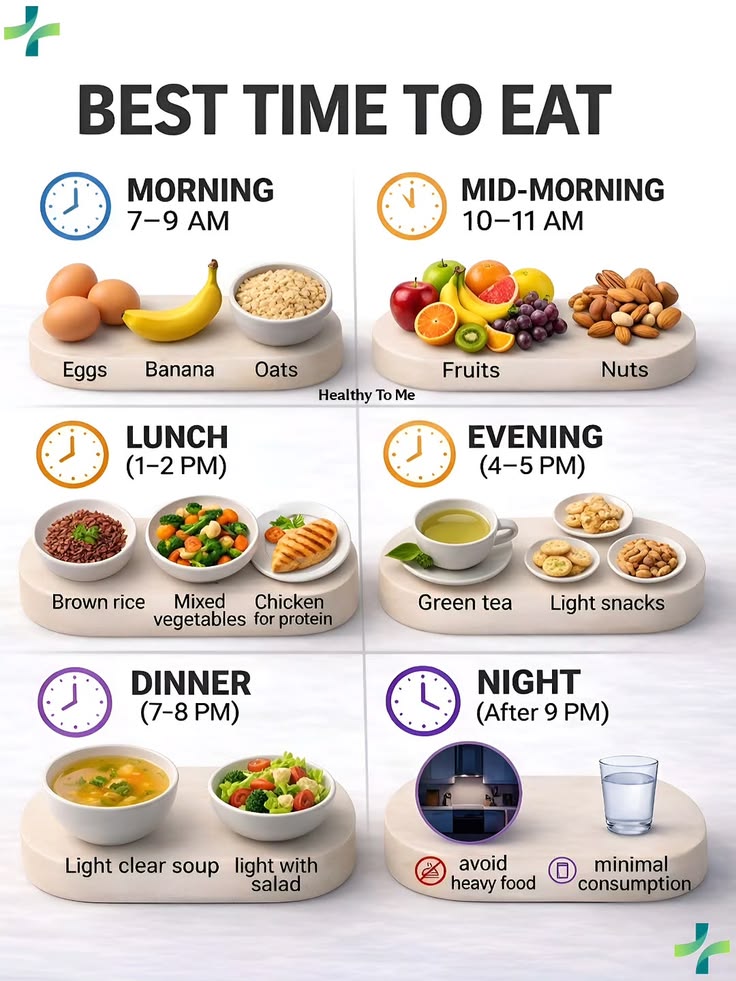
Structuring your daily food intake around optimal time windows supports steady energy, improves digestion, and prevents late-night cravings. Aligning whole-food nutrition with natural circadian rhythms helps your metabolism work efficiently throughout the day.
The visual schedule above breaks down six key daily windows for eating and snacking. Below is a detailed breakdown of each meal window and recommended food choices.
Daily Meal Schedule Breakdown
+---------------+-------------------+-----------------------------------+
| Time Window   | Meal Phase        | Recommended Foods                 |
+---------------+-------------------+-----------------------------------+
| 7–9 AM        | Morning           | Eggs, banana, oats                |
| 10–11 AM      | Mid-Morning       | Fresh fruits, nuts                |
| 1–2 PM        | Lunch             | Brown rice, mixed veggies, chicken|
| 4–5 PM        | Evening           | Green tea, light snacks           |
| 7–8 PM        | Dinner            | Light clear soup, light salad     |
| After 9 PM    | Night             | Avoid heavy food, minimal water   |
+---------------+-------------------+-----------------------------------+
1. Morning (7–9 AM)
-
Goal: Kickstart metabolism and provide sustained energy.
-
Foods: Protein-rich eggs, energy-dense bananas, and fiber-packed oats.
2. Mid-Morning (10–11 AM)
-
Goal: Maintain focus and bridge the gap to lunch without spiking blood sugar.
-
Foods: Fresh fruits (apples, oranges, berries) paired with a handful of raw nuts.
3. Lunch (1–2 PM)
-
Goal: Provide a well-balanced, high-protein peak meal for midday fuel.
-
Foods: Complex carbs like brown rice, steamed mixed vegetables, and grilled chicken breast.
4. Evening (4–5 PM)
-
Goal: Curb late-afternoon fatigue and control pre-dinner hunger.
-
Foods: Antioxidant-rich green tea and light, crunchy healthy snacks.
5. Dinner (7–8 PM)
-
Goal: Eat a light meal to prevent digestive discomfort before sleep.
-
Foods: Light clear vegetable broth soups and fresh green side salads.
6. Night (After 9 PM)
-
Goal: Protect sleep quality and prevent acid reflux.
-
Action: Avoid all heavy foods and keep liquid intake minimal before bed.
Essential Guidelines for Optimal Timing
-
Eat Within 2 Hours of Waking: Starting your morning with protein and fiber balances cortisol and prevents sudden blood sugar dips.
-
Keep Dinners Light: Heavy, high-fat meals late in the evening slow down digestion and can disrupt rest.
-
Allow 2–3 Hours Before Bed: Finishing your last meal at least three hours before sleeping gives your gut enough time to process food comfortably.
Frequently Asked Questions (FAQ)
Why is late-night eating discouraged?
Eating heavy meals late at night can cause heartburn, disrupt normal circadian sleep cycles, and lead to poor fat metabolism while resting.
Can I adjust these time windows to fit a night shift?
Yes! Shift the windows relative to your wake-up time. Maintain the sequence: eat your main protein-carb meal midway through your shift and keep your final meal light before resting.
