
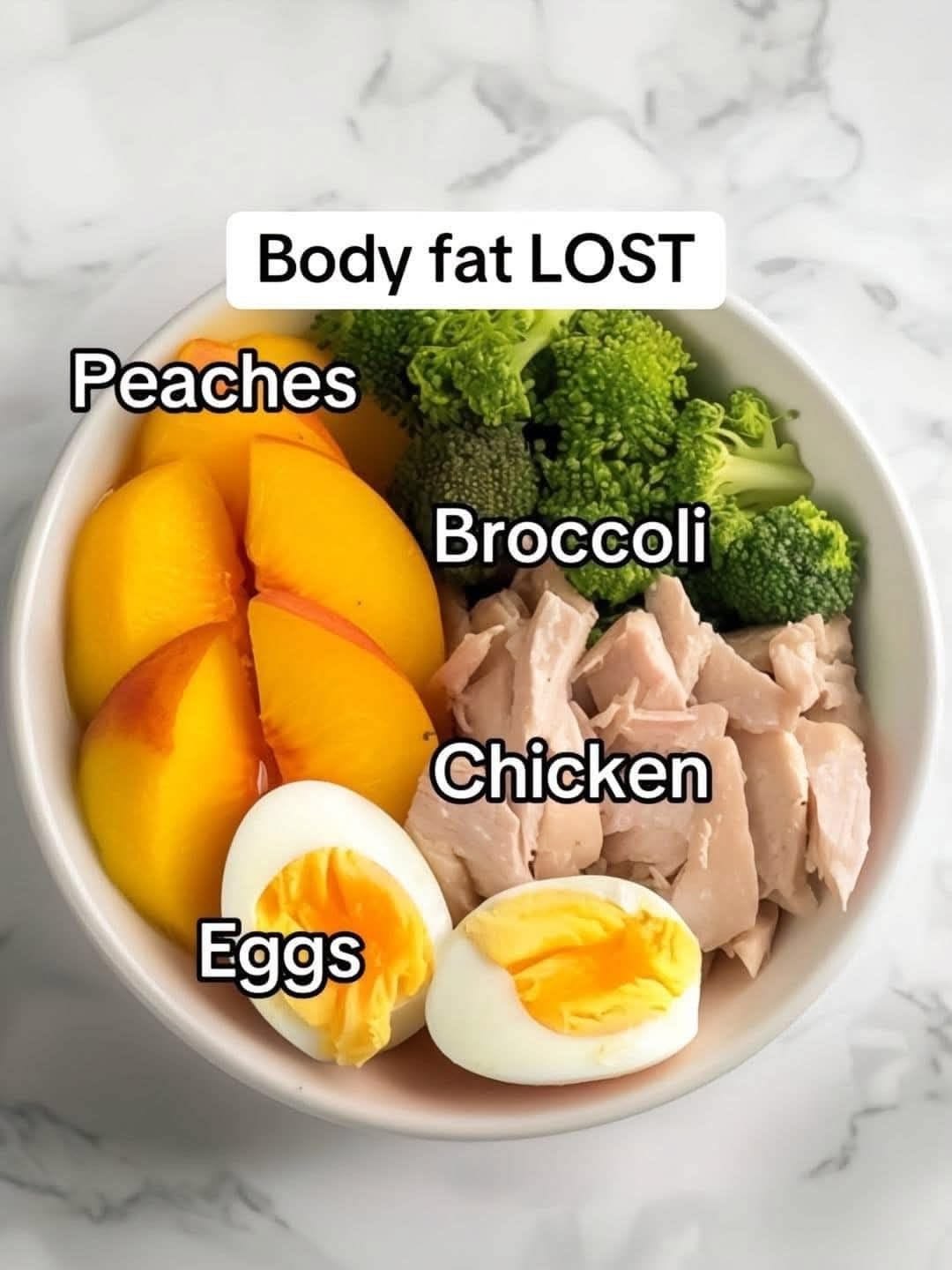
Achieving sustainable body fat loss relies on consistently consuming meals that provide high satiety, essential nutrients, and stable energy. Combining lean protein sources with fiber-rich fruits and vegetables helps manage hunger naturally while keeping overall calories in check.
The image above highlights a clean, four-ingredient meal bowl designed for fat loss. Below is a breakdown of what makes this combination effective, along with its key nutritional benefits.
Nutrient Breakdown
+---------------+---------------------------+---------------------------------------+
| Ingredient    | Primary Nutrient Focus    | Role in Fat Loss                      |
+---------------+---------------------------+---------------------------------------+
| Shredded Chicken| Lean Protein            | Supports muscle retention & satiety   |
| Hard-Boiled Eggs| Protein & Healthy Fats  | Increases fullness & provides choline  |
| Steamed Broccoli| Fiber & Micronutrients  | Adds meal volume with minimal calories|
| Sliced Peaches| Fiber & Natural Carbs     | Satisfies sweet cravings & boosts energy|
+---------------+---------------------------+---------------------------------------+
1. High-Protein Anchor
-
Chicken & Eggs: Protein requires more energy to digest than carbohydrates or fats (thermic effect of food) and helps preserve lean muscle mass during a calorie deficit. Eggs also provide essential healthy fats and vitamins like B12 and choline.
2. High-Volume Fiber
-
Broccoli: Cruciferous vegetables add significant bulk to your meal, slowing down digestion and promoting long-lasting fullness without driving up the calorie count.
3. Natural Sweetness & Micronutrients
-
Peaches: Fresh fruit provides a natural source of carbohydrates for immediate energy, along with dietary fiber, Vitamin A, and Vitamin C.
Tips for Building Fat-Loss Meal Bowls
-
Prioritize Protein First: Aim for 25–40 grams of protein per meal to keep hunger hormones balanced throughout the day.
-
Fill Half the Bowl with Veggies: Volume eating using low-calorie, high-fiber vegetables makes caloric deficits far more manageable.
-
Keep Preparation Simple: Steaming, boiling, and roasting whole foods without heavy sauces minimizes extra hidden calories.
Frequently Asked Questions (FAQ)
Can eating fruit like peaches stop fat loss because of the sugar?
No. Whole fruits contain fiber and water, which slow down sugar absorption. As long as you remain in an overall calorie deficit, fruit is a healthy, energy-boosting addition to your diet.
Why is protein so important when trying to lose body fat?
Protein helps protect lean muscle tissue while losing weight, ensures high satiety to reduce snacking, and requires slightly more metabolic energy to process.
