
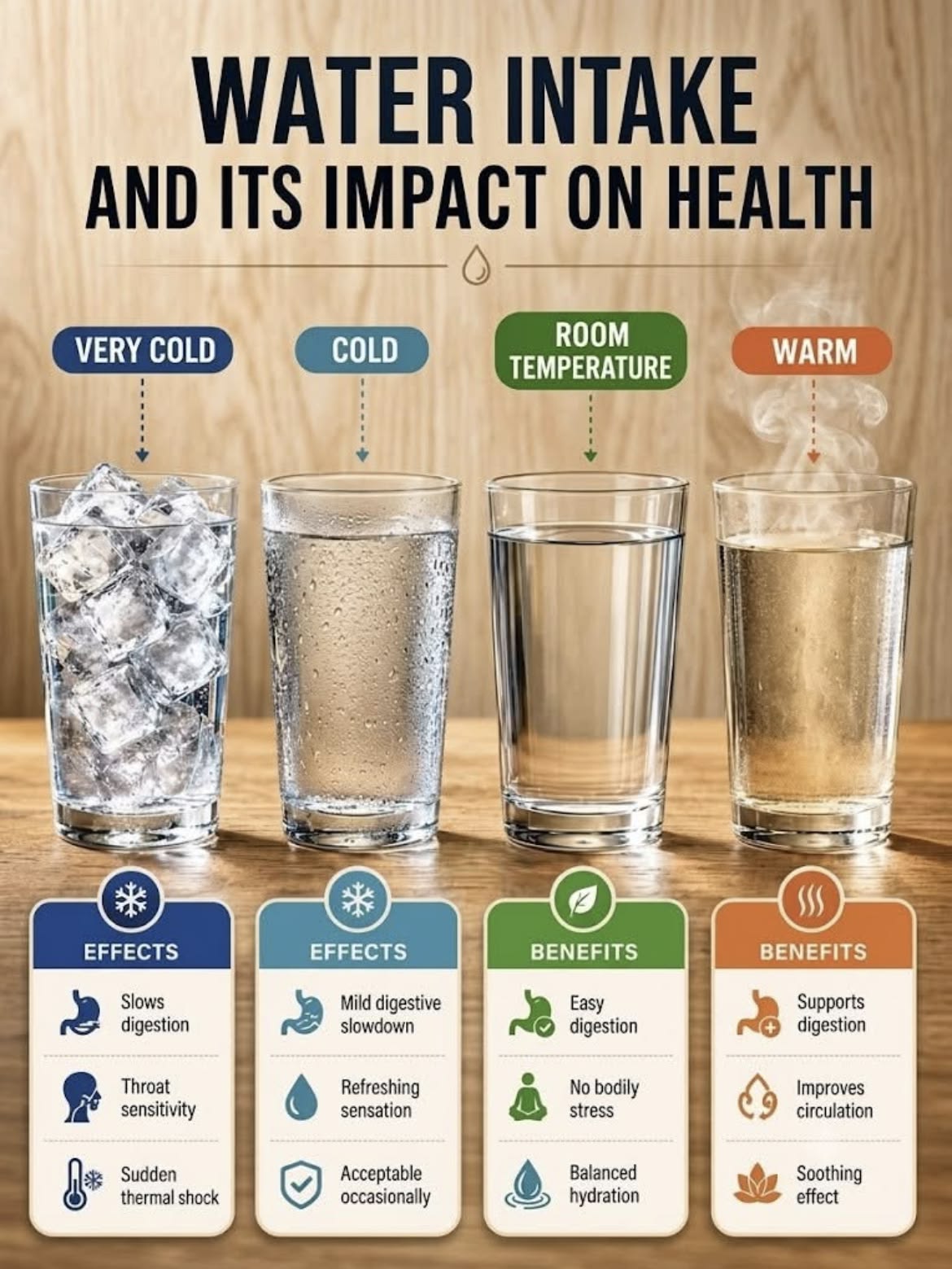
Infographics frequently make sweeping claims about how cold versus warm water impacts digestion, blood circulation, and bodily shock. While temperature can influence comfort and immediate sensation, staying consistently hydrated remains the primary factor for health, regardless of whether your water is iced or warm.
The image above outlines four water temperature categories—very cold, cold, room temperature, and warm—along with their claimed effects and benefits. Below is an objective, evidence-based breakdown of what happens when you sip water at different temperatures.
Temperature Claims & Scientific Reality
+-------------------+-----------------------------------+---------------------------------------+
| Temperature Level | Image Claimed Effect/Benefit      | Scientific & Physiological Reality    |
+-------------------+-----------------------------------+---------------------------------------+
| Very Cold         | Slows digestion & thermal shock   | Quickly warms in stomach; mild shock  |
| Cold              | Mild slowdown & refreshing feel   | Enhances palatability during exercise |
| Room Temperature  | Easy digestion & no body stress   | Neutral, gentle intake for hydration  |
| Warm              | Supports digestion & circulation  | Relaxes GI muscles & eases congestion |
+-------------------+-----------------------------------+---------------------------------------+
The Real Nuances
-
Cold & Very Cold Water: Drinking iced water can cause a brief, minor contraction of blood vessels in the esophagus and stomach, which some individuals with digestive sensitivity (like achalasia) experience as discomfort. However, the body rapidly warms liquid to core body temperature ($37^\circ\text{C}$ / $98.6^\circ\text{F}$), preventing long-term digestive slowdown.
-
Cold Water for Exercise: Cold water is often absorbed slightly faster during intense exercise and helps lower core body temperature, making it ideal for workout hydration and athletic recovery.
-
Warm & Room Temperature Water: Warm water can help relax smooth gastrointestinal muscles, ease bowel motility, and soothe nasal congestion, making it a comfortable choice during illness or first thing in the morning.
Fact Check: What Water Temperature Can and Cannot Do
-
The “Thermal Shock” Claim: While drinking large amounts of ice-cold water rapidly can trigger minor vagus nerve stimulation (sometimes causing a mild “brain freeze” or sudden sensation), it does not cause severe bodily harm or permanently harm digestive function in healthy individuals.
-
Metabolic Impact: Cold water requires the body to expend a tiny amount of calories to warm the fluid to body temperature, but this effect is minimal and does not serve as a primary weight-loss strategy.
-
The Ultimate Goal: Total daily fluid intake matters far more than temperature. Drinking water at whatever temperature encourages you to stay adequately hydrated is the best choice for your body.
Frequently Asked Questions (FAQ)
Is room temperature water better for digestion than cold water?
For individuals with sensitive stomachs or esophageal spasms, warm or room temperature water may feel more soothing. However, for most healthy adults, both temperatures digest efficiently once warmed inside the stomach.
Which water temperature is best during workouts?
Cool or cold water ($10^\circ\text{C}$–$15^\circ\text{C}$) is typically recommended during exercise because it tastes more refreshing—encouraging higher fluid intake—and helps prevent overheating.
