
Social media graphics often showcase golden milk—a warm blend of plant milk, spices, and honey—as a miraculous overnight cure for joint pain. While turmeric and ginger have well-documented anti-inflammatory properties, understanding how these ingredients work helps set realistic expectations for joint support and daily comfort.
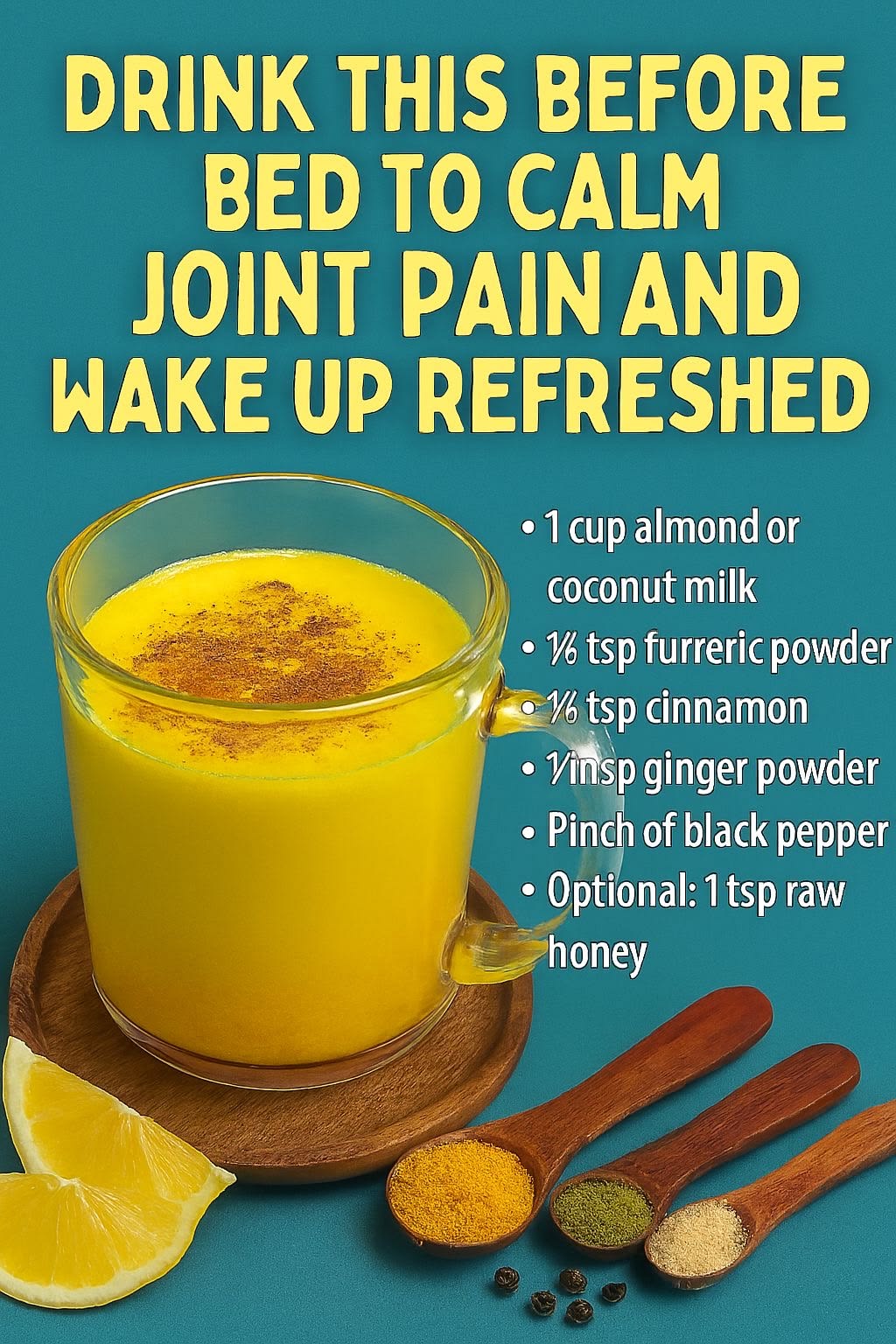
The image above outlines a golden milk recipe designed for bedtime consumption to soothe joint discomfort. Below is a detailed breakdown of the ingredients, a note on typographical errors in the original graphic, and a medical reality check on its efficacy.
Ingredient & Benefit Breakdown
+-----------------------------------+---------------------------------------+---------------------------------------+
| Recipe Ingredient                 | Intended Role                         | Scientific & Physiological Reality    |
+-----------------------------------+---------------------------------------+---------------------------------------+
| Turmeric ("Furreric") Powder      | Primary anti-inflammatory spice       | Contains curcumin; reduces inflammation|
| Ginger Powder                     | Synergistic joint pain support        | Contains gingerols; aids digestion    |
| Black Pepper                      | Enhances curcumin bioavailability     | Piperine increases curcumin absorption|
| Cinnamon                          | Flavor & antioxidant support          | Blood sugar stability & warmth        |
| Almond/Coconut Milk               | Creamy base & healthy fats            | Fat base helps absorb fat-soluble compounds|
| Raw Honey (Optional)              | Natural sweetener                     | Soothes throat; adds taste            |
+-----------------------------------+---------------------------------------+---------------------------------------+
The Real Benefits
-
Curcumin & Piperine Synergism: The active compound in turmeric, curcumin, is a powerful anti-inflammatory antioxidant. However, curcumin is poorly absorbed on its own. Adding black pepper (which contains piperine) can increase curcumin bioavailability by up to $2000\%$.
-
Healthy Fat Absorption: Curcumin is fat-soluble. Preparing it with coconut milk or almond milk provides dietary fats necessary for optimal nutrient absorption.
-
Soothes Digestive & Nervous Systems: Warm plant milk combined with ginger and cinnamon offers a calming bedtime routine that promotes relaxation and eases digestion before sleep.
Fact Check: Realistic Expectations for Joint Pain
-
Image Typo Clarification: The original image contains AI-generated or OCR text typos—specifically listing “furreric powder” (intended as turmeric powder) and “1/n tsp” or “1/1 tsp” measurements. A standard recipe typically uses $\frac{1}{2}$ teaspoon of turmeric and $\frac{1}{4}$ teaspoon of ginger.
-
Cumulative vs. Instant Relief: Drinking a warm turmeric beverage can be a relaxing evening habit, but dietary spices do not act like immediate pharmaceutical pain relievers. Consistent, long-term intake is required to notice subtle reductions in systemic inflammation.
-
Root Causes Matter: Joint pain caused by severe osteoarthritis, rheumatoid arthritis, or structural injury requires comprehensive medical care, physical therapy, or targeted anti-inflammatory management rather than relying solely on home remedies.
Recipe & Preparation Steps
-
Warm the Base: Heat 1 cup of almond or coconut milk in a small saucepan over medium-low heat (do not bring to a hard boil).
-
Whisk in Spices: Add $\frac{1}{2}$ tsp turmeric powder, $\frac{1}{4}$ tsp ground ginger, $\frac{1}{4}$ tsp cinnamon, and a tiny pinch of freshly ground black pepper.
-
Simmer: Whisk thoroughly and simmer gently for 3 to 5 minutes to allow the flavors to combine.
-
Sweeten & Serve: Remove from heat, stir in 1 teaspoon of raw honey if desired, and sip warm about 30 minutes before sleep.
Frequently Asked Questions (FAQ)
Why is black pepper necessary in golden milk recipes?
Black pepper contains piperine, an active compound that prevents the liver from rapidly breaking down curcumin, dramatically enhancing how much turmeric your body can actually absorb and utilize.
Can I drink golden milk if I take medication?
Turmeric in culinary amounts is generally safe, but therapeutic doses or daily supplements can interact with blood thinners, diabetes medications, or stomach acid reducers. Consult a healthcare provider if you take prescription medications regularly.
