
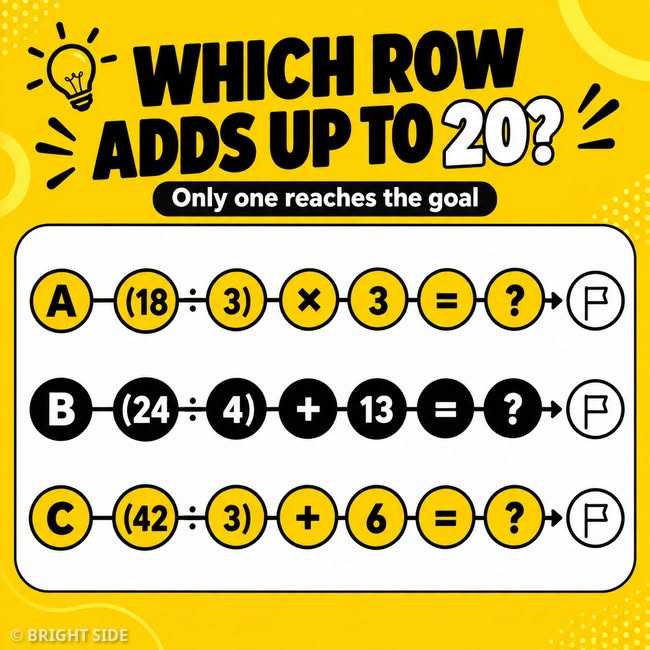
Math puzzles relying on basic order of operations (PEMDAS/BODMAS) are a fantastic way to sharpen mental arithmetic skills. By breaking down each equation step-by-step, we can easily discover which row hits the target value of 20.
In the graphic above, we are given three distinct math chains:
-
Row A: $(18 \div 3) \times 3 = ?$
-
Row B: $(24 \div 4) + 13 = ?$
-
Row C: $(42 \div 3) + 6 = ?$
Let’s calculate the results independently to find the winning row.
Step-by-Step Breakdown: Calculating Each Row
1. Evaluating Row A
-
First, solve inside the parentheses:
$$18 \div 3 = 6$$ -
Next, multiply by 3:
$$6 \times 3 = 18$$ -
Result for Row A: 18
2. Evaluating Row B
-
First, solve inside the parentheses:
$$24 \div 4 = 6$$ -
Next, add 13:
$$6 + 13 = 19$$ -
Result for Row B: 19
3. Evaluating Row C
-
First, solve inside the parentheses:
$$42 \div 3 = 14$$ -
Next, add 6:
$$14 + 6 = 20$$ -
Result for Row C: 20
The Final Answer
Row C is the only row that equals 20.
Why Math Chain Riddles Go Viral
-
Quick Mental Exercise: Simple arithmetic allows readers of all skill levels to solve the riddle in seconds.
-
Friendly Social Competition: Viewers love showing off their calculation speed and tagging friends to test their accuracy.
-
Instant Gratification: Reaching the exact target number provides a quick, satisfying win for puzzle enthusiasts.
