
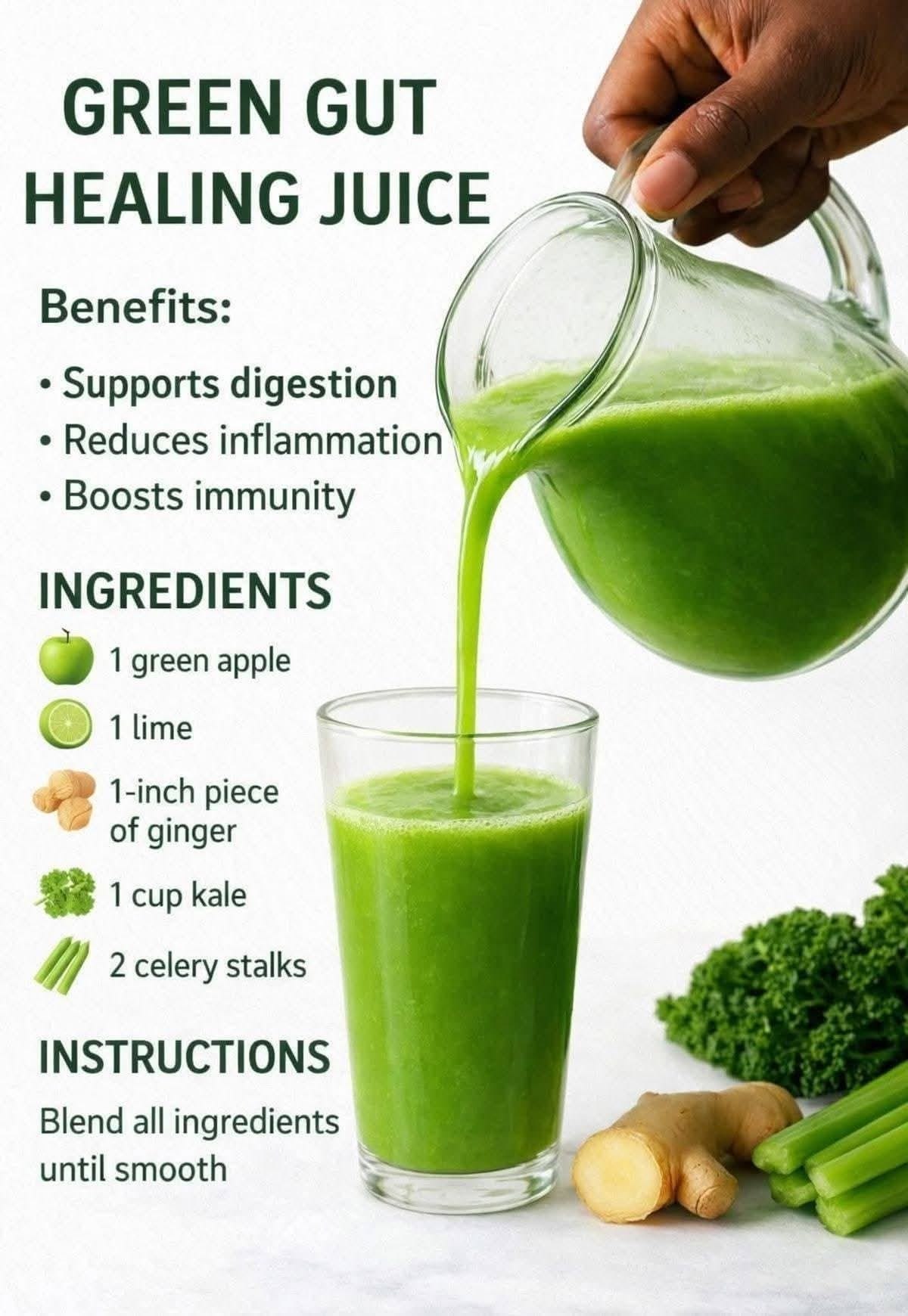
Fresh vegetable and fruit juices have become a staple in wellness routines aimed at improving gut health, reducing systemic inflammation, and supporting immune function. Combining nutrient-dense leafy greens like kale with soothing ginger and hydrating celery provides a rich supply of micronutrients that promote overall digestive health.
The graphic above outlines a popular recipe for a “Green Gut Healing Juice.” Below is a detailed breakdown of its ingredients, health mechanisms, step-by-step preparation, and evidence-based nutritional insights.
Nutritional & Functional Ingredient Breakdown
+-------------------+---------------------------------------+---------------------------------------+
| Ingredient        | Key Active Nutrients                  | Digestive & Health Functionality      |
+-------------------+---------------------------------------+---------------------------------------+
| Green Apple       | Pectin (Soluble Fiber) & Polyphenols  | Feeds beneficial gut microbes & adds balance|
| Lime              | Vitamin C & Citric Acid               | Stimulates digestive enzymes & aids absorption|
| Fresh Ginger      | Gingerol                              | Accelerates gastric emptying & relieves gas|
| Kale              | Vitamins A, C, K, & Chlorophyll       | Provides antioxidants & supports cell health|
| Celery Stalks     | Luteolin, Apigenin, & Potassium       | Hydrates tissue & helps soothe inflammation|
+-------------------+---------------------------------------+---------------------------------------+
How These Ingredients Support the Body
-
Ginger for Gastric Motility: Gingerol, the primary bioactive compound in fresh ginger, helps stimulate gastric emptying and reduces feelings of nausea, bloating, and digestive discomfort.
-
Apple Pectin as a Prebiotic: Green apples contain pectin, a prebiotic soluble fiber that nourishes beneficial bacteria in the gut microbiome, promoting a healthy intestinal lining.
-
Hydration & Electrolytes: Celery and lime are rich in water and essential minerals like potassium, aiding cellular hydration and maintaining proper digestive fluid balance.
-
Antioxidant Protection: Dark leafy greens like kale supply high concentrations of vitamin C, polyphenols, and chlorophyll, which help combat oxidative stress throughout the body.
Fact Check: Juicing vs. Blending for Gut Health
-
Fiber Retained by Blending: The graphic instructs to “blend all ingredients until smooth.” Blending retains the intact plant fibers (pulp), which is crucial for true gut healing. Fiber supports regular bowel movements and acts as food for beneficial gut microbes.
-
Juicing Fiber Loss: Running these ingredients through a traditional centrifugal juicer extracts liquid while discarding insoluble fiber. While easier to absorb rapidly, fiber-free juice lacks the bulk necessary to optimize long-term microbiome health.
-
Realistic Expectations: While green vegetable drinks provide exceptional micronutrient density, no single beverage can single-handedly “heal” complex underlying gastrointestinal conditions like IBS or IBD. They work best as part of a balanced, fiber-rich diet.
Step-by-Step Recipe & Preparation
Ingredients
-
1 green apple (cored and chopped)
-
1 lime (peeled)
-
1-inch piece of fresh ginger root (peeled)
-
1 cup fresh kale (stemmed and washed)
-
2 celery stalks (chopped)
-
Optional: 1/2 to 1 cup water or coconut water (to assist blending)
Instructions
-
Prep the Produce: Wash all fresh ingredients thoroughly. Chop the green apple and celery into smaller chunks, peel the ginger and lime, and strip the kale leaves from their tough center stems.
-
Combine in High-Speed Blender: Add the kale, celery, apple, ginger, and lime into a high-speed blender container. Pour in a small splashing of cold water or coconut water to help the blades catch.
-
Blend Until Smooth: Process on high speed for 45 to 60 seconds until completely emulsified and smooth.
-
Serve Immediately: Pour into a glass and enjoy fresh to maximize antioxidant availability.
Frequently Asked Questions (FAQ)
Can I drink this green juice every morning on an empty stomach?
Yes, drinking fresh green blends in the morning is generally safe and hydrating for most people. However, individuals sensitive to raw brassicas (like kale) or spicy ginger may prefer enjoying it alongside or after a meal to prevent light stomach acidity.
Should I strain out the pulp after blending?
If your primary goal is gut health and microbiome support, keep the pulp! The fiber in the blended pulp feeds beneficial gut bacteria and helps prevent rapid blood sugar spikes compared to strained juice.
