
Maintaining daily health requires paying close attention to subtle signals from our bodies and understanding environmental risks. Small habits like drinking enough water, supporting gut flora, and managing night-time screen use can significantly improve long-term well-being.
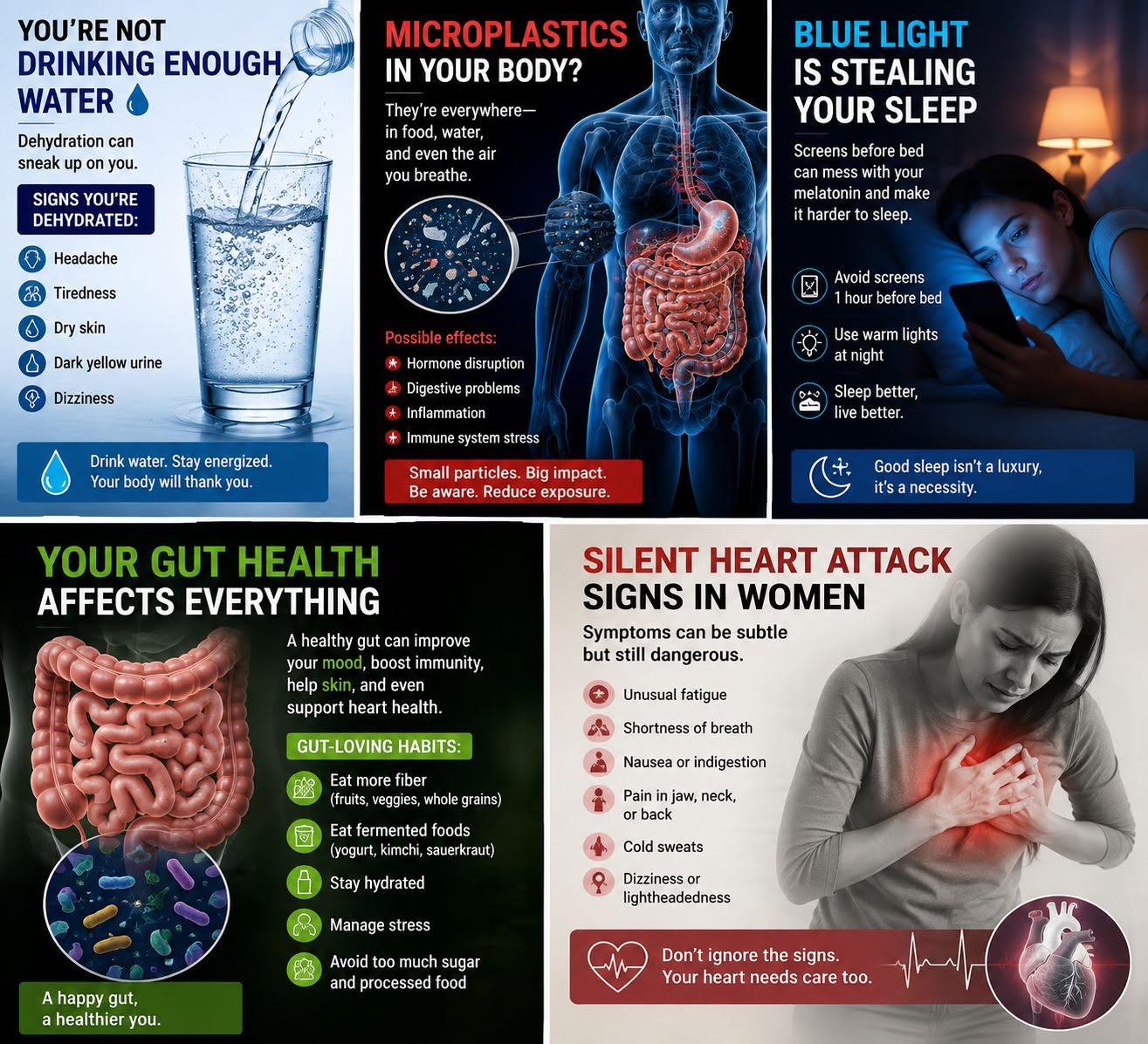
In the health infographic above, five key wellness topics are highlighted: Dehydration, Microplastics Exposure, Blue Light Effects, Gut Health, and Silent Heart Attack Signs in Women. In this guide, we break down each section with practical advice to safeguard your body.
Daily Wellness Topics Overview
+--------------------------------------------------------+
|                Health Awareness Flowchart               |
+---------------------------+----------------------------+
                            |
                            v
+--------------------------------------------------------+
|  Hydration & Gut Support  |  Environmental Hazards     |
|  - Drink sufficient water |  - Reduce microplastics    |
|  - Eat fiber & fermented  |  - Limit evening blue      |
|    foods                  |    light exposure          |
+---------------------------+----------------------------+
|  Cardiovascular Care      |                            |
|  - Recognize subtle heart |                            |
|    attack symptoms        |                            |
+--------------------------------------------------------+
1. Hydration & Dehydration Signals
Dehydration can sneak up on you throughout the day. Common warning signs include:
-
Headaches and tiredness
-
Dry skin and dizziness
-
Dark yellow urine
2. Microplastics Exposure
Microplastics exist in food, water, and even the air. Possible body impacts include:
-
Hormone disruption
-
Digestive problems, inflammation, and immune system stress
3. Blue Light & Sleep Quality
Screens before bed interfere with melatonin production and make falling asleep difficult.
-
Avoid screens 1 hour before bed
-
Use warm lights at night for better sleep quality
4. Gut Health Habits
A healthy gut supports mood, immunity, skin, and heart health.
-
Eat More Fiber: Fruits, vegetables, whole grains
-
Eat Fermented Foods: Yogurt, kimchi, sauerkraut
-
Lifestyle: Stay hydrated, manage stress, and limit sugar or processed foods
5. Silent Heart Attack Signs in Women
Heart attack symptoms in women can be subtle yet dangerous:
-
Unusual fatigue and shortness of breath
-
Nausea, indigestion, or cold sweats
-
Pain in jaw, neck, or back, alongside dizziness or lightheadedness
Health Warning & Wellness Summary Table
| Health Topic | Core Warning / Focus | Primary Symptoms / Risk Factors | Actionable Wellness Habits |
| Hydration | Inadequate water intake | Headaches, dark urine, dizziness | Drink water consistently throughout the day |
| Microplastics | Environmental particulate exposure | Hormone & digestive disruption, inflammation | Reduce single-use plastics & filtered air/water |
| Blue Light | Screen exposure before sleep | Melatonin disruption, insomnia | Turn off screens 1 hour before sleep; use warm lights |
| Gut Health | Microbiome imbalance | Weak immunity, skin issues, mood changes | Eat fiber-rich & fermented foods; manage stress |
| Heart Health | Silent heart attack in women | Subtle fatigue, jaw/neck pain, nausea, dizziness | Seek immediate medical evaluation if symptoms occur |
Preventive Care, Wellness, and Everyday Living
Prioritizing daily preventive health practices helps reduce long-term medical risks and builds physical resilience.
Focusing on lifestyle choices strengthens overall health. Awareness initiatives create opportunities across health education and wellness business sectors, helping individuals safeguard personal finance by avoiding major medical expenses long into retirement.
Simple Action Plan for Better Daily Health
-
Hydrate Early: Start your morning with a large glass of water before caffeine.
-
Night-time Wind Down: Set a “screen curfew” 60 minutes before bedtime to support natural melatonin production.
-
Plate for Gut Health: Add a serving of fermented food or high-fiber vegetables to your daily meals.
Conclusion
Listening to your body’s subtle signals—from dark urine to unusual fatigue—can prevent major health complications down the road.
Which of these health habits are you planning to improve this week? Let us know in the comments below!
FAQ Section
What is a silent heart attack?
A silent heart attack is a heart attack that occurs with subtle, non-traditional, or mild symptoms (like jaw pain or indigestion) rather than crushing chest pressure.
How much water should you drink daily?
While individual needs vary based on climate and activity level, a general recommendation is 8 glasses (about 2 liters) of water per day.
