
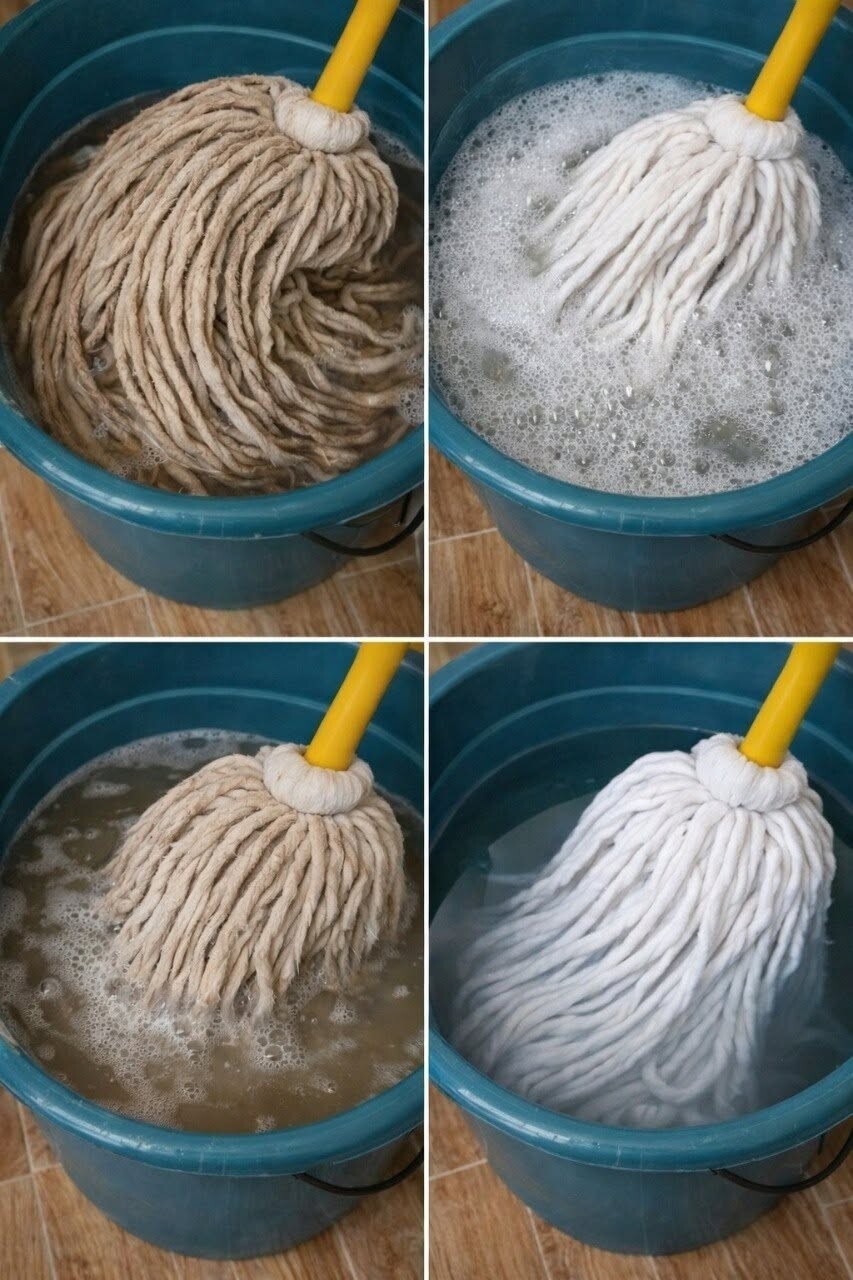
Over time, cotton string mops absorb grease, floor dirt, and detergent buildup, turning from clean white to a dingy, greyish-brown color. Using a dirty mop to clean your floors ends up spreading bacteria and grime around your home rather than lifting it away. Throwing away a mop head every few months gets expensive, but standard washing often fails to restore dingy mop fibers.
Fortunately, you can deep-clean, sanitize, and whiten a filthy mop head using a simple household staple: white vinegar paired with hot water and baking soda or dish soap. In this complete cleaning guide, we will break down how this pantry ingredient works, step-by-step cleaning instructions, and maintenance tips to keep your mop fresh for months.
How One Pantry Ingredient Deep Cleans Dirty Mops
White vinegar (acetic acid) is a natural descaling agent, degreaser, and deodorizer that breaks down stubborn floor residue embedded deep inside mop strings:
-
Breaks Down Soap Scum: Vinegar dissolves old floor cleaner residue and hard water mineral deposits that trap dirt inside cotton fibers.
-
Neutralizes Odors: It eliminates sour, musty smells caused by dampness and bacteria inside mop heads.
-
Natural Whitening Agent: Combined with hot water and baking soda or oxygen bleach, acetic acid lifts surface stains without damaging cotton strands.
Step-by-Step Guide: How to Deep Clean a Dirty Mop Head
Follow this simple soaking process to turn a filthy mop head back to clean white:
+-------------------------------------------------------------------+
|                        DEEP CLEANING SOAK                         |
| Mix 2 cups white vinegar, 1/2 cup baking soda, and 1 tablespoon    |
| liquid dish soap in a bucket filled with hot water!               |
+-------------------------------------------------------------------+
-
Rinse Out Excess Dirt: Rinse the mop thoroughly under warm running water to remove loose debris and surface dirt.
-
Prepare the Cleaning Solution: Fill a mop bucket with hot water (or near-boiling water for heavy grease). Add 2 cups of white vinegar and 1/2 cup of baking soda (or 1/4 cup dish soap).
-
Soak the Mop Head: Submerge the mop head completely in the sudsy solution. Swish it around vigorously to work the liquid through all strings.
-
Let It Sit: Allow the mop head to soak for 1 to 2 hours (or overnight for severely stained mop heads). Watch the water turn dark brown as embedded dirt lifts away!
-
Rinse and Air Dry: Drain the dirty water, rinse the mop thoroughly under clean warm water, and wring out excess liquid. Hang the mop upside down in a well-ventilated spot or outside under direct sunlight to air-dry completely.
Deep Cleaning Methods Compared
| Method | Ingredients Used | Effectiveness on Dirt | Whitening Power |
| Vinegar & Dish Soap Soak | White vinegar, liquid soap, hot water | Very High (Removes grease & soap scum) | High |
| Baking Soda & Vinegar Soak | White vinegar, baking soda | High (Deodorizes & lifts stains) | High |
| Diluted Bleach Soak | 1/2 cup household bleach, cool water | High (Kills bacteria) | Exceptional (Use carefully on cotton) |
| Washing Machine Cycle | Standard laundry detergent, warm cycle | Moderate | Moderate |
Financial, Health, and Home Hygiene Advantages
Maintaining clean home tools offers direct financial and health benefits:
-
Saves Money on Cleaning Supplies: Reviving dirty mop heads instead of constantly replacing them saves household money over time, freeing up funds for investment, retirement, or education savings goals.
-
Better Home Sanitation: Cleaning with a sanitized mop head prevents cross-contamination of bacteria across kitchen and bathroom floors, protecting household health and minimizing indoor allergy or illness risks that trigger out-of-pocket medical costs.
-
Protects Flooring Investments: Removing residual soap scum and grit from mop heads prevents micro-scratches on hardwood, laminate, or tile surfaces, preserving property value covered under home insurance.
Fascinating Cleaning & Hygiene Facts
-
Sunlight Is a Natural Bleach: Hanging cotton mop heads outside in direct sunlight after washing uses natural UV rays to sanitize fibers and bleach away yellow stains naturally!
-
Never Store Mops Wet: Storing a damp mop inside a dark closet encourages mildew growth and bacteria within just 24 hours. Always wring out and air-dry thoroughly.
-
Microfiber vs. Cotton: While traditional cotton string mops absorb heavy water spills easily, microfiber mop pads trap fine dust and micro-particles far more effectively and can be machine-washed hundreds of times.
Conclusion
You do not need harsh chemical cleaners or expensive replacement pads to revive a filthy mop. A simple soak in hot water and white vinegar cuts through greasy buildup, neutralizes sour odors, and restores dingy mop strings so your floors stay sparkling clean!
Frequently Asked Questions (FAQ)
Can I put a cotton mop head in the washing machine?
Yes! Many detachable cotton or microfiber mop heads are machine-washable. Place them inside a mesh laundry bag to prevent strings from tangling, and wash on a warm cycle with laundry detergent.
Is bleach safe for cleaning cotton mops?
Diluted bleach is an effective sanitizer and whitener, but frequent use weakens cotton fibers over time, causing strings to fray and snap. White vinegar is a safer, non-degrading natural alternative for routine maintenance.
How often should you deep clean a mop head?
Rinse and air-dry your mop head after every use, and perform a deep vinegar or soap soak every 3 to 4 uses (or once a month for standard household cleaning).
How do I stop my mop from smelling musty?
Musty smells are caused by trapped moisture and mildew. Always wring out as much water as possible after cleaning and hang the mop in an open, well-ventilated area to dry completely.
