
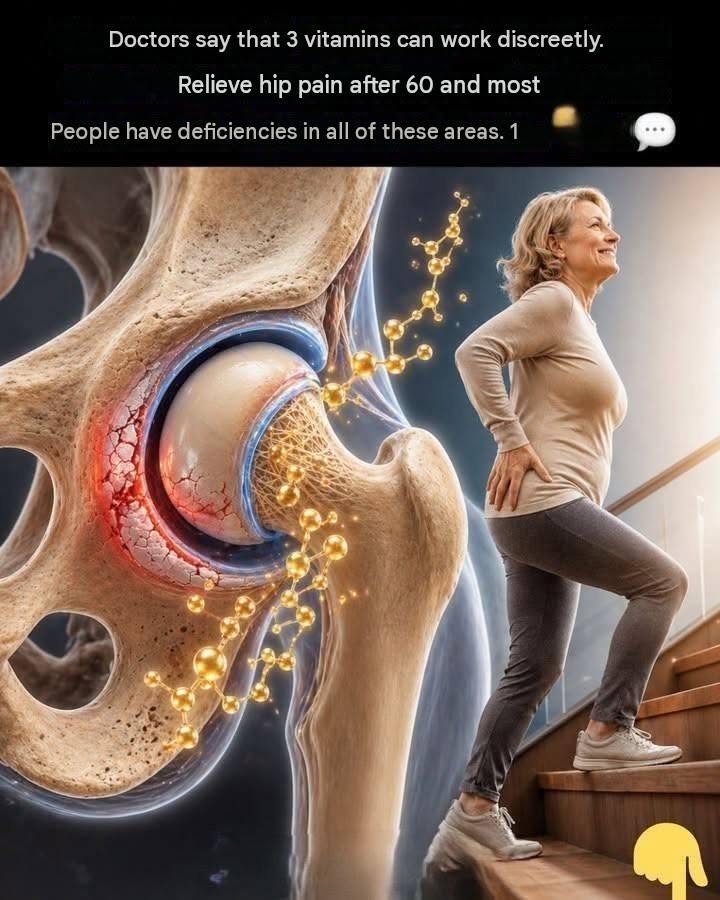
Hip pain after age 60 is a frustratingly common issue that can severely impact mobility, independence, and overall quality of life. While many people assume discomfort is simply an unavoidable part of aging, underlying joint degeneration, cartilage wear, and decreased bone density are frequently influenced by nutritional gaps.
Viral health posts often promise that a few key vitamins can work discreetly to relieve hip pain and rebuild joints. While vitamins are not a direct replacement for medical treatment, maintaining optimal levels of key nutrients plays a critical role in bone strength, cartilage maintenance, and inflammation control. In this guide, we break down the three most essential nutrients for hip and joint health after 60, how they work together, and evidence-based ways to support your mobility naturally.
The 3 Key Nutrients for Hip and Joint Relief
When addressing age-related hip discomfort, three vitamins and minerals consistently stand out for their clinically backed roles in bone and joint preservation:
1. Vitamin D3 (The Bone Builder)
Vitamin D3 is essential for calcium absorption in the gut. Without adequate vitamin D, the body cannot absorb calcium efficiently, leading to weakened bone structure, osteopenia, and increased stress on the hip joints.
-
Key Role: Directs calcium into bones and reduces systemic inflammation around joint tissues.
-
Common Deficiency: Studies show over 40% of adults over 60 have inadequate vitamin D levels due to decreased skin synthesis and reduced sun exposure.
2. Vitamin K2 (The Calcium Director)
While vitamin D3 absorbs calcium, vitamin K2 ensures that calcium reaches the bones and teeth where it belongs—rather than accumulating in soft tissues, arteries, or joint cartilage where it can cause stiffness.
-
Key Role: Activates proteins (osteocalcin) that bind calcium directly to the bone matrix in the hip socket.
-
Synergy: Vitamin D3 and K2 work far better together than either nutrient does on its own.
3. Vitamin C (The Cartilage & Collagen Booster)
Cartilage acts as the natural shock absorber inside the hip joint socket. Vitamin C is a required cofactor for the synthesis of collagen—the primary structural protein in joint cartilage, tendons, and ligaments.
-
Key Role: Promotes collagen synthesis to repair worn joint lining and acts as a powerful antioxidant to neutralize joint-damaging free radicals.
Micronutrients for Joint Health Compared
| Nutrient | Main Source | Primary Joint Benefit | Deficiency Risk After 60 |
| Vitamin D3 | Sunlight, fatty fish, fortified dairy | Increases calcium absorption & bone density | Very High |
| Vitamin K2 | Fermented foods (Natto), aged cheeses, egg yolks | Directs calcium to bones instead of joint cartilage | High |
| Vitamin C | Citrus fruits, bell peppers, berries | Supports collagen creation for cartilage repair | Moderate |
| Magnesium | Nuts, seeds, leafy greens | Works with D3 to convert vitamins into active forms | High |
Practical Steps to Protect Your Hips After 60
In addition to ensuring proper micronutrient intake, adopt these everyday strategies to reduce hip stress:
+-------------------------------------------------------------------+
|                     JOINT PROTECTION TIP                          |
| Combine targeted bone nutrition with low-impact weight-bearing    |
| exercise to stimulate bone density and keep joints lubricated!    |
+-------------------------------------------------------------------+
-
Low-Impact Movement: Engage in gentle activities like walking, swimming, or water aerobics to keep the joint capsule lubricated with synovial fluid without causing impact damage.
-
Targeted Strength Training: Strengthen the gluteal muscles, quadriceps, and core muscles to stabilize the pelvis and decrease pressure placed directly on the hip joint socket.
-
Anti-Inflammatory Nutrition: Incorporate omega-3 fatty acids (found in fish, walnuts, and flaxseeds) to naturally calm joint swelling and stiffness.
Financial, Health, and Daily Lifestyle Benefits
Taking proactive care of your joints and bones provides lasting health and financial peace of mind:
-
Preserving Independence & Mobility: Keeping hips strong and pain-free reduces fall risks and maintains personal freedom, dramatically lowering long-term medical expenses and specialized care costs covered by health insurance.
-
Avoiding Costly Invasive Procedures: Supporting joint cartilage early helps delay or prevent the need for costly hip replacement surgeries, keeping long-term healthcare costs low and preserving funds for investment, retirement, or family education goals.
-
Active Quality of Life: Enjoying pain-free movement allows you to remain socially active, participate in family activities, and maintain mental well-being throughout your golden years.
Conclusion
Hip pain after 60 does not have to be an inevitable part of growing older. By ensuring your body gets essential joint-supporting nutrients like Vitamin D3, Vitamin K2, and Vitamin C—combined with low-impact exercise and anti-inflammatory habits—you provide your hips with the structural support needed for smooth, comfortable movement!
Frequently Asked Questions (FAQ)
Can vitamins cure osteoarthritis in the hip?
No. Vitamins cannot reverse structural bone-on-bone osteoarthritis or replace worn-away cartilage entirely. However, they slow down bone density loss, support remaining cartilage, and reduce joint inflammation.
Why should Vitamin D3 and K2 always be taken together?
Vitamin D3 helps your body absorb calcium into the bloodstream, while Vitamin K2 activates the proteins that carry that calcium into your bones. Taking D3 without K2 can lead to calcium building up in soft tissues and blood vessels instead of strengthening your bones.
What are the earliest warning signs of hip joint breakdown?
Early signs include morning stiffness that lasts under 30 minutes, groin or thigh tightness after sitting, reduced range of motion when tying shoes, and a dull ache in the side or back of the hip after walking.
How long does it take for joint vitamins to work?
Because bone remodeling and tissue support occur gradually, most individuals notice improvements in joint comfort and mobility after 8 to 12 weeks of consistent daily nutrition and light exercise.
