
Left Side vs. Right Side Sleeping: How Your Sleep Position Impacts Digestion
The position you sleep in every night does far more than just keep your spine aligned—it plays a significant role in how your gastrointestinal system functions while you rest. Many people who suffer from nighttime heartburn, acid reflux, or sluggish digestion are surprised to learn that simply changing which side of their body they sleep on can make a noticeable difference in their symptoms.
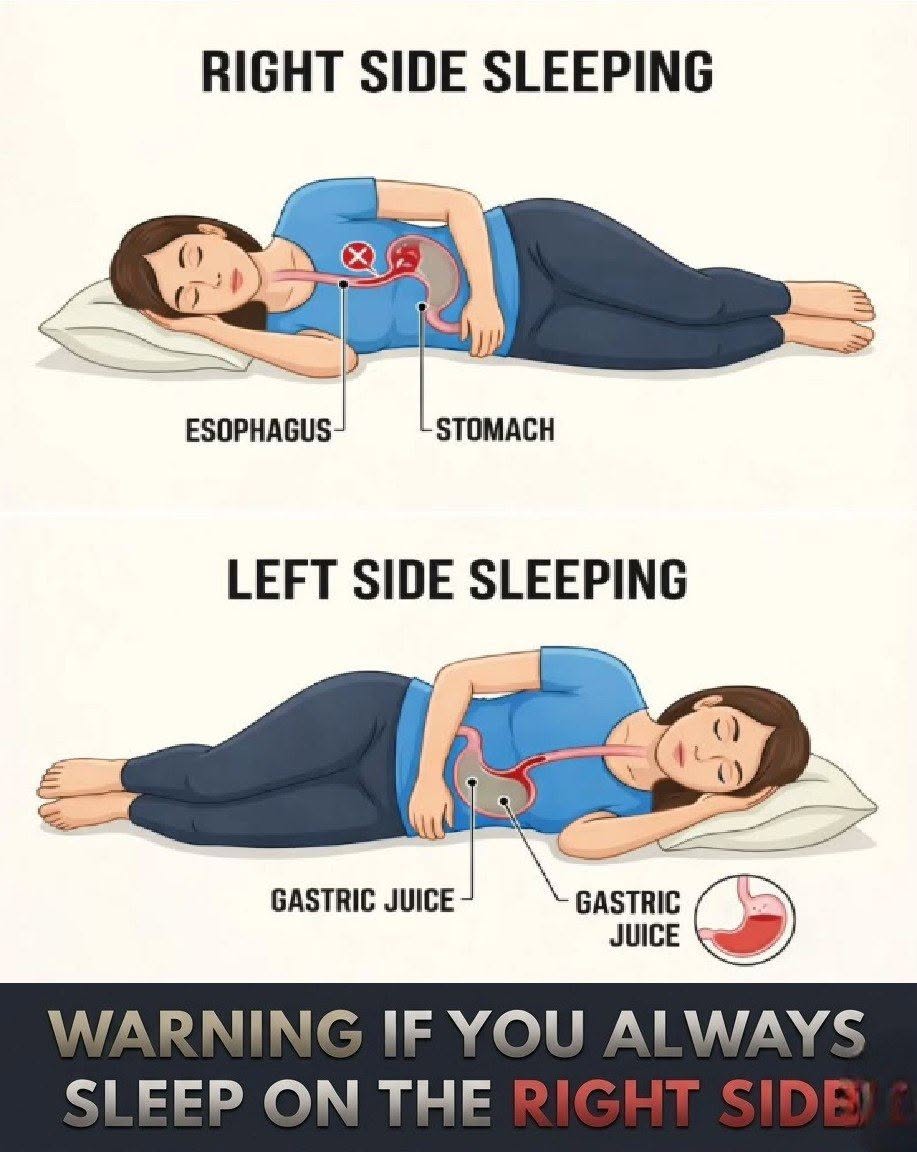
Viral health graphics frequently warn against always sleeping on your right side, illustrating how stomach acid can travel up the esophagus. But what does the medical science actually say? In this comprehensive health guide, we break down the anatomical differences between left and right side sleeping, how gravity affects acid reflux, and practical tips for a better night’s rest.
The Anatomy of Sleep and Digestion
To understand why sleep position matters, it helps to look at the shape and location of the stomach relative to the esophagus:
-
Stomach Location: The stomach is naturally curved and located predominantly on the left side of the upper abdomen.
-
The Esophageal Sphincter: The lower esophageal sphincter (LES) acts as a muscular valve between the esophagus and stomach, preventing digestive acids from leaking upward.
+-------------------------------------------------------------------+
|                        GRAVITY & DIGESTION                        |
| Sleeping on your LEFT side keeps the stomach reservoir BELOW the   |
| esophageal junction, using gravity to prevent acid reflux!        |
+-------------------------------------------------------------------+
Left Side vs. Right Side Sleeping: What Happens?
Sleeping on Your Left Side (Recommended for Reflux)
When you lie on your left side, the stomach rests naturally lower than the lower esophageal sphincter. Gravity holds gastric juices down in the main pool of the stomach, keeping stomach acid well below the junction to the esophagus. As a result, acid reflux episodes are less frequent and less severe.
Sleeping on Your Right Side (May Trigger Heartburn)
When you lie on your right side, the stomach is positioned higher than the esophageal junction. In this orientation, gastric acid pools directly against the lower esophageal sphincter, making it significantly easier for acid to leak upward into the esophagus and trigger painful heartburn or GERD symptoms.
Comparing Sleep Positions for Digestive Health
| Sleep Position | Digestive Impact | Primary Benefits | Potential Drawbacks |
| Left Side | Optimal (Keeps stomach acid below esophagus) | Reduces acid reflux, improves night digestion | Can put slight pressure on shoulders/wrists |
| Right Side | Sub-optimal (Allows acid to pool at sphincter) | May feel comfortable for some cardiovascular conditions | Increases risk of nighttime heartburn and GERD |
| Back Sleeping | Moderate (Neutral, but gravity can allow reflux) | Best for spinal alignment and facial skin | Can worsen snoring, sleep apnea, and acid reflux |
| Stomach Sleeping | Poor (Puts pressure on internal organs) | May reduce snoring in rare cases | Strains neck, flattens lumbar spine, compresses stomach |
Practical Tips for Better Nighttime Digestion
If you frequently experience acid reflux or discomfort at night, adopt these evidence-based sleep hygiene habits:
-
Elevate Your Head and Torso: Use a wedge pillow or elevate the head of your bed by 4 to 6 inches. Raising your upper body prevents acid from traveling up the esophagus regardless of position.
-
Wait Before Lying Down: Avoid eating large or high-fat meals within 3 hours of going to bed to allow your stomach time to empty.
-
Sleep with a Body Pillow: Placing a firm pillow between your knees while lying on your left side helps keep your spine hips, and pelvis aligned for extra comfort.
Financial, Health, and Daily Lifestyle Benefits
Optimizing your sleep position and digestive wellness offers long-term lifestyle and financial advantages:
-
Better Sleep Quality & Productivity: Preventing middle-of-the-night acid reflux wake-ups improves deep sleep cycles, boosting daily energy, mental focus, and work performance.
-
Lower Medical & Medication Costs: Managing acid reflux naturally through positioning reduces reliance on over-the-counter antacids or prescription acid reducers, cutting routine medical expenses and maximizing health insurance benefits.
-
Long-Term Wellness Security: Reducing chronic esophageal acid exposure lowers the risk of long-term esophageal tissue inflammation, protecting overall health and preserving household funds for future investment, retirement, or education goals.
Conclusion
If you suffer from frequent heartburn or acid reflux at night, making a conscious effort to sleep on your left side is a simple, cost-free change that uses gravity to your advantage. Combined with eating lighter evening meals and elevating your head, sleeping on your left side can help you enjoy restful, pain-free sleep every night!
Frequently Asked Questions (FAQ)
Is it really bad to sleep on your right side?
Sleeping on your right side is not dangerous for most healthy individuals, but for those prone to acid reflux or GERD, it positions stomach acid closer to the esophageal opening, increasing the likelihood of nighttime heartburn.
How does left-side sleeping help with digestion?
Because the stomach curves to the left side of the abdomen, sleeping on your left keeps digestive juices settled at the bottom of the stomach pool, preventing acid from rising up into the esophagus.
What is the best sleep position for pregnant women?
Obstetricians generally recommend sleeping on the left side during pregnancy. This position optimizes blood flow to the heart, fetus, uterus, and kidneys while relieving pressure on the liver and inferior vena cava.
How can I train myself to stay on my left side while sleeping?
Positioning a long body pillow behind your back can physically prevent you from rolling onto your right side or back during the night.
