
Raising children to become self-sufficient adults is one of the primary responsibilities of parenting. Teaching essential domestic capabilities—such as meal preparation, home care, and basic budgeting—equips young people with the independence needed to navigate adulthood successfully.
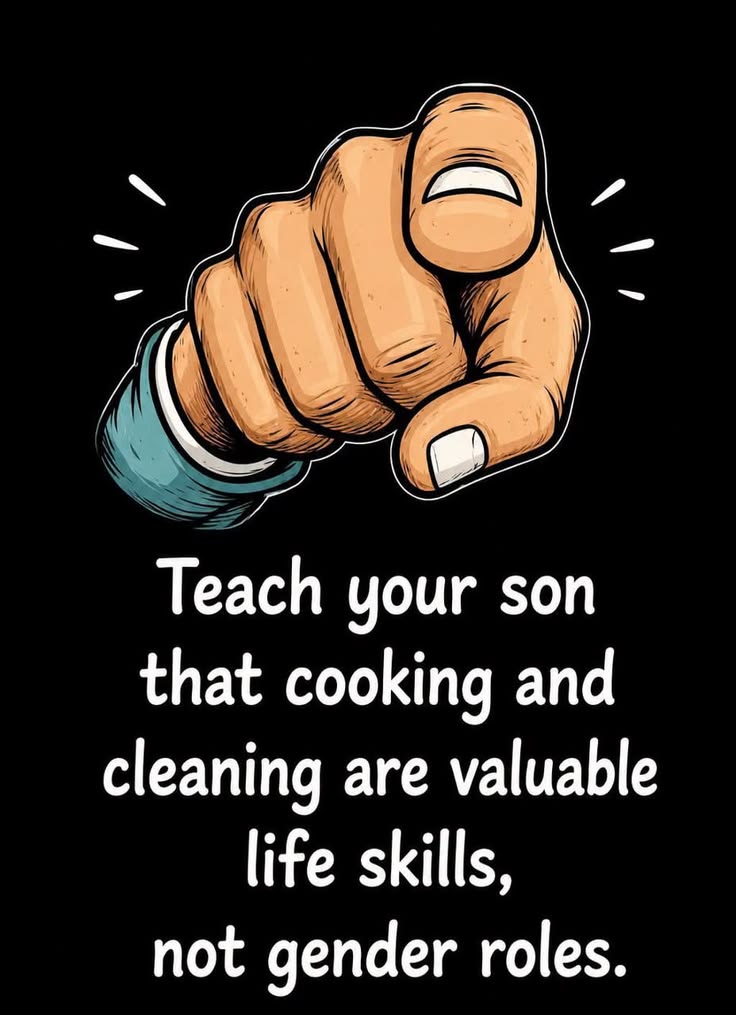
In the parenting educational graphic above, a direct message highlights the importance of practical life skills:
Visual: A hand pointing directly forward
Text: “Teach your son that cooking and cleaning are valuable life skills, not gender roles.”
In this guide, we break down how instilling essential home skills fosters self-reliance, equality, and personal confidence in children.
Strategy Overview
+--------------------------------------------------------+
|              Essential Life Skills Model               |
+---------------------------+----------------------------+
                            |
                            v
+--------------------------------------------------------+
|  Practical Independence   |  Personal Responsibility   |
|  - Meal preparation       |  - Cleaning and hygiene    |
|  - Nutrition awareness    |  - Household maintenance   |
|  - Self-sufficiency       |  - Equal partnership       |
+---------------------------+----------------------------+
                            |
                            v
+--------------------------------------------------------+
|  Core Outcome                                          |
|  - Capable, resilient, and independent adults          |
+--------------------------------------------------------+
Key Benefits of Universal Life Skills
-
Promotes Independence: Knowing how to prepare balanced meals and maintain a living space ensures young adults can thrive on their own.
-
Breaks Outdated Stereotypes: Framing domestic responsibilities as universal life skills promotes fairness and mutual respect in future relationships.
-
Builds Confidence and Discipline: Mastering everyday tasks encourages problem-solving, responsibility, and routine management.
Skills Breakdown Table
| Household Skill | Core Capability Taught | Long-Term Benefit |
| Cooking & Nutrition | Recipe preparation, food safety, budgeting | Healthy eating habits & financial control |
| Cleaning & Maintenance | Organization, hygiene, care for belongings | Disciplined living & peaceful home environment |
| Laundry & Care | Sorting, washing, clothing repair | Self-reliance & personal presentation |
| Shared Responsibility | Teamwork, equal contribution | Healthy communication & equal partnerships |
Parenting, Family Dynamics, and Long-Term Success
Instilling practical capabilities at home creates a solid foundation for individual maturity and balanced personal relationships.
Fostering household self-reliance directly supports personal health and emotional well-being. Practicing task organization benefits individuals across home management and business environments, helping young professionals structure personal finance goals, maintain self-sufficiency, and build stability leading toward retirement.
Essential Ways to Teach Domestic Skills at Home
-
Involve Children Early: Assign age-appropriate chores like clearing the table, sorting laundry, or assembling simple recipes.
-
Focus on Practice over Perfection: Encourage effort and gradual improvement rather than criticizing initial mistakes.
-
Lead by Example: Model shared household responsibilities daily to demonstrate that home care is a joint family effort.
Conclusion
Teaching basic life skills empowers the next generation to grow into confident, capable, and self-reliant individuals.
What domestic skill do you believe is most important to teach children early? Share your thoughts in the comments below!
FAQ Section
At what age should children start learning basic cooking and cleaning skills?
Simple tasks like picking up toys or washing fruits can start in early childhood (ages 3–5), with responsibility gradually increasing as they grow.
How does learning household skills benefit future partnerships?
When partners enter relationships with equal domestic skills, it prevents unequal workloads and fosters mutual respect and balance.
