
Fiber Supplements vs. Gut Health Myths: Can One Spoon “Clear Out the Cement”?
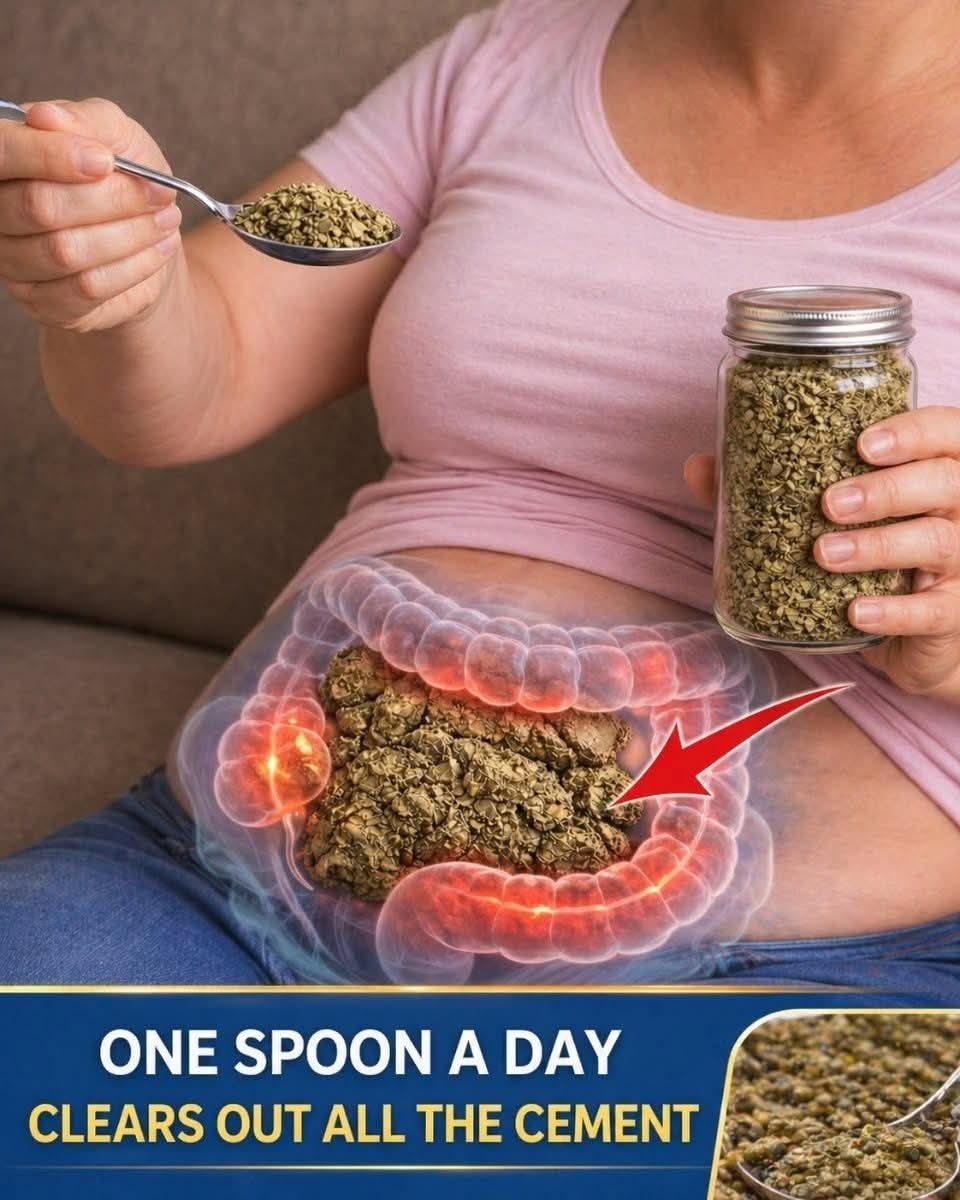
Dramatic health claims frequently spread across social media. A widely shared viral image shows a woman holding a jar and spoon of coarse seeds/herbs, with an graphic overlay pointing to a digestive tract labeled: “ONE SPOON A DAY CLEARS OUT ALL THE CEMENT.”
Sensational terms like “cement in the gut” or “mucoid plaque” are popular marketing slogans used to sell detox teas and cleanses. However, gastrointestinal medicine presents a much clearer picture of how digestion and natural waste elimination actually work.
In this guide, we will examine the science of digestive health, debunk common “gut cement” myths, explain how dietary fiber works, and share safe ways to improve bowel regularity.
Debunking the “Gut Cement” Myth
Medical consensus from gastroenterologists is straightforward regarding intestinal health:
-
The Myth: Waste accumulates on intestinal walls like hard cement or toxic plaque over years, requiring special cleanses to scrub it out.
-
The Reality: Healthy intestines continually shed their epithelial lining every few days. Peristalsis (the natural muscular contractions of the digestive tract) moves digestive material along steadily. Waste does not turn into “cement” inside healthy digestive systems.
-
Severe Impaction: While severe chronic constipation can lead to a condition called fecal impaction, this is a medical issue requiring formal treatment, not a casual “toxic buildup” resolved by viral online cleanses.
What Is the “One Spoon” Remedy Shown?
Images of this style typically refer to natural, high-fiber seed preparations such as psyllium husk, crushed flaxseed, chia seeds, or senna leaf.
When consumed, soluble fiber absorbs water and forms a gel-like substance. This softens stool, adds healthy bulk, and promotes regular bowel movements—giving the sensation of a thorough “cleanse” without any magical detox properties.
Fiber & Colon Health Comparison Matrix
| Ingredient / Remedy | Soluble vs. Insoluble | Primary Action | Medical Safety Profile |
| Psyllium Husk | High Soluble | Form a soft gel, bulk stool, soak up liquid | Safe for daily long-term use with adequate water |
| Flaxseed / Chia | Balanced Both | Provide fiber, healthy fats, & gentle motility | Safe daily addition to diet |
| Harsh Herbal Laxatives (Senna) | Stimulant | Force bowel contractions rapidly | Use short-term only; can cause dependency |
Safe Ways to Support Digestive Motility
Instead of extreme detoxes, evidence-based methods safely optimize digestive function:
-
Increase Dietary Fiber: Gradually add dietary sources of fiber (whole grains, legumes, berries, and leafy greens) up to $25–30\text{ grams}$ per day.
-
Hydrate Consistently: Fiber requires ample water to move through the digestive system smoothly. Drinking insufficient liquid while taking fiber supplements can actually increase constipation.
-
Incorporate Daily Movement: Regular physical activity (like walking) stimulates intestinal contractions and keeps food moving through the GI tract.
-
Support Your Microbiome: Consume fermented foods containing probiotics (like yogurt, kefir, or kimchi) to nourish healthy gut bacteria.
Conclusion
While no single spoon of herbs will “clear out cement,” daily dietary fiber supplements like psyllium husk or flaxseed remain fantastic, science-backed tools for maintaining smooth digestion and colon health.
Frequently Asked Questions (FAQ)
Is it safe to take psyllium husk every day?
Yes. Soluble fiber like psyllium husk is non-habit forming and safe for daily use for most adults, provided it is taken with plenty of water.
What happens if you take fiber supplements without enough water?
Taking bulk-forming fiber without adequate fluids can cause the fiber to swell in the throat or digestive tract, potentially causing choking, severe bloating, or worsening constipation.