
Sleeping on Your Left Side vs. Right Side: How Sleep Position Impacts Acid Reflux
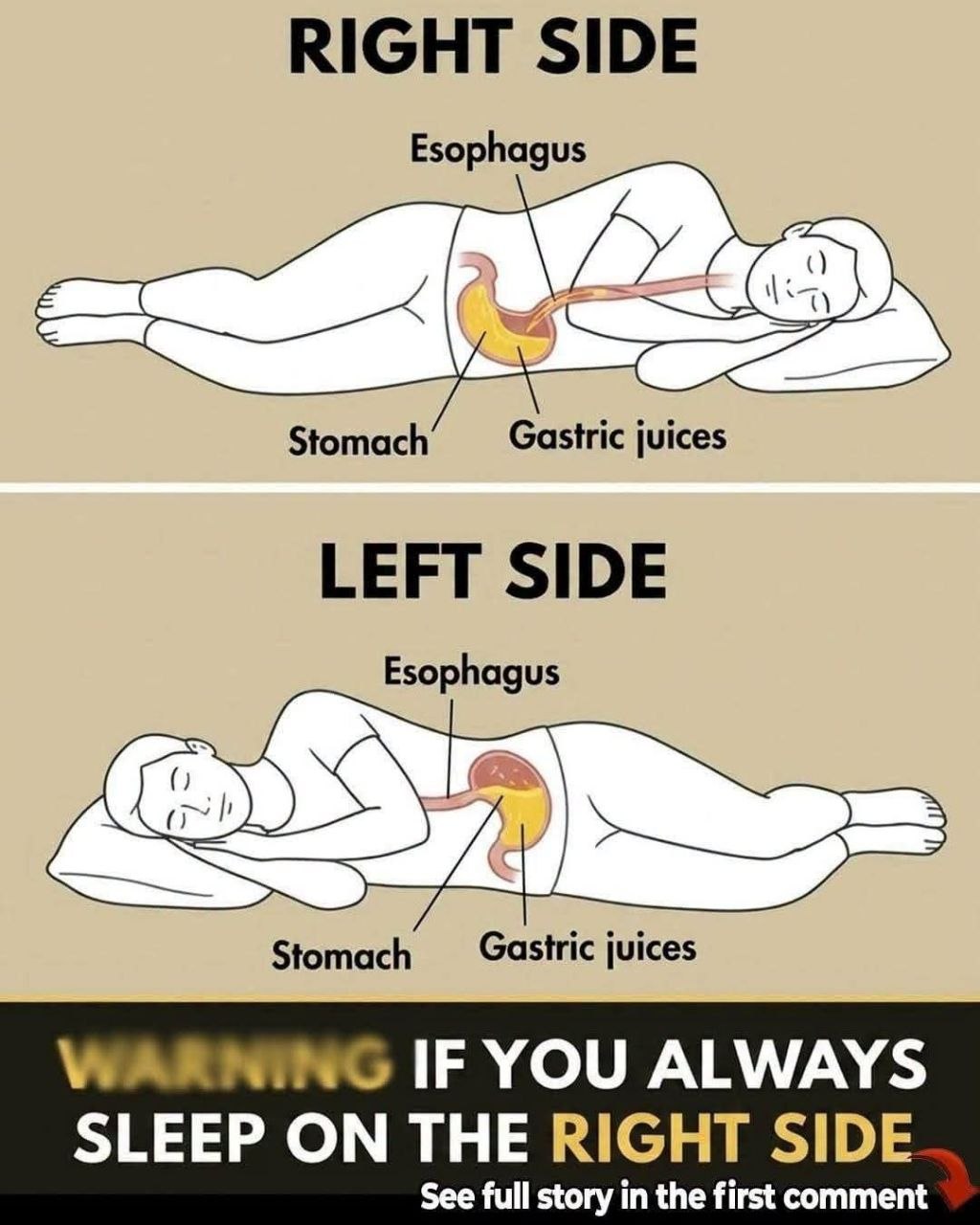
Health infographics routinely highlight how simple body postures affect daily wellness. A viral visual diagram shows a person resting on both sides with anatomical labels, carrying the headline: “WARNING IF YOU ALWAYS SLEEP ON THE RIGHT SIDE.”
While changing sleep positions might sound like a minor detail, gastroenterologists frequently recommend positional therapy for individuals suffering from gastroesophageal reflux disease (GERD), nighttime heartburn, and indigestion.
In this guide, we will break down the anatomy of sleeping positions, explain why sleeping on your left side reduces acid reflux, and share actionable tips for better nighttime digestion.
The Anatomy Behind Sleep Position & Digestion
The human stomach naturally curves to the left side of the abdomen. The lower esophageal sphincter (LES)—the muscular valve that connects the esophagus to the stomach—enters from the top right of the stomach reservoir.
1. Sleeping on the Right Side
When lying on your right side, the stomach rests above the esophagus. This places pool of gastric acid directly against the lower esophageal sphincter. Gravity works against you, allowing stomach acid to leak into the esophagus and trigger acid reflux, heartburn, and throat irritation.
2. Sleeping on the Left Side
When lying on your left side, the stomach curves downward below the esophagus. The lower esophageal sphincter stays elevated above the level of gastric juices. Gravity holds acid at the bottom of the stomach, drastically reducing acid exposure in the esophagus.
Sleep Position Comparison Matrix
| Sleep Position | Impact on Acid Reflux | Impact on Circulation & Pregnancy | Additional Considerations |
| Left Side Sleeping | Best Choice: Keeps stomach acid below esophagus valve | Improves blood flow to heart & kidneys; optimal for pregnancy | Reduces snoring & nighttime GERD symptoms |
| Right Side Sleeping | Worst Choice: Encourages acid leakage into esophagus | May increase pressure on vena cava compared to left side | Can exacerbate chronic heartburn |
| Back Sleeping (Elevated) | Moderate: Good if head is elevated $6–8\text{ inches}$ | Neutral | May aggravate snoring or sleep apnea |
| Stomach Sleeping | Poor: Places pressure on stomach & neck | Can strain spinal alignment | Compresses internal organs |
How to Prevent Nighttime Acid Reflux
If you struggle with nighttime heartburn or GERD, combine left-side sleeping with these evidence-based habits:
-
Elevated Sleeping: Use a wedge pillow or elevate the head of your bed frame by $6\text{ inches}$ to let gravity keep acid down.
-
Avoid Late Meals: Stop eating at least 3 hours before bedtime to allow your stomach to empty fully before lying down.
-
Limit Trigger Foods: Reduce evening consumption of acidic, fatty, spicy foods, caffeine, chocolate, and alcohol.
-
Wear Loose Nightwear: Tight clothing around the waist increases abdominal pressure, pushing gastric acid upward.
Conclusion
The warning about right-side sleeping is rooted in sound human anatomy. Simple gravity makes sleeping on your left side one of the easiest, non-pharmacological ways to reduce nighttime heartburn and improve sleep quality.
Frequently Asked Questions (FAQ)
Does left-side sleeping really stop heartburn instantly?
While it reduces acid exposure mechanically by keeping gastric juices below the esophagus, severe GERD may still require dietary adjustments or medical treatment.
What if I naturally roll onto my right side while sleeping?
Using a body pillow or wedge pillow behind your back can help comfortably anchor your body on your left side throughout the night.