
In culinary traditions across the globe, fresh herbs bring life, color, and distinct aroma to every dish. However, even experienced home cooks frequently mix up three members of the Apiaceae (parsley or carrot) family: parsley, celery leaves, and cilantro (coriander). Because they share similar bright green hues, compound leaf structures, and serrated edges, telling them apart at a glance can present a surprisingly tricky challenge.
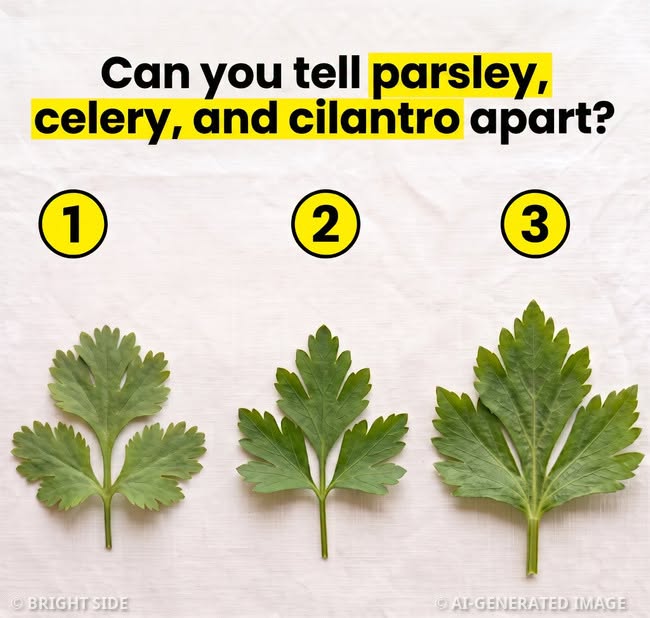
The image above highlights three leaves labeled 1, 2, and 3. Each represents one of these popular culinary greens: cilantro (1) with its soft, rounded lobes; flat-leaf Italian parsley (2) with its pointed, triangular serrations; and celery leaf (3) with its larger, broader, and deeply divided profile. In this guide, we will break down the physical characteristics, visual cues, flavor profiles, and nutritional advantages of each plant, while exploring how culinary health and kitchen safety intersect with broader household planning.
1. Visual Identification: Spotting the Key Differences
While all three herbs look remarkably similar in a grocery bundle, paying close attention to leaf shape, serration, and texture instantly reveals their true identities.
+————————+———————————–+———————————–+
| Leaf Number & Name | Visual Leaf Shape | Flavor Profile |
+————————+———————————–+———————————–+
| 1. Cilantro | Rounded, curved, fan-shaped lobes | Citrusy, peppery, fresh (pungent) |
| 2. Flat-Leaf Parsley | Triangular, sharp, pointed edges | Bright, grassy, slightly bitter |
| 3. Celery Leaf | Large, broad, deeply serrated | Strong, salty, savory celery bite |
+————————+———————————–+———————————–+
1. Cilantro (Coriander Leaves)
Visual Profile: Cilantro leaves feature soft, rounded edges and fan-shaped lobes that curve inward smoothly. The leaves are generally thinner and delicate compared to parsley.
Aroma and Taste: Cilantro possesses a strong, citrusy, and slightly peppery scent. Due to genetic factors involving OR6A2 olfactory receptors, some individuals perceive its taste as soapy.
2. Flat-Leaf Parsley (Italian Parsley)
Visual Profile: Flat-leaf parsley features prominent triangular leaves with sharply pointed, serrated edges. The structure is stiffer and more defined than cilantro.
Aroma and Taste: It offers a clean, fresh, grassy flavor with subtle earthiness and mild bitterness that brightens rich dishes.
3. Celery Leaves
Visual Profile: Celery leaves are noticeably larger, broader, and thicker than both parsley and cilantro. They grow off thick, fibrous stalks and possess deep, distinct serrations along their outer margins.
Aroma and Taste: Celery leaves pack a concentrated, punchy celery flavor with natural mineral saltiness, making them ideal for soups and stocks.
2. Culinary Uses and Preparation Tips
Using the right herb for the right culinary application enhances the overall depth and balance of your meal.
How to Use Each Herb in the Kitchen
Cilantro: Ideal for raw garnishes, salsas, guacamole, curries, tacos, and Southeast Asian noodle dishes. Heat quickly destroys its delicate flavor, so add it right before serving.
Parsley: Exceptional for marinades, chimichurri, tabbouleh, pesto, and roasted vegetable toppings. Parsley holds up better to moderate cooking than cilantro.
Celery Leaves: Fantastic as a flavor base for broths, stews, stuffing, and green salads. Chop them coarsely to add a burst of savory aromatics without throwing away valuable nutrients.
3. Nutrition, Healthy Living, and Household Protection
Integrating fresh herbs into your daily diet delivers powerful antioxidants, essential vitamins, and anti-inflammatory compounds. Cooking with fresh ingredients is a simple yet effective strategy for supporting long-term wellness and reducing reliance on processed foods.
Nutrition and Long-Term Household Security
Maintaining vibrant health through wholesome nutrition works hand in hand with proactive lifestyle planning. Just as proper diet protects bodily health, comprehensive financial and legal safeguards protect your family’s future.
Protecting your loved ones involves securing a comprehensive Health plan that covers preventative care and Medical consultations. Securing home assets through property Insurance and ensuring continuity with life insurance offers total peace of mind against unexpected emergencies.
On the financial front, building a stable home life often involves managing long-term assets wisely—whether securing a residential Mortgage, evaluating a consolidation Loan, or responsibly leveraging Credit lines. Wise wealth management and strategic Investment decisions pave the way for a comfortable Retirement and ensure funding for higher Education opportunities for your children.
When scaling a family Business or navigating complex property contracts, relying on professional Legal Services and the counsel of an experienced Attorney ensures that every asset remains protected under statutory regulations.
4. Kitchen Hacks: Storing Fresh Herbs for Maximum Shelf Life
Fresh herbs spoil quickly if left in plastic packaging. Follow these steps to double their freshness:
The Glass Jar Method: Trim the stems of parsley and cilantro, place them upright in a jar filled with an inch of water, and cover the leaves loosely with a plastic bag in the refrigerator.
Damp Paper Towel Wrap: Roll unwashed leaves inside a damp paper towel and store them inside an airtight container or sealable silicone bag.
Freeze in Herb Cubes: Chop leftover herbs, place them into ice cube trays, fill with olive oil or melted butter, and freeze for instant cooking bases later on.
Interesting Facts About Culinary Herbs
Ancient Symbolism: In ancient Greece, parsley was considered sacred and was used to make crowns for winners of the Isthmian Games rather than as a everyday garnish.
The Soap Gene: The preference for or aversion to cilantro is genetic; individuals with specific aldehyde-detecting olfactory genes experience the herb as smelling like soap.
Nutritional Powerhouses: Gram for gram, fresh parsley contains more vitamin C than an orange and is exceptionally rich in vitamin K for bone health.
Conclusion
Distinguishing between cilantro, flat-leaf parsley, and celery leaves comes down to analyzing leaf shape, serration, and aroma. Cilantro features soft rounded lobes (1), flat-leaf parsley displays sharp triangular points (2), and celery leaves show larger, deeply serrated structures (3). Master these visual cues, and you will elevate your culinary precision while making the most of these nutrient-rich greens.
Frequently Asked Questions (FAQ)
Can I substitute flat-leaf parsley for cilantro in a recipe?
While they look similar, their flavor profiles are entirely different. Flat-leaf parsley brings a mild, grassy freshness, while cilantro delivers a bright, citrusy punch. You can swap them in a pinch, but the dish’s final taste profile will change significantly.
Are celery leaves edible and healthy?
Yes! Celery leaves are completely edible and packed with vitamins A, C, and calcium. They contain a more concentrated celery flavor than the stalks themselves.
Why does cilantro taste like soap to some people?
Certain individuals possess a genetic variation in their olfactory receptors (specifically the OR6A2 gene) that makes them highly sensitive to the aldehyde chemicals present in cilantro leaves.
