
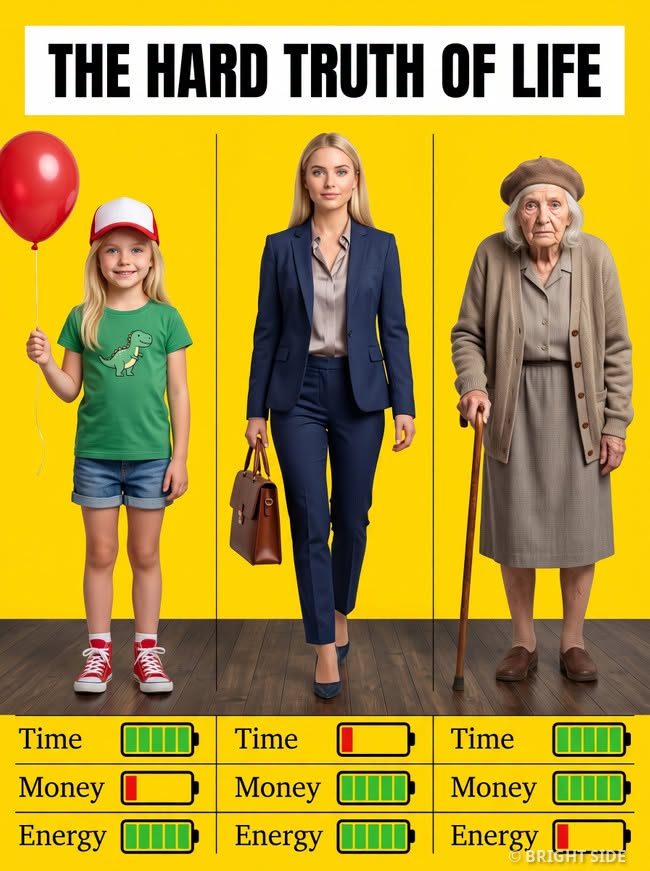
Life across different age stages presents a well-known paradox: at almost no point in our lives do we simultaneously enjoy an abundance of time, financial resources, and physical energy. This visual graphic illustrates “The Hard Truth of Life,” breaking down how these three critical resources shift as we navigate through childhood, working adulthood, and retirement.
Understanding these life cycles helps us make smarter decisions, prioritize personal fulfillment, and optimize long-term health and wealth planning. Below is a breakdown of how time, money, and energy evolve across a typical lifetime, alongside strategies to achieve better balance at every age.
1. Analyzing the Three Life Stages
The classic tripartite model divides human life into three primary operational phases, each defined by distinct resource trade-offs.
+------------------------+-------------------+-------------------+-------------------+
| Life Stage             | Time Level        | Money Level       | Energy Level      |
+------------------------+-------------------+-------------------+-------------------+
| Youth (Childhood)      | Full (High)       | Empty (Low)       | Full (High)       |
| Adulthood (Working)    | Low (Depleted)    | Full (High)       | Full (High)       |
| Seniority (Retirement) | Full (High)       | Full (High)       | Low (Depleted)    |
+------------------------+-------------------+-------------------+-------------------+
Stage 1: Youth (Childhood)
In early life, children and young adults enjoy high levels of Time and Energy. Unburdened by career responsibilities or household expenses, youth allows for endless exploration and activity. However, financial autonomy (Money) remains extremely low or non-existent, leaving young people dependent on family support for resources.
Stage 2: Adulthood (Working Years)
During career-building years, adults generally possess high Energy and earn their highest lifetime levels of Money. However, long work hours, family commitments, and adult responsibilities severely restrict free Time. Managing time efficiently becomes the primary challenge during this active phase.
Stage 3: Seniority (Retirement)
In retirement, individuals regain abundant free Time and, assuming prudent lifelong financial planning, hold accumulated savings and assets (Money). However, physical stamina and bodily vitality (Energy) naturally decline with age, making physical endurance the main constraint.
2. Breaking the Cycle: Strategies to Balance Life’s Resources
While the trade-offs depicted in the chart are natural, proactive habits can help smooth out these extreme imbalances during adulthood and retirement.
-
Reclaim Time in Adulthood: Focus on career efficiency, setting clear work-life boundaries, and automation to free up personal time before retirement.
-
Invest Early for Financial Security: Building passive income streams, managing a home Mortgage, keeping personal Loan obligations low, and building strong Credit early on provides financial freedom much sooner.
-
Preserve Vitality and Health: Prioritize regular exercise, proper nutrition, and comprehensive Health checkups during working years to preserve physical Energy well into senior age.
3. Financial Wellness, Health, and Legal Protection
Achieving long-term peace of mind requires integrating smart financial management with proper health and legal planning.
Securing total household security starts with obtaining proper Insurance coverage—including life, disability, and medical protection. Having access to top-tier Medical care preserves long-term physical well-being.
On the asset side, disciplined Investment planning accelerates wealth building, ensuring a well-funded Retirement and providing funds for higher Education opportunities for children. For those building a commercial Business, seeking professional Legal Services and consulting a qualified Attorney ensures contracts, tax structures, and estate plans are fully protected.
Conclusion
The “Hard Truth of Life” serves as a powerful reminder to cherish the resources you have in your current stage. By managing health early, planning finances wisely, and setting boundaries at work, you can create a more balanced life filled with time, security, and vitality at every age.
Frequently Asked Questions (FAQ)
How can working adults create more free time?
Working adults can create time by delegating non-essential tasks, establishing strict boundaries between professional and personal hours, and focusing on high-impact daily activities.
Why is physical health investment so important during adulthood?
Investing in fitness and proper medical care during your 20s, 30s, and 40s helps maintain high energy levels and mobility into retirement, preventing rapid physical decline later in life.
What is the most effective way to secure financial independence early?
Consistently allocating income into long-term investments, building good credit habits, avoiding high-interest debt, and establishing dedicated retirement accounts early in your career are proven ways to build financial independence.
