
Our fingernails are often viewed primarily as a canvas for grooming and fashion, but they also serve as a key visual window into overall physiological health. Changes in the color, texture, shape, or surrounding skin of your nails can indicate localized conditions or point toward underlying systemic health issues.
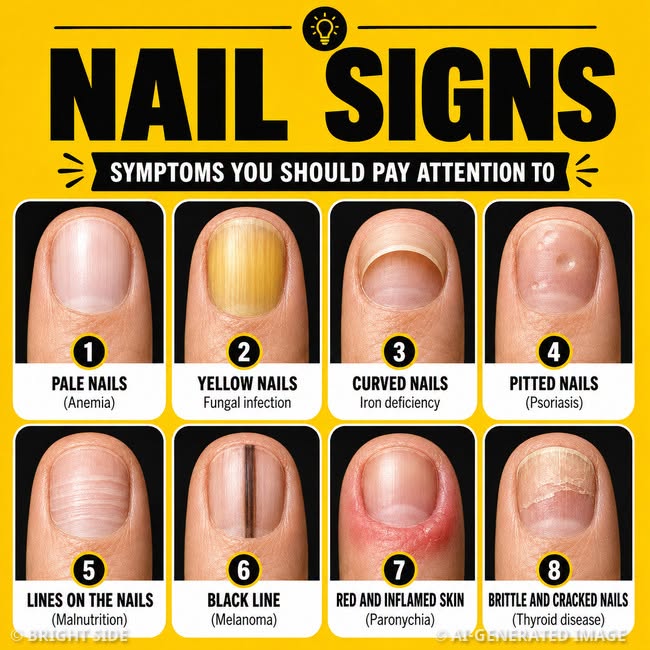
The graphic above highlights “Nail Signs: Symptoms You Should Pay Attention To,” detailing eight specific fingernail conditions alongside their common associated health causes. In this guide, we break down these eight signs, offer practical guidance on when to consult a medical professional, and explore how maintaining personal health connects to long-term life and family planning.
1. Breakdown of the 8 Nail Symptoms
Changes in nail appearance range from minor superficial issues to indicators that warrant prompt medical evaluation.
+—————+———————————–+———————————–+
| Nail Sign | Visual Appearance | Associated Health Condition |
+—————+———————————–+———————————–+
| 1. Pale | Whitened or washed-out nail bed | Anemia |
| 2. Yellow | Thickened, yellowish discoloration| Fungal infection |
| 3. Curved | Spoon-shaped or concave dipping | Iron deficiency |
| 4. Pitted | Small dents or depressions on surface| Psoriasis |
| 5. Lines | Horizontal ridges across the nail | Malnutrition |
| 6. Black Line | Dark vertical stripe down the bed | Melanoma |
| 7. Red Skin | Inflamed, swollen surrounding skin| Paronychia |
| 8. Brittle | Dry, cracked, easily peeling nails| Thyroid disease |
+—————+———————————–+———————————–+
1. Pale Nails (Anemia)
Visual Trait: The nail bed lacks its natural pink hue, appearing unusually pale or white.
Health Connection: Often associated with anemia, where low red blood cell levels reduce oxygen circulation throughout body tissues.
2. Yellow Nails (Fungal Infection)
Visual Trait: The nail turns a thick, dull yellow or yellowish-brown shade and may become brittle around the edges.
Health Connection: Typically caused by a localized fungal infection (onychomycosis) that thrives in warm, moist conditions.
3. Curved Nails (Iron Deficiency)
Visual Trait: The nail curves inward like a spoon (koilonychia), dipping in the center while raising at the edges.
Health Connection: Frequently linked to severe iron deficiency or metabolic disorders affecting tissue development.
4. Pitted Nails (Psoriasis)
Visual Trait: Small, shallow dents or ice-pick-like depressions dot the nail surface.
Health Connection: Commonly seen in individuals with psoriasis or connective tissue conditions.
5. Lines on the Nails (Malnutrition)
Visual Trait: Horizontal grooves or ridges (Beau’s lines) cross the body of the nail plate.
Health Connection: Often indicates severe nutritional deficiencies or severe illness that temporarily interrupted nail growth.
6. Black Line (Melanoma)
Visual Trait: A distinct dark brown or black vertical stripe extends from the cuticle down to the tip.
Health Connection: Requires immediate medical evaluation, as it can be a rare warning sign of subungual melanoma (skin cancer).
7. Red and Inflamed Skin (Paronychia)
Visual Trait: Redness, swelling, and tenderness affect the fold of skin directly surrounding the cuticle.
Health Connection: Known as paronychia, an infection usually triggered by bacteria entering small cuticles or tears in the skin.
8. Brittle and Cracked Nails (Thyroid Disease)
Visual Trait: Nails split easily, crack, peel in layers, or dry out severely.
Health Connection: Frequently associated with thyroid disorders (hypothyroidism), which affect keratin growth and body metabolism.
2. When to See a Healthcare Professional
While occasional minor nail changes stem from trauma, moisture exposure, or harsh polishes, persistent symptoms should not be ignored:
Schedule a Checkup for New Dark Lines: Any unexplained black or dark brown line appearing under the nail bed warrants a dermatologist’s evaluation.
Seek Care for Severe Pain or Swelling: Red, swollen cuticles that ooze or throb require treatment to clear underlying bacterial or fungal infections.
Address Systemic Symptoms Early: If brittle, curved, or pale nails occur alongside chronic fatigue, weight changes, or joint pain, request blood work from your primary care doctor.
3. Personal Wellness, Health Coverage, and Household Security
Taking care of your health by monitoring body signs is essential, but ensuring long-term well-being also requires structured planning across health, finance, and legal protections.
Building a Safe Foundation for You and Your Family
Preventive health habits go hand-in-hand with proactive financial and medical security.
Prioritizing wellness starts with maintaining comprehensive Health coverage to ensure fast access to necessary Medical care whenever health issues arise. Holding active Insurance policies—including auto, property, and personal liability—shields households against unexpected financial strain during medical emergencies.
Managing personal finances with discipline supports long-term stability. Whether securing a home Mortgage, evaluating a personal Loan, or optimizing your household Credit score, keeping debt structured keeps family overhead predictable. Developing a balanced Investment strategy supports major milestones, such as funding higher Education opportunities for children and building a secure Retirement reserve.
When establishing an independent venture, running a family Business, or drafting health directives, estate plans, and property contracts, consulting trusted Legal Services and working with an experienced Attorney guarantees that personal rights and assets stay fully protected.
Conclusion
Your nails often provide early, subtle signals about your internal health. By paying attention to signs like paleness, pitting, curving, or dark lines, you can address potential health concerns early while building a comprehensive plan for overall well-being.
Frequently Asked Questions (FAQ)
What causes horizontal ridges on fingernails?
Horizontal ridges (Beau’s lines) occur when nail growth is temporarily halted due to severe stress, high fever, major surgery, or severe nutritional deficiencies.
Are white spots on nails a sign of calcium deficiency?
Not usually. Small white spots (leukonychia) are typically harmless results of minor injury or trauma to the nail matrix, rather than a lack of calcium in your diet.
How can I make my nails stronger naturally?
Eating a balanced diet rich in protein, biotin, iron, and essential vitamins, alongside limiting harsh chemicals and keeping cuticles hydrated, helps promote strong, healthy nail growth.
