
FACEBOOK POST:
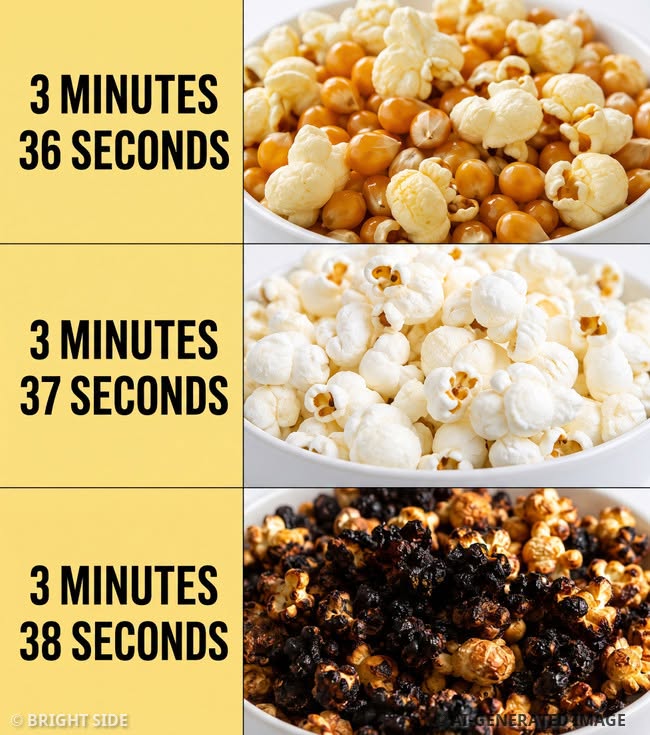
Why does microwave popcorn go from unpopped to completely burnt in one single second? 🍿🔥 Drop your popcorn struggles in the comments! 👇
ARTICLE:
The Science of Microwave Popcorn: Why Timing Is Everything
Anyone who has ever made microwave popcorn knows the delicate, high-stakes game of timing. Leaving the bag in for just a fraction of a second too short leaves you with a bowl full of hard, unpopped kernels. But leave it in for just one second too long, and you are left with a charred, smoky mess that ruins snack night.
As humorously depicted in the graphic above—showing the dramatic shift from unpopped kernels at 3 minutes 36 seconds, to perfection at 3 minutes 37 seconds, to burnt black at 3 minutes 38 seconds—the window for perfect popcorn is shockingly narrow.
Why Is the Popcorn Window So Small?
The dramatic jump from perfectly fluffy to burnt comes down to basic physics, moisture content, and how microwaves heat food.
1. The Physics of the “Pop”
Inside every popcorn kernel is a tiny drop of water surrounded by hard starch and a tough outer shell (hull). As the microwave heats the kernel:
-
The water turns to high-pressure steam.
-
The starch melts into a superheated, jelly-like state.
-
When the pressure becomes too great, the hull ruptures, causing the starch to expand rapidly and instantly cool into a fluffy white foam.
2. Rapid Heat Transfer
Once the majority of kernels have popped, there is very little moisture left in the bag to absorb the microwave’s radiation. Without water to evaporate and absorb energy, the remaining heat instantly absorbs directly into the delicate, dry carbon structures of the popped corn, causing it to scorch within seconds.
Practical Tips for Perfect Microwave Popcorn Every Time
To avoid burning your popcorn or leaving half the bag unpopped, follow these simple guidelines:
-
Listen to the Pops, Don’t Rely on the Timer: Microwave wattages vary widely. Stop the microwave when the popping slows down to 2 to 3 seconds between pops, regardless of the time remaining on the display.
-
Never Use the “Popcorn” Button: Most built-in popcorn preset buttons rely on fixed timers rather than humidity sensors, making them notoriously unreliable.
-
Elevate the Bag: Placing an inverted microwave-safe bowl under the bag ensures even rotation and prevents cold spots.
Conclusion
Making perfect popcorn is less about following a rigid timer and more about staying attentive during the final seconds. By listening closely to the popping rate rather than relying strictly on the clock, you can enjoy fluffy, golden popcorn every time without filling your kitchen with smoke.
