
Tennis demands rapid lateral movements, explosive serves, and constant directional changes. Whether you are playing a competitive match or practicing your serve, prioritizing flexibility and hip mobility reduces the risk of muscle strain and enhances on-court agility.
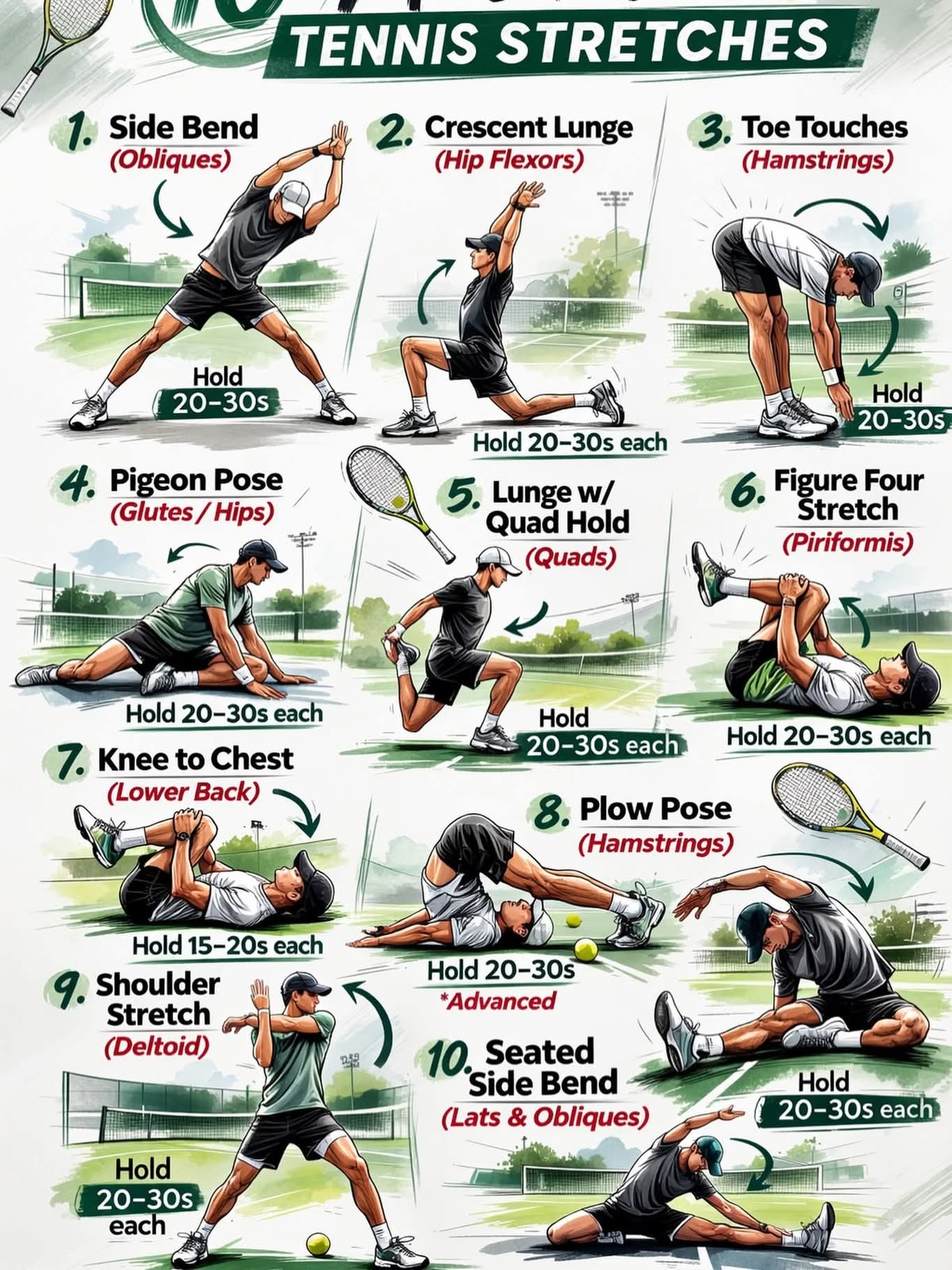
The visual guide above breaks down ten targeted stretches designed specifically for tennis players. Below is a detailed overview of each stretch, the targeted muscle groups, and ideal hold times.
1. Lower Body & Hip Mobility Stretches
The lower body absorbs the majority of impact during quick court sprints and split-steps. Targeting the hips, glutes, and hamstrings helps prevent common injuries like hamstring pulls and lower back tightness.
+--------------------------+-----------------------+------------------+
| Stretch Name             | Target Muscle Group   | Hold Duration    |
+--------------------------+-----------------------+------------------+
| Crescent Lunge           | Hip Flexors           | 20–30s each      |
| Toe Touches              | Hamstrings            | 20–30s           |
| Pigeon Pose              | Glutes / Hips         | 20–30s each      |
| Lunge w/ Quad Hold       | Quads                 | 20–30s each      |
| Figure Four Stretch      | Piriformis            | 20–30s each      |
| Plow Pose (*Advanced)    | Hamstrings            | 20–30s           |
+--------------------------+-----------------------+------------------+
Key Lower Body Movements
-
Crescent Lunge: Opens up tight hip flexors caused by frequent crouching and low athletic stances.
-
Toe Touches & Plow Pose: Lengthens the hamstrings to support smooth forward strides and bending for low balls.
-
Pigeon Pose & Figure Four: Relieves tension in the glutes and piriformis, improving rotational hip power for groundstrokes.
-
Lunge w/ Quad Hold: Targets quadriceps tightness to maintain power in leg drives during serves and overheads.
2. Core, Back, and Upper Body Stretches
Upper body and trunk mobility are vital for generating racquet head speed and recovering smoothly after powerful rotational swings.
+--------------------------+-----------------------+------------------+
| Stretch Name             | Target Muscle Group   | Hold Duration    |
+--------------------------+-----------------------+------------------+
| Side Bend                | Obliques              | 20–30s           |
| Knee to Chest            | Lower Back            | 15–20s each      |
| Shoulder Stretch         | Deltoid               | 20–30s each      |
| Seated Side Bend         | Lats & Obliques       | 20–30s each      |
+--------------------------+-----------------------+------------------+
Key Upper Body & Core Movements
-
Side Bends (Standing & Seated): Stretches the obliques and lats to expand lateral range of motion for reaching wide shots.
-
Knee to Chest: Relieves tension in the lower back after repeated hyperextension during serves.
-
Shoulder Stretch: Lengthens the deltoids to protect the shoulder joint from wear and tear caused by repeated serve motions.
Frequently Asked Questions (FAQ)
Should these stretches be done before or after a tennis match?
Dynamic variations of these stretches are best done as a warm-up before playing to activate muscles, while static holds (holding for 20–30 seconds) are most effective post-match for cooling down and increasing long-term flexibility.
Why is hip flexibility so important for tennis players?
Tight hips restrict lateral movement and limit rotational power during forehands and backhands, placing additional strain on the lower back and knees.
How often should tennis players stretch?
Incorporating a 10-to-15-minute stretching routine after every practice session or match helps maintain optimal muscle length, reduces soreness, and speeds up recovery.
