
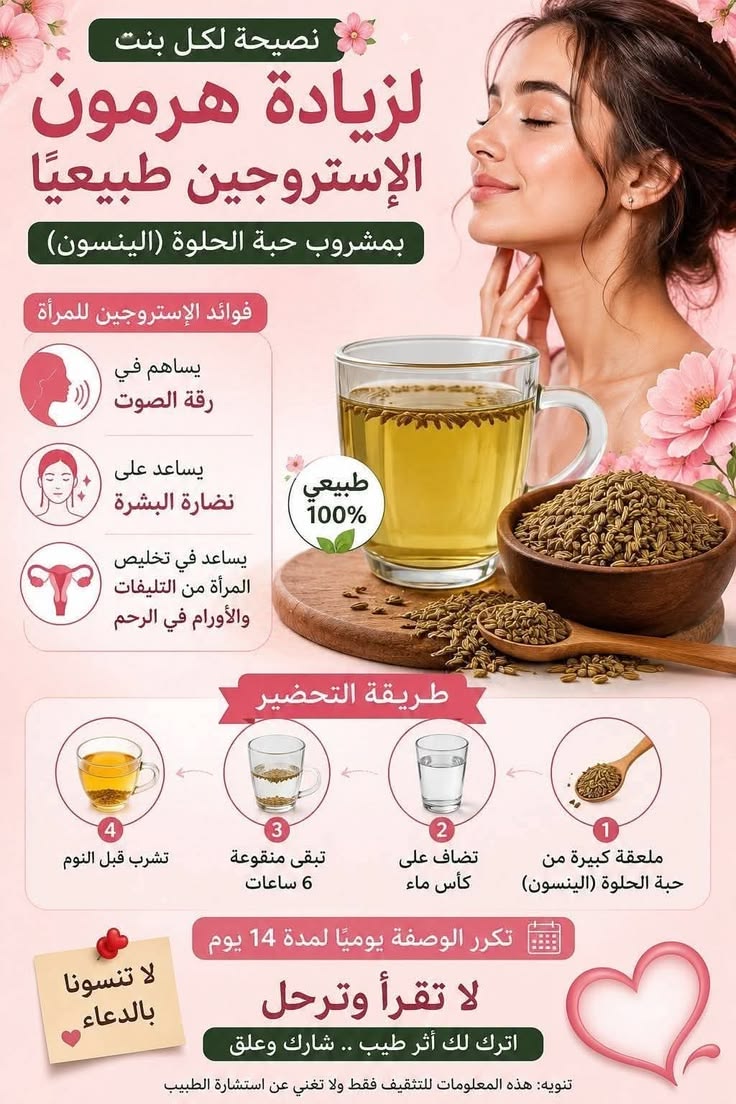
Social media infographics frequently market herbal infusions like anise tea (أنيسون / حبة الحلوة) as “natural remedies” to boost estrogen, enhance feminine physical traits, or treat complex reproductive conditions. While anise contains mild phytoestrogens and offers general digestive and anti-inflammatory perks, extreme medical claims require a grounded, evidence-based perspective.
The graphic above presents an anise tea recipe claimed to naturally raise estrogen and treat uterine fibroids. Below is a translation and science-based analysis of these claims and how anise fits into women’s wellness.
Claim Breakdown & Medical Reality Check
+-----------------------------------+-----------------------------------+---------------------------------------+
| Claimed Benefit in Image          | Image Translation                 | Scientific & Medical Reality          |
+-----------------------------------+-----------------------------------+---------------------------------------+
| Softens/refines vocal tone        | يساهم في رقة الصوت                | No evidence; vocal cords aren't altered|
| Enhances skin radiance            | يساعد على نضارة البشرة            | Mild antioxidants; hydration benefits  |
| Treats uterine fibroids/tumors    | للتخلص من التليفات والأورام      | FALSE; cannot cure or shrink fibroids |
| Steep 1 tbsp in water for 6 hours | طريقة التحضير                     | Standard infusion method; safe drink   |
+-----------------------------------+-----------------------------------+---------------------------------------+
1. Phytoestrogens and Estrogen Levels
-
Weak Estrogenic Activity: Anise contains compounds like anethole, which acts as a weak phytoestrogen (plant-based estrogen). While phytoestrogens can weakly mimic estrogen in the body, drinking anise tea does not dramatically raise human estrogen levels or alter physical vocal traits.
-
Skin Hydration: The antioxidants and hydration provided by herbal teas can support overall skin health, but this is due to general fluid intake and plant compounds rather than direct hormonal shifts.
Fact Check: Can Anise Tea Cure Uterine Fibroids or Tumors?
-
Critical Misinformation Alert: The claim that anise tea can eliminate uterine fibroids, cysts, or tumors (التليفات والأورام في الرحم) is medically incorrect and unsafe.
-
Understanding Uterine Fibroids: Fibroids are benign muscular tumors that grow in or around the uterus. Their growth is driven by genetic factors and endogenous hormones (estrogen and progesterone). No herbal tea can dissolve or “cure” uterine growths.
-
Why Phytoestrogens Require Caution: Women with hormone-sensitive conditions—such as uterine fibroids, endometriosis, or estrogen-receptor-positive cancers—should actually exercise caution with high doses of phytoestrogens, as excessive intake could theoretically stimulate hormone-sensitive tissues.
Preparation and Safe Usage
-
Standard Preparation: As shown in the graphic, steeping anise seeds in water creates a soothing, warm beverage that can help ease digestive gas, bloating, and mild menstrual cramps.
-
Consult a Healthcare Professional: Persistent hormonal imbalances, irregular periods, or diagnosed uterine fibroids require medical evaluation and guidance from a qualified gynecologist.
Frequently Asked Questions (FAQ)
Is anise tea safe to drink every day?
Yes, enjoying 1–2 cups of anise tea daily is generally safe for healthy individuals. However, concentrated extracts or excessive daily consumption should be avoided without medical supervision.
Can herbal teas regulate menstrual cycles?
While some herbs provide mild antispasmodic effects that ease cramps, they do not correct underlying endocrine or structural issues causing irregular cycles.
