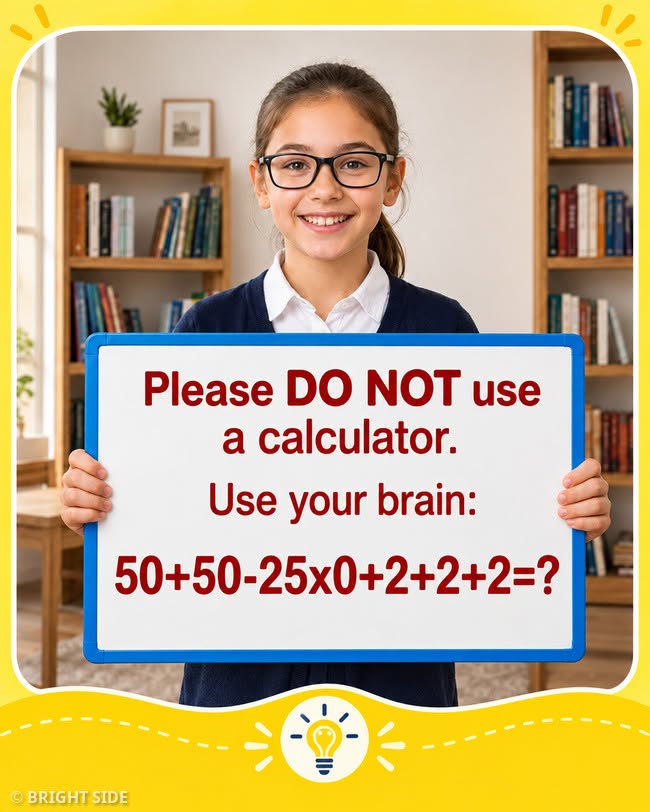
Mathematical brain teasers and order-of-operations riddles regularly flood social media feeds, generating thousands of comments, fierce debates, and divided answers. Equations that look deceptively simple often trap unwary adults because they exploit common misconceptions regarding basic arithmetic rules. This comprehensive guide explores the psychology behind math viral posts, the history and importance of the order of operations, and practical strategies to sharpen your mental math skills.The Psychology Behind Viral Math DebatesWhy do simple arithmetic expressions spark intense online arguments? When viewers scroll through their feeds and spot a math equation, they often perform a quick mental calculation in seconds without second-guessing their approach. Because people rely on cognitive shortcuts, they frequently forget standardized mathematical conventions.When users realize that hundreds of others have arrived at a different answer, a competitive urge takes over. People rush to the comments to prove their intelligence or point out everyone else’s mistakes. This creates an exponential loop of engagement, driving massive reach for puzzle content across platforms like Facebook and Instagram.Understanding the Order of OperationsMathematics is a universal language governed by strict structural rules to ensure that any given expression yields one definitive, unambiguous answer. Without standardized rules, two people evaluating the same equation could arrive at completely different results.The PEMDAS / BODMAS FrameworkTo prevent confusion, mathematicians established a universal hierarchy known by acronyms such as PEMDAS (Parentheses, Exponents, Multiplication and Division, Addition and Subtraction) or BODMAS (Brackets, Orders, Division and Multiplication, Addition and Subtraction).Parentheses or Brackets: Always evaluate operations enclosed within grouping symbols first.Exponents or Orders: Calculate powers and roots next.Multiplication and Division: Perform multiplication and division from left to right as they appear in the expression.Addition and Subtraction: Finally, execute addition and subtraction from left to right.Step-by-Step Breakdown: Solving the PuzzleLet us apply the formal order of operations to the expression shown in our image:$$50 + 50 – 25 \times 0 + 2 + 2 + 2 = ?$$Step 1: Identify Multiplication and Division: Following the order of operations, we must look for multiplication or division terms before handling addition or subtraction. Here, we spot the term $-25 \times 0$.Step 2: Calculate the Product: Multiplying $25$ by $0$ yields $0$. The expression now simplifies to:$$50 + 50 – 0 + 2 + 2 + 2$$Step 3: Perform Addition and Subtraction Left to Right: Now, execute the remaining operations sequentially from left to right:$50 + 50 = 100$$100 – 0 = 100$$100 + 2 = 102$$102 + 2 = 104$$104 + 2 = 106$Final Verdict: The correct answer is $106$.Practical Tips to Improve Mental Math and Analytical AccuracyMaintaining sharp mathematical and analytical skills requires regular practice and deliberate attention to detail.Slow Down and Read Carefully: Never rush through a math problem. Take a moment to scan the entire expression before starting your calculations.Isolate Operations: Use scrap paper to underline or circle multiplication and division components so you do not accidentally blend them into early addition steps.Brush Up on Fundamentals: Periodically review foundational math rules to keep your cognitive pathways robust and responsive.Embrace Puzzles as Brain Fitness: Treat everyday logic challenges as mental workouts that enhance your overall problem-solving speed and working memory.Interesting Facts About Mathematical ConventionsThe rules governing mathematics have a rich history that evolved over centuries to eliminate ambiguity in commerce, engineering, and science.Historical Evolution: Ancient mathematicians did not always use standardized operator precedence. As algebraic notation developed during the 16th and 17th centuries, mathematicians gradually agreed upon the modern order of operations to keep complex equations readable.The Role of Zero: The number zero, which plays a critical role in neutralizing multiplication terms in viral puzzles, has a fascinating history originating in ancient India and Babylon before becoming a cornerstone of global mathematics.Internet Phenomena: Visual math riddles leverage human psychological blind spots—specifically our tendency to read text from left to right without accounting for operator hierarchy—making them viral staples of modern digital culture.ConclusionMath puzzles are much more than a playful way to pass the time; they are a fantastic reminder of why fundamental rules matter. By respecting the order of operations and slowing down to evaluate each term systematically, you can avoid common traps and master any numerical challenge thrown your way. Keep practicing your mental math, stay curious, and enjoy the satisfaction of cracking the code!Frequently Asked QuestionsWhy do so many people get this math problem wrong?Most people make the mistake of reading the equation strictly from left to right, failing to prioritize multiplication over addition and subtraction, or they accidentally mishandle the multiplication by zero.Does multiplication always come before addition?Yes. According to the standard order of operations (PEMDAS/BODMAS), multiplication and division must always be calculated before moving on to addition and subtraction.How can I help children grasp the order of operations?Using acronyms like PEMDAS alongside visual color-coding for different operators helps students separate steps logically and builds long-term mathematical confidence.
The Ultimate Guide to Order of Operations: Why Basic Math Puzzles Trip Up Millions Online