
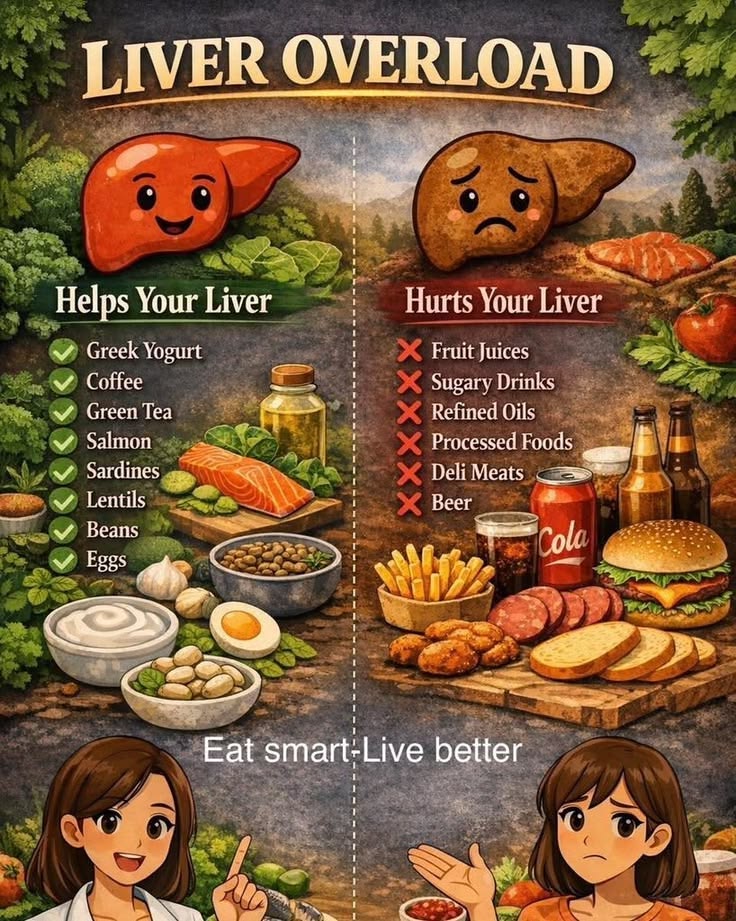
Social media infographics frequently divide foods into strict “good” vs. “bad” categories for organ health. While the liver is a remarkably resilient organ capable of self-regeneration and natural detoxification, long-term dietary habits directly influence your risk of fatty liver disease, inflammation, and metabolic strain.
The image above outlines a comparison between nutrient-dense whole foods and processed options. Below is a detailed nutritional and medical breakdown of how these foods affect liver function.
Food & Liver Impact Breakdown
+-------------------+---------------------------------------+---------------------------------------+
| Category          | Food Items Listed                     | Physiological & Medical Impact        |
+-------------------+---------------------------------------+---------------------------------------+
| Helps Your Liver  | Greek Yogurt, Coffee, Green Tea,      | Provides antioxidants, polyphenols,   |
|                   | Salmon, Sardines, Lentils, Beans, Eggs| omega-3s & high-quality lean protein  |
+-------------------+---------------------------------------+---------------------------------------+
| Hurts Your Liver  | Fruit Juices, Sugary Drinks, Refined  | Increases fructose overload, visceral |
|                   | Oils, Processed Foods, Deli Meats,    | fat deposition, inflammation & hepatic|
|                   | Beer                                  | steatosis (fatty liver risk)          |
+-------------------+---------------------------------------+---------------------------------------+
Foods That Support the Liver
-
Coffee & Green Tea: Coffee is one of the most well-studied beverages for liver health; daily consumption is linked to lower liver enzyme levels, reduced risk of liver fibrosis, and protection against cirrhosis. Green tea provides EGCG (epigallocatechin gallate), a powerful antioxidant that helps reduce oxidative stress.
-
Fatty Fish (Salmon & Sardines): Rich in omega-3 fatty acids, these fish help lower liver fat accumulation, reduce systemic inflammation, and support healthy cholesterol levels.
-
Legumes & Eggs (Lentils & Beans): High in fiber and essential amino acids like choline (found abundantly in egg yolks), which is critical for proper lipid metabolism and preventing fat buildup in liver cells.
-
Greek Yogurt: High in protein and probiotics that support gut-barrier function, reducing the translocated inflammatory signals that reach the liver via the gut-liver axis.
Foods That Strain the Liver
-
Sugary Drinks & Fruit Juices: Highly concentrated liquid sugars—especially fructose—are processed almost entirely by the liver. Excess fructose rapidly converts into triglycerides, driving non-alcoholic fatty liver disease (NAFLD/MASLD).
-
Beer & Alcohol: Alcohol is metabolized into acetaldehyde, a toxic compound that induces cellular damage, fat accumulation, and eventual scarring (fibrosis/cirrhosis) when consumed excessively.
-
Processed Foods & Ultra-Processed Deli Meats: High concentrations of saturated fats, sodium, and preservatives contribute to chronic inflammation, insulin resistance, and metabolic overload.
Fact Check: Context Matters Most
-
Is All Fruit Juice Bad? While 100% fruit juice contains vitamins, it lacks whole-fruit fiber, leading to rapid fructose spikes in the liver. Whole fruit is always preferred over juice.
-
Balanced Whole-Food Approach: No single food instantly ruins or cures liver function. Metabolic health depends on overall diet quality, calorie balance, regular physical activity, and limiting alcohol intake over time.
Frequently Asked Questions (FAQ)
How does coffee protect the liver?
Coffee contains bioactive compounds like chlorogenic acid and caffeine that help decrease fat accumulation in liver tissues, reduce collagen deposition that causes scarring, and boost protective antioxidant pathways.
What is the most effective way to reduce fatty liver naturally?
The most proven intervention for reversing early-stage fatty liver is gradual weight management through a Mediterranean-style diet (rich in vegetables, lean proteins, nuts, and healthy fats) combined with regular cardiovascular exercise.
