
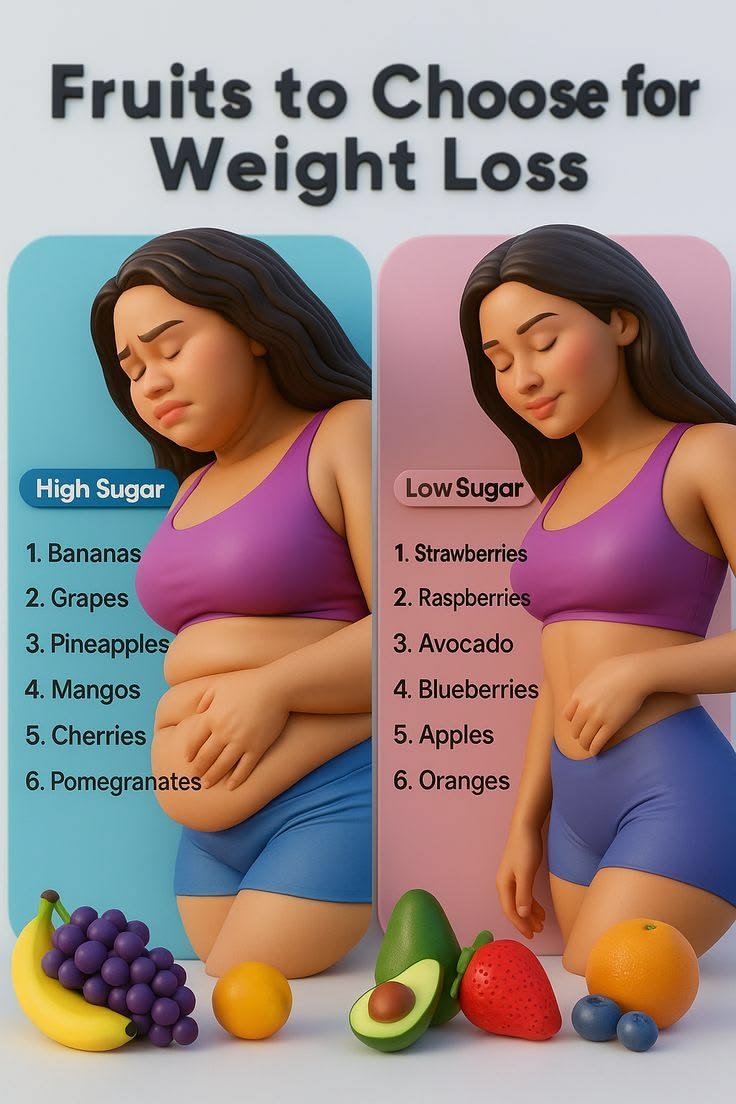
Social media graphics frequently separate fresh fruits into strict “High Sugar” and “Low Sugar” categories, implying that higher-sugar fruits cause weight gain or body fat storage. While different fruits vary in carbohydrate and sugar density, whole fruits contain dietary fiber, essential vitamins, and water that moderate digestion and support metabolic health.
The graphic above contrasts higher-sugar fruits with lower-sugar alternatives for weight management. Below is a detailed breakdown of the listed fruits, their actual nutritional profiles, and a scientific reality check on fruit consumption and weight loss.
Fruit Sugar Breakdown
+-------------------+---------------------------------------+---------------------------------------+
| Category (Image)  | Fruit Items Listed                    | Scientific & Nutritional Reality      |
+-------------------+---------------------------------------+---------------------------------------+
| High Sugar        | Bananas, Grapes, Pineapples, Mangos,  | Higher natural sugar per serving;     |
|                   | Cherries, Pomegranates                | rich in potassium, fiber & antioxidants|
+-------------------+---------------------------------------+---------------------------------------+
| Low Sugar         | Strawberries, Raspberries, Avocado,   | Lower calorie density; high fiber &   |
|                   | Blueberries, Apples, Oranges          | healthy fats (avocado) for satiety    |
+-------------------+---------------------------------------+---------------------------------------+
Understanding Fruit Categories
-
Higher Sugar Density Fruits: Fruits like bananas, mangos, grapes, and cherries contain higher amounts of natural fructose per serving. However, they also supply vital micronutrients—such as potassium, Vitamin C, bromelain (in pineapples), and polyphenols (in pomegranates)—alongside natural fiber that slows glucose absorption.
-
Lower Sugar & High Fiber Fruits: Berries (strawberries, raspberries, blueberries) are exceptionally high in dietary fiber and water while remaining low in total sugar and calories, making them high-volume, filling choices for a calorie deficit.
-
Unique Healthy Fats (Avocado): While botanically a fruit, avocados are nearly sugar-free and rich in heart-healthy monounsaturated fats and dietary fiber, which promote satiety and long-lasting fullness.
Fact Check: Does Fruit Sugar Cause Weight Gain?
-
Calorie Balance Over Fruit Sugar: Weight loss is driven by a sustained calorie deficit over time, not by avoiding the natural sugar in whole fruit. The sugar in whole fruit comes bound in a cellular matrix of fiber and water, which prevents rapid blood sugar spikes compared to refined sugars or sodas.
-
Nutrient Density vs. Portion Size: No fresh, whole fruit needs to be completely avoided for weight loss. Enjoying higher-sugar fruits in moderate portions fits easily into a healthy, balanced diet.
-
Fiber and Satiety: Fruits high in soluble fiber (like apples, oranges, and berries) expand in the digestive tract, helping you stay full longer and naturally reducing overall calorie intake throughout the day.
Recipe & Serving Suggestions
-
Berry & Greek Yogurt Bowl: Pair 1 cup of fresh mixed berries (strawberries, blueberries, raspberries) with plain Greek yogurt for a high-protein, high-fiber, low-sugar breakfast or snack.
-
Balanced Fruit Smoothie: Blend $\frac{1}{2}$ banana or $\frac{1}{2}$ cup of mango with spinach, unsweetened almond milk, a scoop of protein powder, and a tablespoon of chia seeds to balance natural fruit sugars with healthy fats and protein.
-
Avocado & Citrus Salad: Combine sliced avocado with orange segments and mixed greens, drizzled with lemon juice and olive oil, for a nutrient-dense lunch side.
Frequently Asked Questions (FAQ)
Can eating bananas stop you from losing weight?
No. A medium banana contains around 100 calories and 3 grams of fiber. As long as your overall daily intake remains in a calorie deficit, eating bananas will not prevent weight loss.
Are frozen berries as nutritious as fresh berries?
Yes! Frozen berries are typically flash-frozen at peak ripeness, preserving their fiber, Vitamin C, and antioxidant contents just as effectively as fresh berries.
