
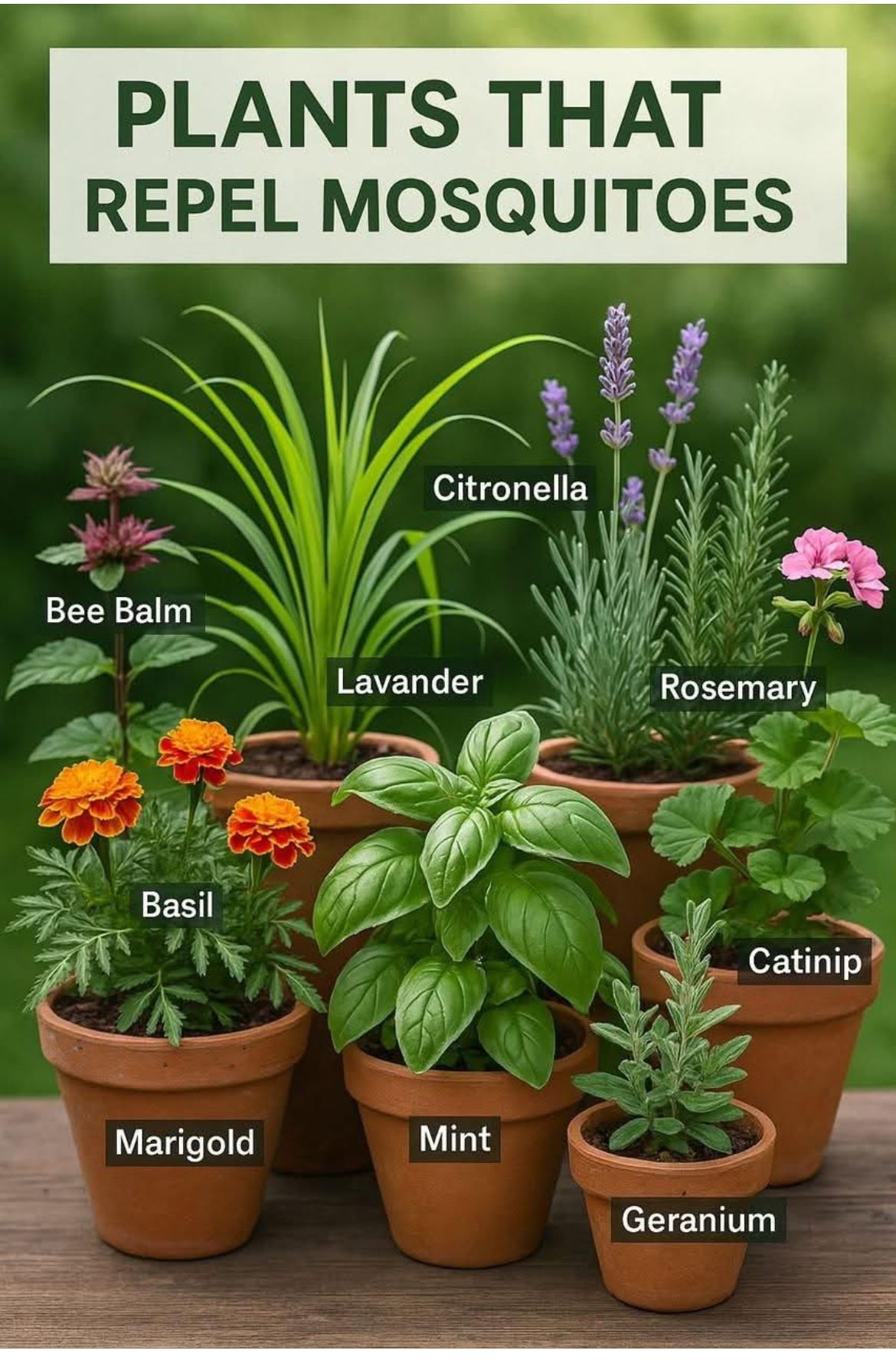
Social media graphics frequently promote potted herbs and flowers as visual “invisibility cloaks” that instantly clear an entire patio of mosquitoes. While many of these plants naturally manufacture essential oils with potent insect-repellent properties, the physical presence of a potted plant in your garden produces only a mild localized effect compared to concentrated plant extracts.
The infographic above presents a collection of common garden herbs and flowers advertised as natural mosquito deterrents. Below is a detailed breakdown of these plants, how they actually work, and the science of natural pest management.
Plant & Repellent Breakdown
+-------------------+---------------------------------------+---------------------------------------+
| Plant Name        | Key Active Compounds                  | Mechanism of Action & Efficiency      |
+-------------------+---------------------------------------+---------------------------------------+
| Citronella        | Citronellal & Citronellol             | Masks carbon dioxide scents when crushed|
| Lavender          | Linalool & Camphor                    | Strong aromatic oil deters mosquitoes |
| Basil             | Eugenol & Estragole                   | Essential oils possess larvicidal properties|
| Rosemary          | Eucalyptol & Camphor                  | Woody aroma masks human scent markers |
| Marigold          | Pyrethrum & Limonene                  | Contains compounds used in insecticides|
| Catnip            | Nepetalactone                         | Highly effective repelling compound   |
| Mint              | Menthol & Menthone                    | Strong scent disrupts insect sensing  |
| Bee Balm          | Thymol & Carvacrol                    | Attracts pollinators while masking scent|
| Geranium          | Geraniol                              | Common ingredient in botanical sprays  |
+-------------------+---------------------------------------+---------------------------------------+
The Real Botanical Science
-
Oil Extraction Matters: Mosquitoes locate human targets by detecting carbon dioxide ($CO_2$), body heat, and lactic acid. The active repellent compounds inside plants (like citronellal, nepetalactone, and linalool) are locked within their leaves. To release enough aromatic compounds to deter insects, the leaves usually need to be crushed or bruised to release their essential oils.
-
Typos & Mislabeled Visuals in the Graphic: The image contains clear text typos and mismatched labels—spelling “Lavander” and “Catinip”, while incorrectly placing the “Geranium” label on a small sage-like plant and the “Catinip” label near a flowering geranium.
-
Nepetalactone Power: Catnip contains nepetalactone, an essential oil compound found in studies to be remarkably effective at deterring mosquitoes when extracted into concentrated forms.
Fact Check: Can Plants Alone Keep Mosquitoes Away?
-
Passive Growing vs. Active Crush: Simply sitting next to an undisturbed potted plant offers minimal protection because the volatile oils remain inside the plant tissue. Gently crushing a fresh leaf and rubbing the fragrant oils onto exposed skin or clothing yields far better localized results.
-
Standing Water Control: The single most effective botanical strategy is prevention. Ensuring potted plants have proper drainage and removing standing water in saucers eliminates primary mosquito breeding grounds.
Gardening & Patio Tips for Maximum Effect
-
Strategic Placement: Plant fragrant herbs like basil, mint, and rosemary near high-traffic patio seating areas or entryways where people gather.
-
Brush & Release: Plant them along walkways where brushing past the leaves naturally agitates the foliage, releasing essential oils into the surrounding air.
-
Potted Herb Garden: Grow mint and lemon balm in pots rather than open garden beds, as their aggressive root systems can quickly spread and overtake other plants.
Frequently Asked Questions (FAQ)
Is citronella grass the same as “citronella geranium”?
No. True citronella grass (Cymbopogon nardus) is a tall tropical grass related to lemongrass, whereas “citronella geranium” (Pelargonium citrosum) is a scented geranium that smells like citronella but produces lower amounts of insect-repelling oils.
Are essential oil bug sprays made from these plants safe for pets?
Caution is necessary. While living plants are generally fine in gardens, highly concentrated essential oils (especially tea tree, mint, and citrus oils) can be toxic to dogs and cats if ingested or absorbed through skin.
