
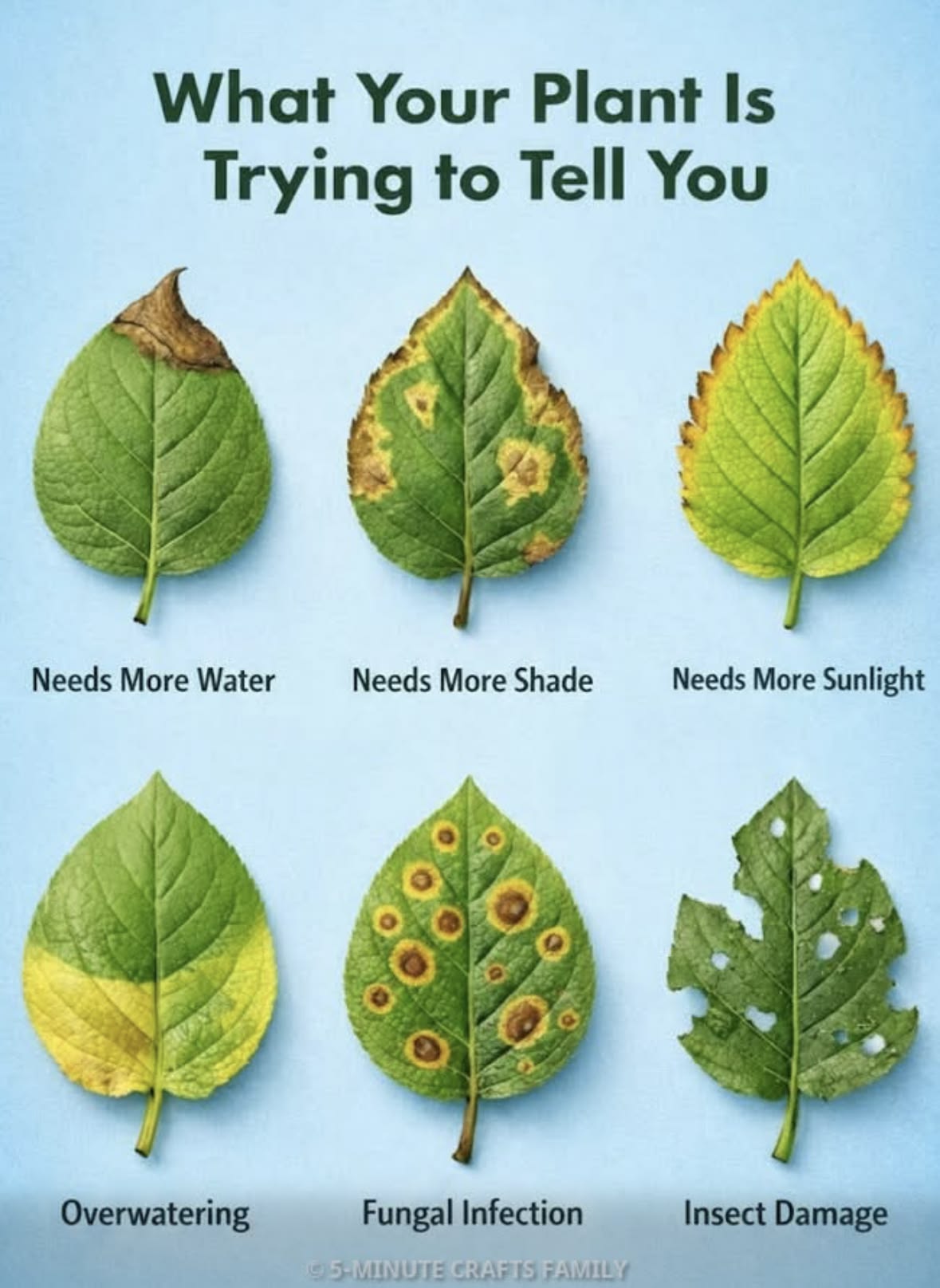
Houseplants and garden crops communicate their stress primarily through visual changes in their leaves. Identifying early warning signs—such as dry crisping, chlorosis (yellowing), or fungal spotting—allows plant owners to adjust watering schedules, lighting conditions, and pest controls before permanent damage occurs.
The visual guide above illustrates six common leaf stress symptoms. Below is a detailed breakdown of each condition, its botanical causes, and practical steps for plant rehabilitation.
Leaf Symptom & Cause Breakdown
+---------------------+---------------------------------------+---------------------------------------+
| Leaf Symptom        | Stated Cause (Image)                  | Underlying Botanical Mechanism        |
+---------------------+---------------------------------------+---------------------------------------+
| Brown Crispy Tip    | Needs More Water                      | Desiccation due to low soil moisture  |
| Irregular Brown Spots| Needs More Shade                      | Sunburn / leaf scorch from UV intensity|
| Yellow Leaf Edges   | Needs More Sunlight                   | Impaired chlorophyll synthesis        |
| Pale Yellow Base    | Overwatering                          | Root hypoxia & anaerobic root rot     |
| Concentric Spotting | Fungal Infection                      | Spore germination (e.g., Leaf Spot)   |
| Chewed Holes        | Insect Damage                         | Mechanical damage by pests/caterpillars|
+---------------------+---------------------------------------+---------------------------------------+
Decoding Specific Leaf Signs
-
Dry, Crispy Brown Tips (Underwatering): When soil moisture levels drop too low, transpiration outpaces root water uptake, causing tissue at the leaf margins and tips to crisp and turn brown.
-
Bleached or Scorched Spots (Sunburn/Excess Light): Direct, intense sunlight can break down plant pigments and scorch delicate leaf tissue, creating irregular dried brown patches where the light was concentrated.
-
Yellow Edges & Pale Chlorosis (Insufficient Light): Without adequate light exposure, plants cannot photosynthesize efficiently, leading to reduced chlorophyll production and pale yellow outer leaf edges.
-
Soft Yellowing & Wilting (Overwatering): Excess moisture saturates soil air pockets, starving roots of oxygen ($O_2$). Damaged roots can no longer absorb nutrients, causing the leaves—often starting at the base—to turn yellow and feel soft or limp.
-
Target-Like Spots (Fungal Issues): High humidity and wet leaf surfaces encourage fungal spores (such as Septoria or Alternaria) to germinate, creating brown spots with halo-like rings.
-
Irregular Holes & Jagged Edges (Pest Damage): Chewed leaf tissue with clean or jagged edges points to chewing insects like caterpillars, beetles, or slugs actively feeding on the foliage.
Fact Check: Symptom Overlap & Nuance
-
Underwatering vs. Overwatering: Overwatering and underwatering can sometimes look surprisingly similar because both result in root dysfunction. Always check soil moisture 2 inches below the surface with your finger before adding water.
-
Nutrient Deficiencies: Yellowing leaves are not always caused by lighting issues alone. A lack of essential macronutrients like nitrogen ($N$), potassium ($K$), or magnesium ($Mg$) can also cause distinct yellowing patterns across older or newer growth.
Step-by-Step Action Plan for Sick Plants
-
Check the Soil First: Insert a finger or moisture meter into the soil. If bone dry, give the plant a thorough soak; if soggy, hold off on watering and ensure drainage holes are clear.
-
Adjust Lighting Gradually: Move sunburned plants a few feet back from direct sun, or relocate pale plants closer to bright, indirect light sources. Avoid sudden, extreme light changes to prevent shock.
-
Prune Damaged Leaves: Trim away dead, heavily infected, or crispy foliage using clean, disinfected shears to prevent disease spread and direct energy toward fresh growth.
-
Inspect for Hidden Pests: Look under leaves and along stems for sap-sucking insects (mealybugs, spider mites, scale) or chewing pests, and treat with neem oil or insecticidal soap if needed.
Frequently Asked Questions (FAQ)
Will yellow or brown leaves turn green again?
No. Once leaf tissue turns brown and dry, that specific portion of the leaf is dead and cannot regenerate green chlorophyll. Pruning dead tips or badly damaged leaves improves plant appearance and health.
How often should I water my indoor plants?
Rather than following a rigid calendar schedule, water based on soil dryness. Most common indoor houseplants prefer the top 1 to 2 inches of soil to dry out completely between waterings.
