
The ginger family (Zingiberaceae) encompasses hundreds of species, ranging from standard culinary rhizomes to aromatic medicinal roots and ornamental flowering plants. While grocery stores typically stock standard brown ginger, regional cuisines across Asia, India, and the Pacific utilize distinct varieties prized for their unique flavor profiles, colors, and essential oils.
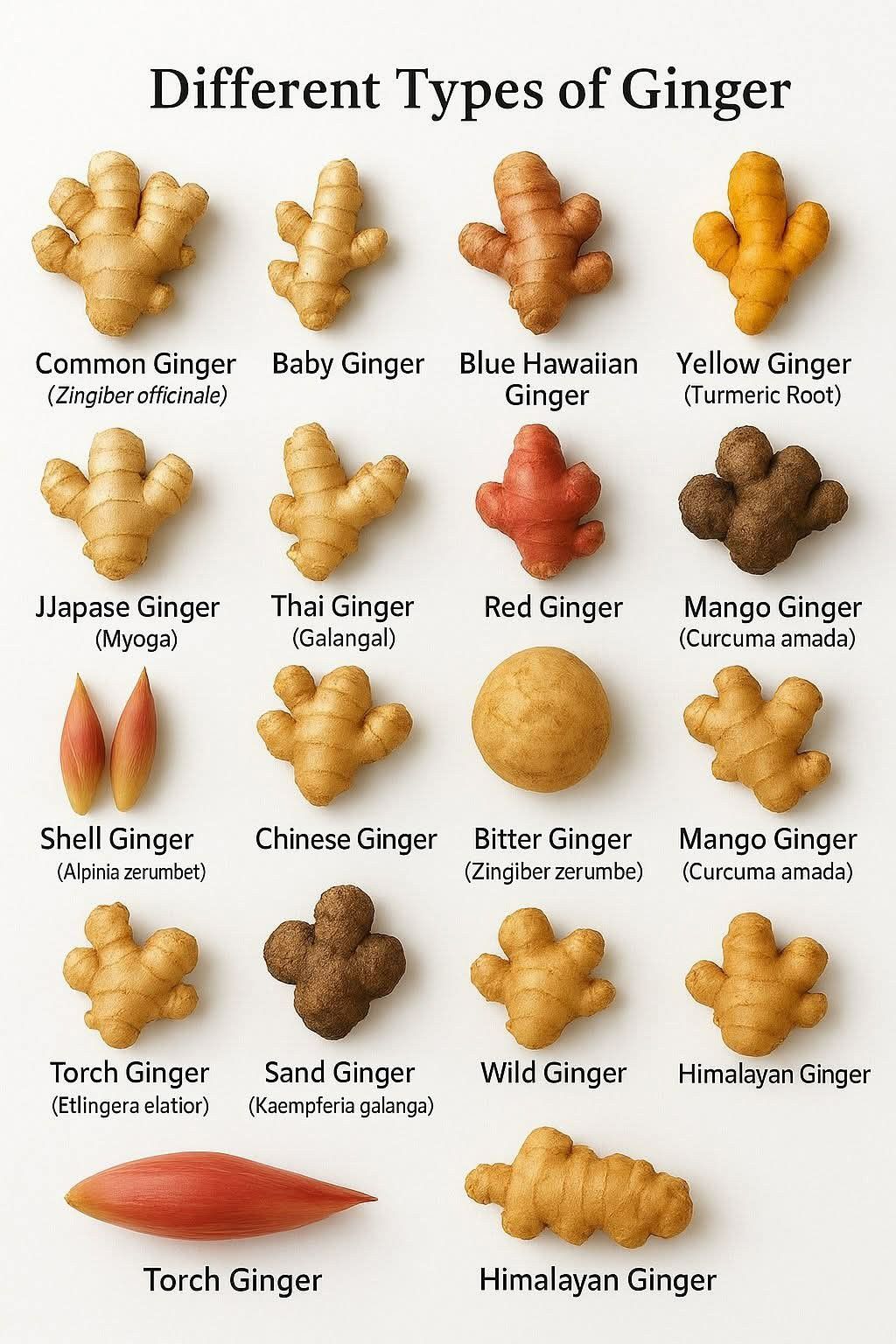
The infographic above illustrates sixteen ginger varieties. Below is a detailed botanical and culinary breakdown of these roots, along with a critical look at the accuracy of the image’s depictions and labeling.
Ginger Variety & Characteristics Breakdown
+-------------------+---------------------------------------+---------------------------------------+
| Variety           | Botanical Name                        | Culinary & Botanical Profile          |
+-------------------+---------------------------------------+---------------------------------------+
| Common Ginger     | Zingiber officinale                   | Pungent, peppery root used globally   |
| Thai Ginger       | Alpinia galanga (Galangal)            | Sharp, citrusy flavor essential to soup|
| Japanese Ginger   | Zingiber mioga (Myoga)                | Mild, crunchy flower buds used raw    |
| Mango Ginger      | Curcuma amada                         | Tastes like green mango; used in pickles|
| Yellow Ginger     | Curcuma longa (Turmeric)              | Earthy, golden-yellow dye & spice     |
| Shell Ginger      | Alpinia zerumbet                      | Fragrant leaves used for tea & wraps  |
| Torch Ginger      | Etlingera elatior                     | Tart, floral flower buds for salads   |
| Sand Ginger       | Kaempferia galanga                    | Aromatic, peppery root used in stews  |
+-------------------+---------------------------------------+---------------------------------------+
Key Culinary & Botanical Highlights
-
Common & Baby Ginger (Zingiber officinale): Standard ginger harvested at full maturity develops a fibrous, tan skin with a sharp, warming bite. “Baby ginger” is simply young Zingiber officinale harvested early—it features pink tips, ultra-thin skin, and no tough fibers, making it ideal for pickling.
-
Galangal & Sand Ginger: Essential in Southeast Asian cooking, Thai Galangal (Alpinia galanga) offers a piney, citrus aroma that does not melt into dishes like standard ginger. Sand Ginger (Kaempferia galanga) brings a warm, camphoraceous flavor to Chinese and Indonesian slow-cooked dishes.
-
Flowering Shoots vs. Rhizomes: Varieties like Myoga (Zingiber mioga) and Torch Ginger (Etlingera elatior) are cultivated primarily for their edible flower buds rather than underground roots, offering crisp textures and tart, floral flavors to fresh salads and soups.
Fact Check: Graphic Anomalies & Mislabeling
-
Repeated & Duplicate Entries: The image duplicates several items with identical or mismatched visuals. “Mango Ginger,” “Torch Ginger,” and “Himalayan Ginger” appear twice in different rows with vastly different AI-generated shapes and colors.
-
Misspellings & Mismatches: The graphic contains clear AI text errors, such as spelling Japanese Ginger as “JJapase Ginger”. Additionally, “Shell Ginger” is illustrated with red flower buds that actually resemble Myoga shoots.
-
Botanical Distinctions: While Turmeric (Curcuma longa) is labeled as “Yellow Ginger” in some regional markets, it belongs to the Curcuma genus and is botanically distinct from true ginger (Zingiber).
Culinary Applications for Cooking
-
Southeast Asian Curries & Soups: Use sliced Galangal (Thai Ginger) in Tom Yum and Tom Kha soups to infuse an authentic herbal, citrus-like aroma.
-
Fresh Pickles & Chutneys: Grate fresh Mango Ginger (Curcuma amada) into salt, oil, and lemon juice to create vibrant Indian-style raw pickles that naturally taste like green mangoes.
-
Garnish & Salads: Thinly slice Myoga or Torch Ginger buds into fine ribbons to top cold noodles, sashimis, or fresh summer salads for a refreshing crunch.
Frequently Asked Questions (FAQ)
Can I substitute standard ginger for galangal in recipes?
While standard ginger provides warmth, it lacks the piney, sharp citrus fragrance of galangal. If galangal is unavailable, a combination of ginger and a dash of fresh lemon zest makes the best substitute.
What causes Blue Hawaiian Ginger to look blue?
Blue Hawaiian ginger (Zingiber purpuratum) contains natural anthocyanin pigments that give the internal flesh a distinct bluish-purple hue when mature, accompanied by a rich, earthy flavor.
