
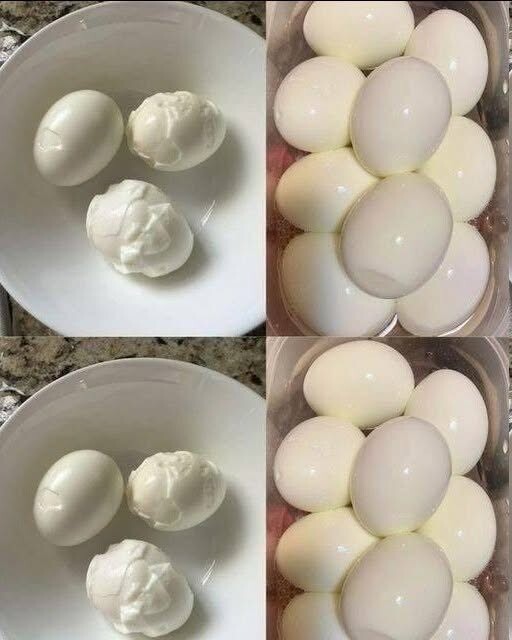
Hard-boiled eggs are a staple of healthy meal prep, salad toppings, and quick protein snacks. Yet, almost everyone has experienced the frustration of peeling an egg only for half the egg white to tear away, leaving behind a pitted, messy mess. While dozens of kitchen tricks exist—from adding baking soda or vinegar to the boiling water to tapping the shells on specific surfaces—achieving effortlessly smooth, whole eggs comes down to culinary science rather than luck.
By understanding how thermal shock affects the egg membrane and using simple physical techniques, you can make hard-boiled egg shells slide off in clean, whole pieces every single time. In this complete cooking guide, we will break down the science behind egg peeling, step-by-step boiling methods, top peeling hacks, and proper storage tips for meal prep success.
The Science of the Egg Shell: Why Peeling Is Hard
To master peeling, it helps to understand what causes the shell to fuse to the egg white in the first place:
-
The Inner and Outer Membranes: Two thin protein membranes sit between the eggshell and the white (albumen). When eggs are heated slowly, these membrane proteins bind tightly to the keratin in the egg white, making them nearly impossible to separate without tearing the meat.
-
Egg Age and pH Levels: Fresh eggs have a lower pH level (more acidic), causing the inner membrane to cling stubbornly to the egg white. As eggs age, they absorb air through micro-pores in the shell, raising the pH level and causing the inner membrane to naturally loosen away from the shell.
Step-by-Step Method for Perfectly Peeled Eggs
Follow this foolproof technique to ensure smooth, flawless hard-boiled eggs every time:
+-------------------------------------------------------------------+
|                        THE GOLDEN RULE                            |
| Always lower eggs into ALREADY BOILING water, then immediately     |
| transfer them to an ICE BATH after cooking!                        |
+-------------------------------------------------------------------+
Step 1: The Boiling Water Drop (Thermal Shock)
Never start eggs in cold water. Lower cold eggs directly into a pot of rapidly boiling water. The sudden temperature jump causes the egg white proteins to contract rapidly, shrinking away from the inner shell membrane.
Step 2: Precise Cooking Times
-
Soft-Boiled (Runny Yolk): 6 to 7 minutes
-
Medium-Boiled (Jammy Yolk): 8 to 9 minutes
-
Hard-Boiled (Firm Yolk): 10 to 12 minutes
Step 3: The Ice Water Bath
Immediately transfer cooked eggs into a bowl filled with cold water and ice cubes for at least 15 minutes. Thermal shock stops the cooking process instantly and causes the egg inside to shrink slightly, creating a gap between the egg white and the membrane.
Top Hacks for Effortless Peeling
If you want to speed up peeling even further, try these popular chef-approved hacks:
| Peeling Hack | How It Works | Effectiveness |
| The Container Shake Hack | Place cooled eggs in a covered container with a splash of water and shake gently | High (Cracks shells all over instantly) |
| The Spoon Method | Slide a teaspoon under the membrane following the egg’s curve | High (Lifts shell cleanly) |
| Peeling Under Water | Peel submersed in the ice bath or under a running faucet | High (Water slips under the membrane) |
| Adding Vinegar/Baking Soda | Softens calcium carbonate shells during boiling | Moderate |
Financial, Health, and Daily Lifestyle Benefits
Mastering simple kitchen hacks elevates daily meal routines while supporting personal health and household efficiency:
-
Efficient Meal Prep: Hard-boiled eggs offer a high-protein, low-cost food source ideal for weight management and metabolic wellness. Maintaining healthy nutrition habits supports long-term physical wellness, reducing out-of-pocket medical expenses and maximizing primary health insurance benefits.
-
Smart Grocery Budgeting: Eggs are one of the most affordable protein sources available per serving. Preventing food waste by cleanly peeling every egg keeps weekly food costs down, leaving extra funds for long-term investment, retirement, or education savings goals.
-
Commercial Kitchen Efficiency: For catering operations, food prep businesses, and restaurants, fast-peeling methods lower labor costs and ensure visually attractive presentation for customers.
Fascinating Facts About Hard-Boiled Eggs
-
The Air Pocket Clue: The larger flat end of an egg contains a natural air cell (air pocket). Cracking this end first makes it easier to get your thumb under the inner membrane!
-
Green Yolk Ring Mystery: The grayish-green ring around overcooked egg yolks is caused by iron in the yolk reacting with hydrogen sulfide in the white when boiled too long or cooled too slowly.
-
Fresh vs. Older Eggs: Older eggs (about 7 to 10 days old) are significantly easier to peel than farm-fresh eggs due to higher internal pH levels.
Conclusion
Say goodbye to torn, pitted egg whites for good! By starting your eggs in boiling water, timing the cook precisely, and plunging them straight into an ice bath, you utilize thermal shock to separate the shell from the membrane effortlessly. Try these simple kitchen hacks during your next meal prep session for picture-perfect hard-boiled eggs every time!
Frequently Asked Questions (FAQ)
Why do some hard-boiled egg shells stick so badly?
Shells stick when eggs are started in cold water instead of boiling water, or when extremely fresh eggs are used. Starting in boiling water creates thermal shock, preventing the membrane from fusing to the white.
Does adding salt or vinegar to boiling water help peeling?
Adding vinegar helps weaken calcium in the shell, while salt raises the water’s boiling point and helps seal minor cracks. However, thermal shock (boiling water drop + ice bath) has a far greater impact on peeling ease.
How long do peeled hard-boiled eggs last in the fridge?
Peeled hard-boiled eggs should be stored in an airtight container or bowl of cold water in the refrigerator and consumed within 5 to 7 days.
Why do my eggs crack when dropped into boiling water?
Dropping cold eggs onto the hard bottom of a pot can crack them. Use a slotted spoon to gently lower eggs into the water one by one.
