
A Transient Ischemic Attack (TIA), commonly referred to as a “mini-stroke,” is a brief episode of neurological dysfunction caused by a temporary disruption of blood flow to the brain. Unlike a major ischemic stroke, the symptoms of a mini-stroke typically resolve within minutes to hours without leaving permanent brain damage.
However, ignoring a TIA is extremely dangerous. Medical professionals treat mini-strokes as urgent medical warnings, as approximately 1 in 3 people who experience a TIA go on to suffer a full stroke within a year. In this comprehensive guide, we cover the five warning symptoms, the vital F.A.S.T. protocol, and key preventive measures to protect vascular health in older adults.
5 Symptoms of a Mini-Stroke in Older Adults
Recognizing these subtle, sudden symptoms early can allow for immediate medical intervention:
1. Sudden Numbness or Weakness (Especially on One Side)
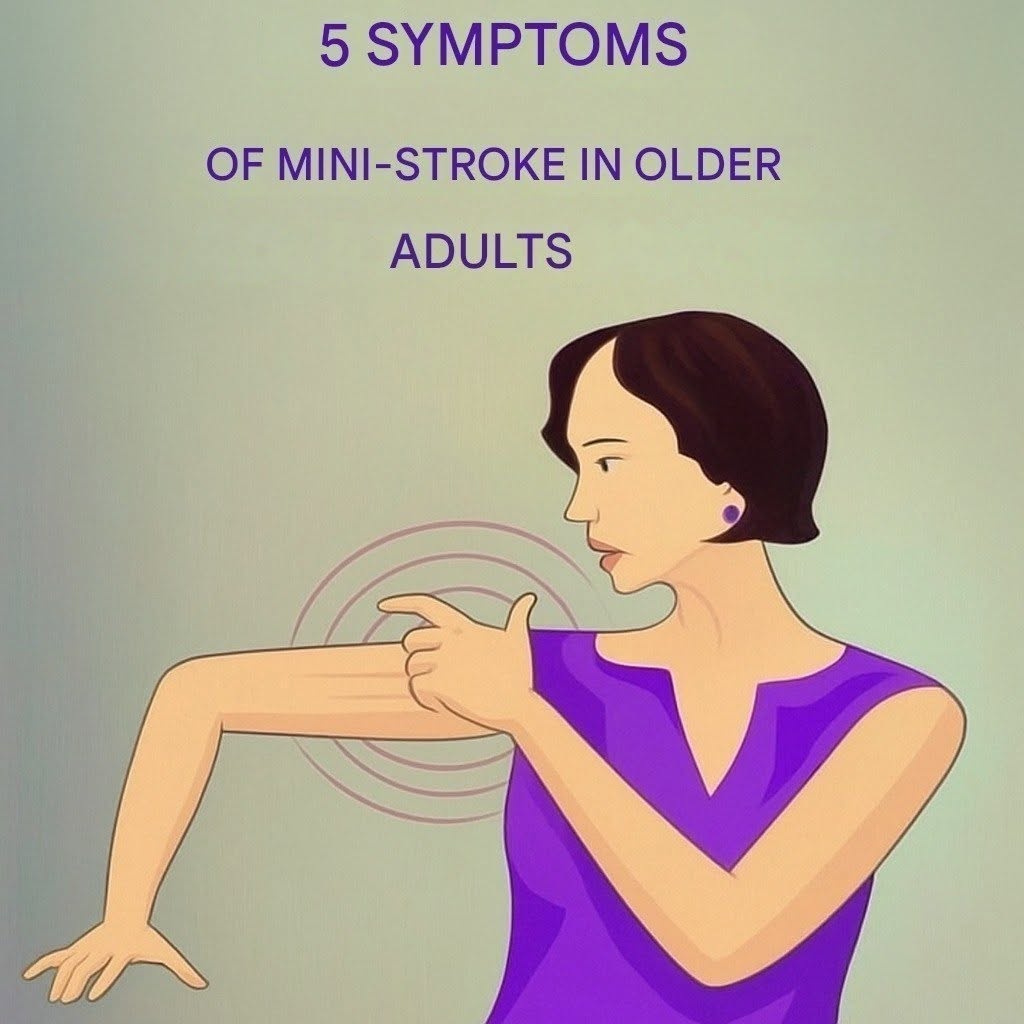
A sudden, localized weakness, tingling, or complete loss of sensation in the face, arm, or leg—most commonly affecting just one side of the body—is a classic indicator of temporarily reduced cerebral blood flow.
2. Sudden Confusion or Difficulty Speaking
Older adults experiencing a TIA may suddenly struggle to produce clear speech (slurred speech) or find themselves unable to understand simple conversations (aphasia).
3. Sudden Vision Disturbances
A temporary drop in brain blood supply can cause sudden vision loss in one or both eyes, double vision, or a sensation described as a dark shade falling over the eyes (amaurosis fugax).
4. Sudden Loss of Balance or Dizziness
Unexplained dizziness, loss of coordination, sudden difficulty walking, or a feeling of spinning (vertigo) occurs when temporary blood blockage affects the cerebellum or brainstem.
5. Sudden Severe Headache with Unknown Cause
An abrupt, unusually severe headache—often accompanied by neck stiffness or facial discomfort—can signal vascular disruption or pressure changes in cerebral blood vessels.
The F.A.S.T. Assessment for Stroke Warnings
Emergency responders and neurologists recommend using the F.A.S.T. acronym to quickly identify potential stroke or TIA symptoms:
+-------------------------------------------------------------------+
|                        F.A.S.T. WARNING TEST                      |
|  F - Face Drooping (Is one side of the face numb or drooping?)    |
|  A - Arm Weakness (Does one arm drift downward when raised?)      |
|  S - Speech Difficulty (Is speech slurred, strange, or garbled?)  |
|  T - Time to Call Emergency Services!                             |
+-------------------------------------------------------------------+
Comparing Mini-Stroke (TIA) vs. Major Ischemic Stroke
| Feature | Transient Ischemic Attack (TIA) | Major Ischemic Stroke |
| Blood Flow Blockage | Temporary (Clot dissolves naturally) | Permanent or prolonged unless treated |
| Symptom Duration | Typically lasts a few minutes up to 24 hours | Persistent (Does not go away on its own) |
| Brain Tissue Damage | No permanent brain tissue infarction | High risk of permanent neurological damage |
| Medical Action Required | Immediate Emergency Room Evaluation | Immediate Emergency ER Intervention |
Financial, Health, and Daily Lifestyle Advantages
Taking swift action and focusing on cardiovascular health offers critical long-term safety:
-
Preventing Major Neurological Disability: Immediate medical evaluation after a TIA allows doctors to prescribe preventative medications, significantly reducing major stroke risks and preventing long-term disability expenses covered under health insurance.
-
Protecting Quality of Life & Vitality: Maintaining healthy blood pressure, cholesterol, and blood sugar levels preserves mental sharpness, physical independence, and mobility in senior years.
-
Smart Long-Term Financial Planning: Preventing severe medical crises minimizes emergency hospitalization costs, preserving family resources for investment, retirement, or education goals.
Conclusion
Even if mini-stroke symptoms disappear completely within a few minutes, never adopt a “wait and see” approach. A TIA is a vital warning sign that requires immediate medical care to prevent a major stroke. Knowing the signs and seeking emergency evaluation right away can save lives and protect long-term mobility!
Frequently Asked Questions (FAQ)
How long do mini-stroke symptoms typically last?
Most mini-stroke symptoms last anywhere from 1 to 10 minutes, though they can occasionally persist for up to 24 hours. Because they resolve quickly, many individuals mistake them for fatigue or temporary nerve compression.
Should I go to the emergency room if symptoms disappear?
Yes. You should always seek emergency medical attention immediately after experiencing TIA symptoms, even if you feel completely fine afterward. Doctors need to run imaging scans and blood tests to identify the cause and prevent a major stroke.
What is the most common cause of a mini-stroke?
The most common cause is a temporary blood clot or plaque fragment that travels into a small blood vessel in the brain, temporarily restricting oxygen delivery before dissolving or dislodging.
Can lifestyle changes reduce the risk of a future stroke?
Absolutely. Managing blood pressure, adopting a Mediterranean-style diet, quitting smoking, exercising regularly, and taking prescribed blood thinners or cholesterol medications can dramatically lower future stroke risks.
