
Determining whether raw eggs in your refrigerator are still safe and fresh to eat can sometimes feel like a guessing game. Expiration dates stamped on cartons often reflect sell-by recommendations rather than actual spoilage. Throwing away perfectly good eggs wastes money, while accidentally cracking a spoiled egg can ruin a recipe.
The egg float test is a classic kitchen trick that uses simple physics to test freshness before cracking open the shell. In this practical guide, we break down how the egg float test works, what each position in the water means, and other reliable ways to verify egg quality.
The Science Behind the Egg Float Test
Eggshells are porous, containing thousands of tiny microscopic pores that allow air and moisture to pass through.
-
The Air Pocket: Inside every egg, there is a small pocket of air between the inner and outer membranes, usually located at the wider end.
-
Evaporation Over Time: As an egg ages, liquid evaporates through the porous shell and is replaced by air entering from the outside.
-
Buoyancy Shift: The larger the internal air pocket becomes, the less dense the egg gets relative to water, causing older eggs to tilt, stand up, or float completely to the surface.
How to Read the Float Test Results
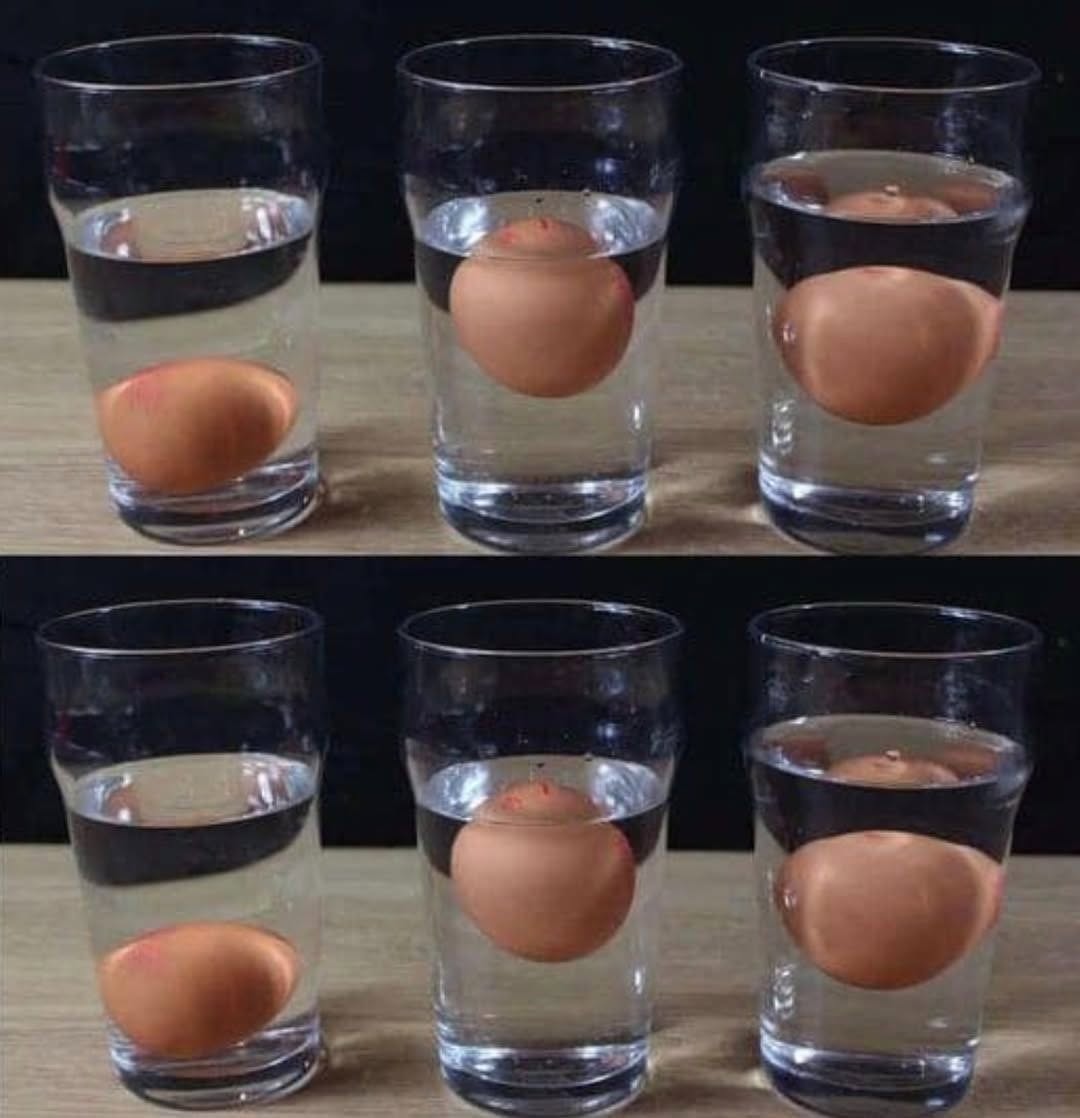
Fill a tall glass or bowl with cold water and gently submerge the egg:
+-------------------------------------------------------------------+
|                        EGG FRESHNESS CHART                        |
|  Bottom (Sinks flat)    --> Fresh (1-7 days old)                   |
|  Middle (Tilts/Stands)  --> Slightly older, still safe (2-3 weeks) |
|  Top (Floats)           --> Very old / Rotten (Discard!)          |
+-------------------------------------------------------------------+
-
Sinks to the Bottom and Lies Flat: The egg is extremely fresh and has a very small air pocket. Ideal for frying, scrambling, or poaching.
-
Sinks to the Bottom but Stands Upright: The egg is slightly older (2 to 3 weeks) but perfectly safe to eat. Older eggs with larger air pockets are actually much easier to peel when hard-boiled!
-
Floats to the Top: The air pocket has expanded significantly because the egg is very old. Floating eggs should be discarded, as bacteria or decomposition may have set in.
Comparing Egg Testing Methods
| Testing Method | How It Works | Accuracy Level | When to Use |
| Float Test | Measures density and air pocket size in water | High | Quick check before cracking raw eggs |
| Plate / Sniff Test | Check yolk firmness and smell after cracking | Very High (Definitive test for spoilage) | Right before adding eggs to batter or pans |
| Candling Test | Shine a bright flashlight through the shell in the dark | High | Commercial grading or home farming |
| Carton Date | Pack date or expiration label printed on packaging | Moderate | General buying and storage guidance |
Financial, Health, and Home Kitchen Benefits
Mastering simple food preservation tests offers practical health and household benefits:
-
Reduces Food Waste and Costs: Testing eggs before throwing them away prevents needless grocery spending, maximizing your weekly food budget and saving money for long-term investment, retirement, or family education goals.
-
Prevents Foodborne Illness: Discarding floating, questionable eggs reduces the risk of foodborne bacteria like Salmonella, protecting family health and avoiding unpleasant gastrointestinal illness or emergency room medical expenses covered by health insurance.
-
Better Cooking Results: Matching egg freshness to the right cooking technique ensures perfectly fluffy omelets or easy-to-peel hard-boiled eggs every time.
Conclusion
The float test is an easy, reliable way to check egg freshness without wasting food or risking spoiled recipes. Remember: if an egg sinks flat, it is fresh; if it stands upright, boil it; and if it floats to the top, toss it out!
Frequently Asked Questions (FAQ)
Does a floating egg automatically mean it has gone bad?
A floating egg indicates a large internal air cell from age, which strongly suggests it may be spoiled. To be 100% sure, crack the floating egg into a separate bowl—if it smells neutral and has normal color, it is technically safe, but if it smells off or sulfurous, discard it immediately.
How long do raw eggs usually stay fresh in the refrigerator?
When kept properly chilled at 40°F (4°C) or lower, raw eggs in their shells generally stay fresh for 3 to 5 weeks past the pack date on the carton.
Why are older eggs easier to peel when boiled?
As an egg ages, it loses moisture and carbon dioxide, causing the internal pH level to rise. Higher pH levels cause the egg white proteins to bond less tightly to the inner shell membrane, making peeled shells slip off cleanly!
Should you wash eggs before putting them in the fridge?
No. Store-bought eggs have a protective oil coating or wash applied. Washing eggs at home strips away the natural protective “bloom” layer, allowing bacteria and air to penetrate the porous shell more easily.
