
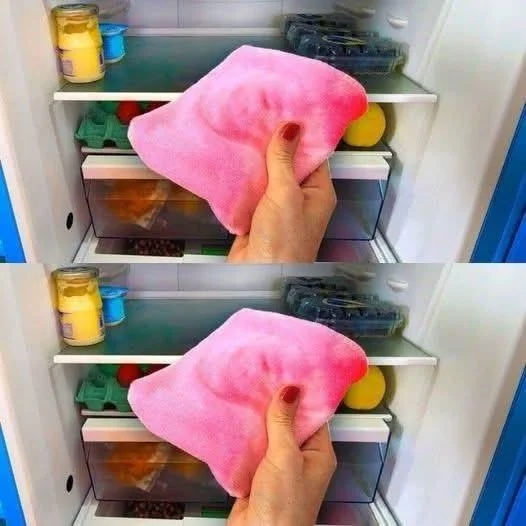
A popular kitchen trick circulating online suggests placing a clean, damp sponge inside your refrigerator to manage humidity, absorb unwanted odors, and extend the freshness of fruits and vegetables stored in crisper drawers.
While moisture control is critical to preventing fresh produce from wilting or drying out, putting a sponge inside a cool, dark environment presents unique benefits and distinct biological risks. In this guide, we break down the food science behind humidity management, bacterial growth risks, and safer alternatives for food storage.
How the Sponge Fridge Hack Works
The concept relies on the porous structure of sponges to regulate air moisture:
-
Moisture Absorption: Refrigerators naturally extract humidity during their cooling cycles, causing fresh vegetables to dry out quickly. A damp sponge releases controlled ambient moisture to combat crisping loss.
-
Odor Control: When combined with a sprinkle of baking soda, porous sponges can trap volatile odor molecules emitted by leftover foods.
-
Absorbing Spills: Keeping a sponge handy on a bottom shelf catches minor leaks from condiments or produce bins before they stick to glass shelves.
Benefits vs. Potential Health Risks
| Feature | Claimed Benefit | Microbial Science & Risk |
| Produce Longevity | Keeps leafy greens crisp and hydrated | Excess moisture encourages rapid mold and fungal growth on nearby produce. |
| Bacterial Growth | “Cleans the fridge air naturally” | High Hazard: Damp sponges are breeding grounds for Listeria monocytogenes and Pseudomonas. |
| Odor Removal | Absorbs stale food smells | Ineffective compared to dry activated charcoal or baking soda. |
+-------------------------------------------------------------------+
|                        FOOD SAFETY ALERT                          |
| Damp sponges stored in cold, dark spaces cultivate bacteria easily.|
| Never place sponges in direct contact with unsealed raw foods!    |
+-------------------------------------------------------------------+
Safer Alternatives for Refrigerator Humidity & Odors
Instead of keeping a damp sponge inside your fridge, consider these hygienic, low-maintenance options:
-
Baking Soda Box: Place an open box of sodium bicarbonate on a middle shelf to neutralize acidic and basic odor molecules without adding unnecessary moisture.
-
Paper Towels in Crisper Drawers: Line vegetable drawers with dry paper towels to absorb excess condensation while keeping produce dry enough to prevent mold decay.
-
Activated Charcoal Deodorizer: Use reusable activated carbon packs to trap heavy odors and moisture particles safely and hyper-hygienically.
Financial, Health, and Home Safety Benefits
Maintaining proper refrigerator hygiene protects your family’s health and reduces household waste:
-
Preventing Foodborne Illness: Eliminating bacterial harbors like damp sponges minimizes the risk of cross-contamination, protecting physical health and avoiding costly medical or ER visits covered by health insurance.
-
Reducing Food Waste: Storing fruits and vegetables at optimal humidity prevents premature spoilage, saving hundreds of dollars annually on groceries to put toward long-term investment, retirement, or family education goals.
-
Extending Appliance Efficiency: Keeping fridge interiors clean and dry prevents mold build-up along door seals, preserving gaskets and maintaining cooling efficiency.
Conclusion
While a damp sponge in the fridge might seem like a quick fix for dry produce or stale odors, the high risk of bacterial contamination outweighs the minor moisture benefits. Sticking to proven methods like paper towel liners and dry baking soda keeps your food fresher and far safer!
Frequently Asked Questions (FAQ)
Can bacteria grow in a cold refrigerator?
Yes. Pathogens like Listeria monocytogenes can actively multiply at standard refrigerator temperatures (below 4°C / 40°F), especially in moist environments like damp sponges.
How often should you clean and sanitize your refrigerator?
It is best to wipe down refrigerator shelves weekly with a solution of warm water and mild dish soap or diluted vinegar, perform a deep clean every 3 months, and discard old sponges regularly.
What is the ideal humidity level for fresh produce in a fridge?
Most crisper drawers feature adjustable humidity sliders: use high humidity (vent closed) for leafy greens that wilt quickly, and low humidity (vent open) for fruits that rot easily or produce ethylene gas (like apples and pears).
