
How to Deep Clean and Restore a Dirty Mop Head Like New
Keeping floors clean and hygienic is a top priority for any home, but many homeowners overlook one crucial detail: the cleanliness of the mop head itself. Over time, traditional string and microfiber mops absorb grime, grease, bacteria, and hard water minerals. Washing a mop head with regular soap often leaves it looking dingy, brown, and foul-smelling. When you mop with a dirty tool, you end up spreading old bacteria across your floors instead of sanitizing them.
Fortunately, restoring a dirty mop to bright, pristine condition requires only a few inexpensive household ingredients and a simple deep-cleaning method. In this guide, we break down step-by-step techniques to deep clean, sanitize, and whiten dirty mop heads, keeping your home spotless while saving you money on constant replacement tools.
Why Deep Cleaning Your Mop Head Matters
A dirty mop head is a breeding ground for mildew, bacteria, and unpleasant odors. When left damp in a bucket, trapped organic matter decomposes quickly, releasing stubborn smells into your home.
Deep cleaning your cleaning equipment regularly ensures that floor surfaces—whether hardwood, tile, laminate, or vinyl—are truly sanitized. Moreover, maintaining your cleaning tools extends their lifespan, preventing unnecessary household expenses and cutting down on unnecessary plastic waste.
Key Benefits of Mop Head Maintenance
-
Superior Home Hygiene: Eliminates lingering bacteria, mold spores, and trapped odors before they spread across your living room and kitchen floors.
-
Extended Tool Longevity: Prevents fiber degradation caused by trapped grit, allowing cotton or microfiber mop heads to last up to three times longer.
-
Cost Efficiency: Saves money by restoring old cleaning equipment instead of purchasing replacement heads every few weeks.
Step-by-Step Guide: How to Whiten and Sanitize a Dirty Mop
Transforming a heavily stained mop head back into a bright white tool is straightforward when using the right chemical breakdown techniques. Follow this step-by-step process for optimal results.
Step 1: Preliminary Rinse
Begin by rinsing the mop head thoroughly under warm running water or inside a bucket. Squeeze out excess surface dirt, loose debris, and dark water to ensure your deep-cleaning solution works efficiently.
Step 2: Prepare the Deep-Cleaning Solution
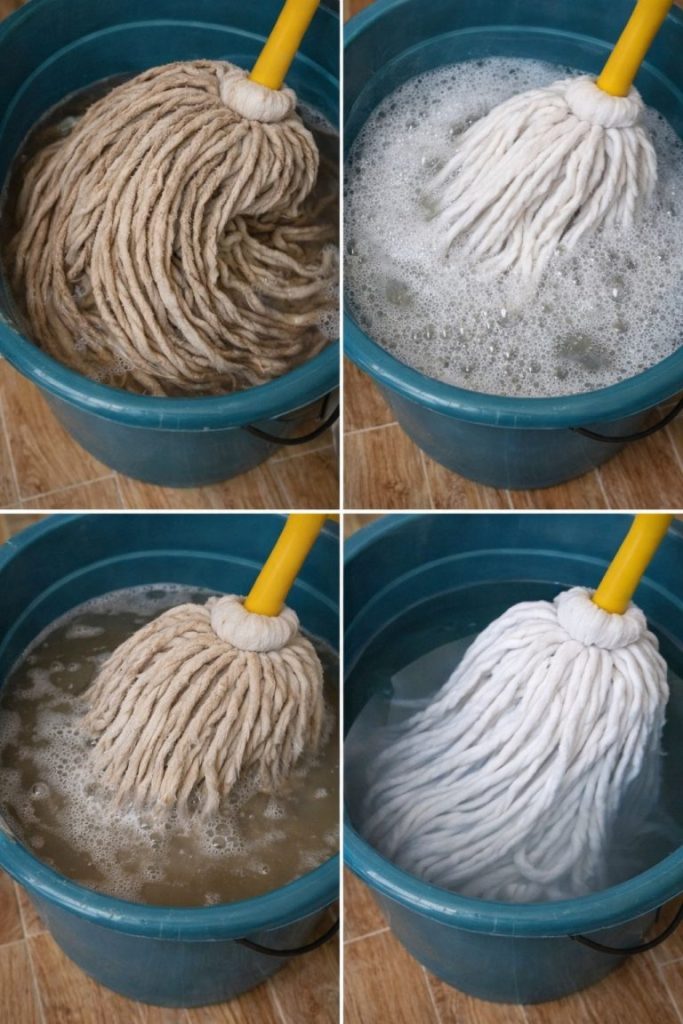
Fill a large cleaning bucket with hot water. Add one cup of oxygen bleach or standard liquid household bleach along with two tablespoons of heavy-duty liquid dish soap or laundry detergent. Oxygen bleach is ideal for preserving fiber strength while removing tough stains.
Step 3: Submerge and Soak
Place the mop head directly into the bubbling solution, making sure all fibers are completely submerged. Allow the mop head to soak for at least 30 to 60 minutes. For severe discoloration, letting it soak overnight ensures the whitening agents break down set-in grease and grime completely.
Step 4: Agitate and Rinse
Agitate the mop head inside the bucket by plunging it up and down. You will notice the clear cleaning solution turning murky as trapped dirt releases from the fibers. Discard the dirty water, refill the bucket with clean water, and rinse thoroughly until the water runs completely clear.
Step 5: Complete Air Drying
Wring out as much moisture as possible. Hang the mop upside down in a well-ventilated area, preferably outdoors under direct sunlight. Natural ultraviolet sunlight acts as an additional natural sanitizer and helps eliminate any remaining odor.
Alternative Vinegar and Baking Soda Eco-Friendly Method
If you prefer natural, chemical-free home remedies, white vinegar and baking soda offer an effective eco-friendly alternative for routine maintenance.
-
Vinegar Soak: Mix equal parts hot water and distilled white vinegar in a clean bucket. The natural acidity breaks down mineral build-up and neutralizes odors.
-
Baking Soda Boost: Add half a cup of baking soda to create an effervescent reaction that lifts stubborn surface dirt from the individual strands.
-
Soak and Rinse: Let the mop rest in the mixture for 45 minutes before rinsing thoroughly with warm water.
Smart Floor Care Practices to Protect Your Home Investment
Maintaining clean floors requires more than just a spotless mop head. Establishing efficient home care routines protects tile grout, preserves hardwood finishes, and keeps home maintenance manageable.
Essential Home Floor Care Tips
-
Change Wash Water Frequently: Never mop an entire floor using a single bucket of dirty solution. Refresh your rinse bucket as soon as the water appears discolored.
-
Invest in Quality Cleaning Tools: High-density microfiber or heavy-duty cotton yarn mops offer superior absorption and withstand repeated hot water deep-cleaning cycles.
-
Store Equipment Properly: Always ensure cleaning tools are completely dry before storing them in tight closets to prevent mold and mildew growth.
Proper home upkeep not only creates a healthier environment for your family but also protects your home’s financial value by preserving expensive flooring materials over time.
Frequently Asked Questions (FAQ)
How often should I deep clean my mop head?
It is best to deep clean and sanitize your mop head after every 3 to 4 uses, or immediately after tackling heavy messes like kitchen grease spills or pet accidents.
Can I wash a mop head in the washing machine?
Removable cotton and microfiber mop heads can often be machine washed on a hot cycle. Place them inside a mesh laundry bag to prevent strands from tangling around the washing machine agitator.
Is bleach or oxygen brightener better for cotton mops?
While liquid chlorine bleach offers fast disinfection, oxygen-based brighteners are gentler on cotton fibers, allowing the material to last significantly longer without fraying
