
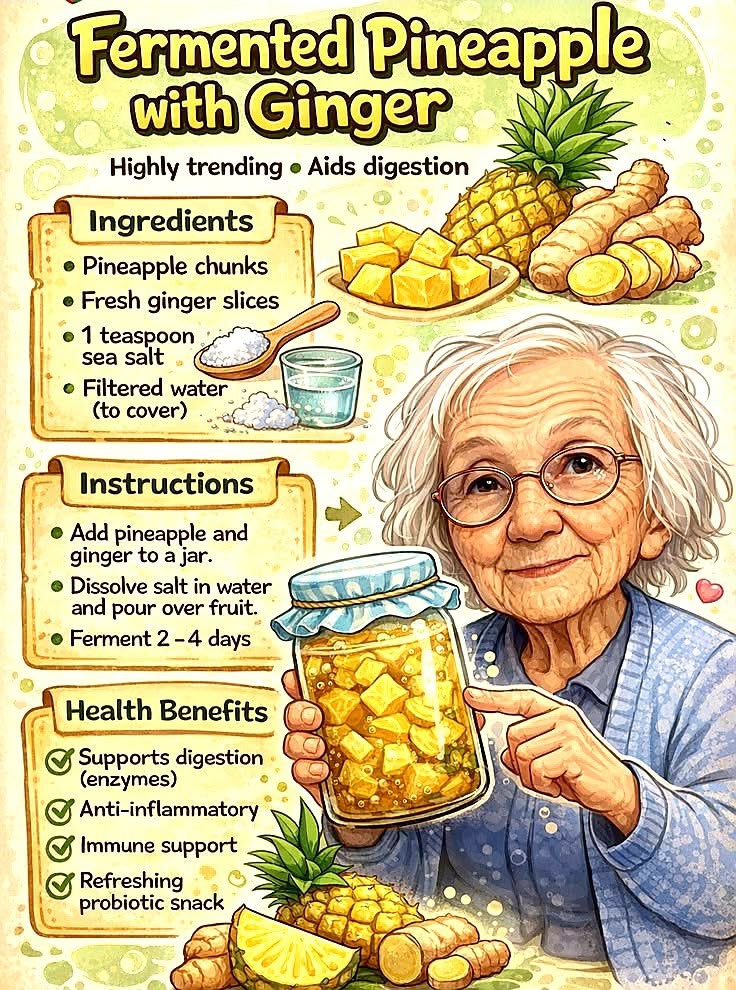
Fermented fruit drinks and snacks—such as tepache-style fermented pineapple infusions—are gaining popularity as gut-friendly alternatives to sugary beverages. Combining pineapple’s natural digestive enzymes with ginger’s anti-inflammatory properties creates a tangy, naturally effervescent food packed with health potential.
The infographic above outlines a simple home-fermentation method for pineapple chunks and fresh ginger using a light salt brine. Below is a complete breakdown of the recipe, its true health benefits, and critical fermentation safety tips.
Ingredient & Benefit Breakdown
+-------------------+---------------------------------------+---------------------------------------+
| Recipe Ingredient | Claimed Role / Function               | Scientific & Nutritional Reality      |
+-------------------+---------------------------------------+---------------------------------------+
| Pineapple Chunks  | Digestive enzyme base                 | Rich in bromelain, Vitamin C & sugars |
| Fresh Ginger      | Anti-inflammatory spice               | Contains gingerol; aids GI motility   |
| Sea Salt          | Fermentation brine component          | Creates environment for good bacteria |
| Filtered Water    | Submersion liquid                     | Chlorine-free water protects microbes |
+-------------------+---------------------------------------+---------------------------------------+
The Real Health Benefits
-
Enzyme Support (Bromelain): Pineapple is one of the richest natural sources of bromelain, a enzyme mixture that helps break down complex proteins, easing heavy digestion and supporting gut comfort.
-
Probiotic Development: As wild lactic acid bacteria feed on the natural sugars of the pineapple over 2 to 4 days, they transform the liquid into a probiotic-rich snack that supports a healthy gut microbiome.
-
Anti-Inflammatory Synergy: Fresh ginger contains bioactive gingerols that, when combined with bromelain, provide anti-inflammatory and antioxidant benefits throughout the digestive tract.
Fermentation Instructions & Safety Tips
-
Pack the Jar: Place fresh pineapple chunks and thin ginger slices into a clean, sterilized glass jar.
-
Prepare the Brine: Dissolve 1 teaspoon of sea salt into filtered water. (Filtered water is essential because chlorine in tap water can kill beneficial fermentation bacteria).
-
Submerge Completely: Pour the brine over the fruit until everything is fully submerged under liquid to prevent mold growth.
-
Ferment: Cover loosely with a lid or cloth, store at room temperature away from direct sunlight, and allow to ferment for 2 to 4 days until slightly fizzy and tangy.
-
Refrigerate: Once desired flavor and effervescence are reached, seal tightly and move to the refrigerator to slow down further fermentation.
Fact Check & Important Safety Precautions
-
Preventing Mold: Floating fruit exposed to air is the primary cause of mold during short home fermentations. Using a fermentation weight to keep fruit below the brine line ensures safety.
-
Gas Release: Fermentation creates carbon dioxide ($CO_2$). If using a sealed glass jar, “burp” the jar daily by loosening the lid briefly to release pressure and avoid glass breakage.
Frequently Asked Questions (FAQ)
How do I know if my fermented pineapple has gone bad?
Safe fermentation smells pleasantly sour, fruity, and yeast-like. If you see white, fuzzy, or colored mold growing on top, or if the liquid smells foul and putrid, discard the entire batch.
Is fermented pineapple safe for everyone?
Most healthy adults can enjoy small portions safely. However, because it contains active enzymes, wild probiotics, and small amounts of natural acid, individuals with sensitive stomachs or histamine intolerances should start with tiny servings.
