
DIY botanical hair infusions have gained widespread popularity as natural alternatives for hair care. Combining carrier oils with warming spices and aromatic herbs helps nourish the scalp, stimulate blood circulation, and protect hair strands from environmental damage.
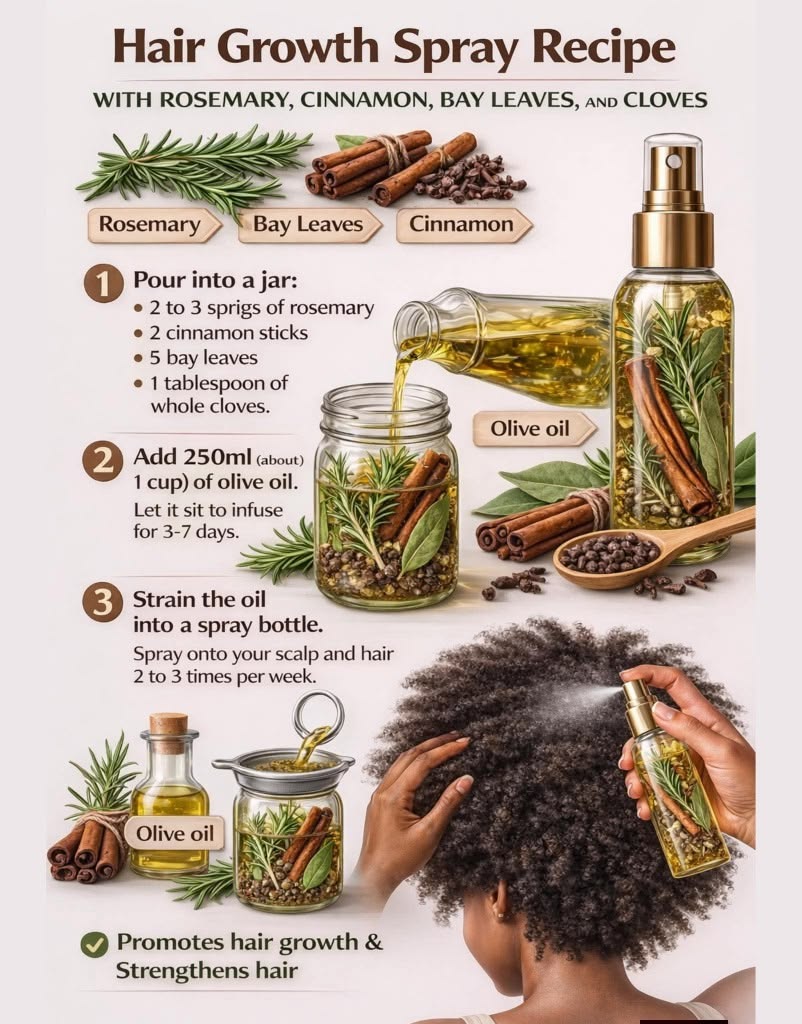
The infographic above outlines a step-by-step recipe for an infused botanical oil spray. Below is a detailed breakdown of the ingredients, step-by-step instructions, and key medical and scalp safety considerations.
Botanical Ingredients & Benefits Breakdown
+-------------------+---------------------------------------+---------------------------------------+
| Herbal Ingredient | Key Compounds                         | Mechanism & Scalp Benefits            |
+-------------------+---------------------------------------+---------------------------------------+
| Rosemary          | Carnosic Acid & Rosmarinic Acid       | Stimulates scalp circulation & growth |
| Cinnamon          | Cinnamaldehyde                        | Increases microcirculation to follicles|
| Whole Cloves      | Eugenol                               | Antioxidant & antimicrobial protection|
| Bay Leaves        | Eucalyptol & Polyphenols              | Soothes scalp irritation & adds shine |
| Olive Oil (Base)  | Oleic Acid & Vitamin E                | Deeply moisturizes & coats hair shaft |
+-------------------+---------------------------------------+---------------------------------------+
How These Herbs Support Hair Health
-
Rosemary: Frequently compared to low-strength minoxidil in preliminary studies, rosemary compound helps improve cellular turnover and blood flow at the hair follicle level.
-
Cinnamon & Cloves: These warming spices contain powerful volatile oils (cinnamaldehyde and eugenol) that stimulate microcirculation in the scalp while offering natural antimicrobial benefits.
-
Olive Oil Base: Rich in monounsaturated fatty acids, olive oil acts as a protective barrier, reducing moisture loss and preventing mechanical hair breakage.
Step-by-Step Preparation & Application
-
Combine Ingredients in a Jar: Add 2 to 3 fresh sprigs of rosemary, 2 cinnamon sticks, 5 dried bay leaves, and 1 tablespoon of whole cloves into a clean glass jar.
-
Infuse with Oil: Pour 250 ml (about 1 cup) of olive oil over the herbs, ensuring they are completely submerged. Seal the jar tightly and let it sit in a cool, dark place to infuse for 3 to 7 days.
-
Strain and Spray: Strain out the solid herbs using a fine-mesh sieve or cheesecloth, then pour the infused oil into a spray bottle.
-
Application: Spray lightly onto your scalp and hair roots 2 to 3 times per week, massaging gently into the scalp with your fingertips.
Fact Check & Scalp Safety Tips
-
Oil Sprays vs. Water Sprays: Pure oil infusions are thick and require a fine-mist trigger bottle designed for oils, or they can be applied using a dropper for direct scalp massage.
-
Patch Test First: Cinnamon and clove essential oils are known potential irritants. Always perform a small patch test on your inner arm 24 hours before applying spicy infusions directly to your scalp to check for allergic contact dermatitis.
-
Washing Out: Leaving thick oils on the scalp for multiple days can clog hair follicles (folliculitis) or worsen dandruff. Apply as a pre-shampoo treatment for 30–60 minutes, then wash thoroughly with a clarifying shampoo.
Frequently Asked Questions (FAQ)
How long does this DIY infused hair oil last?
Stored in a cool, dark place away from direct sunlight and moisture, infused oils typically remain fresh for up to 1 to 2 months. Ensure all fresh herbs are completely dry before infusing to prevent bacterial or mold growth.
Can I leave this hair growth oil on overnight?
While some hair types tolerate overnight oiling, individuals prone to oily scalps or seborrheic dermatitis should limit application to 30 minutes to 2 hours before washing to avoid scalp irritation.
