
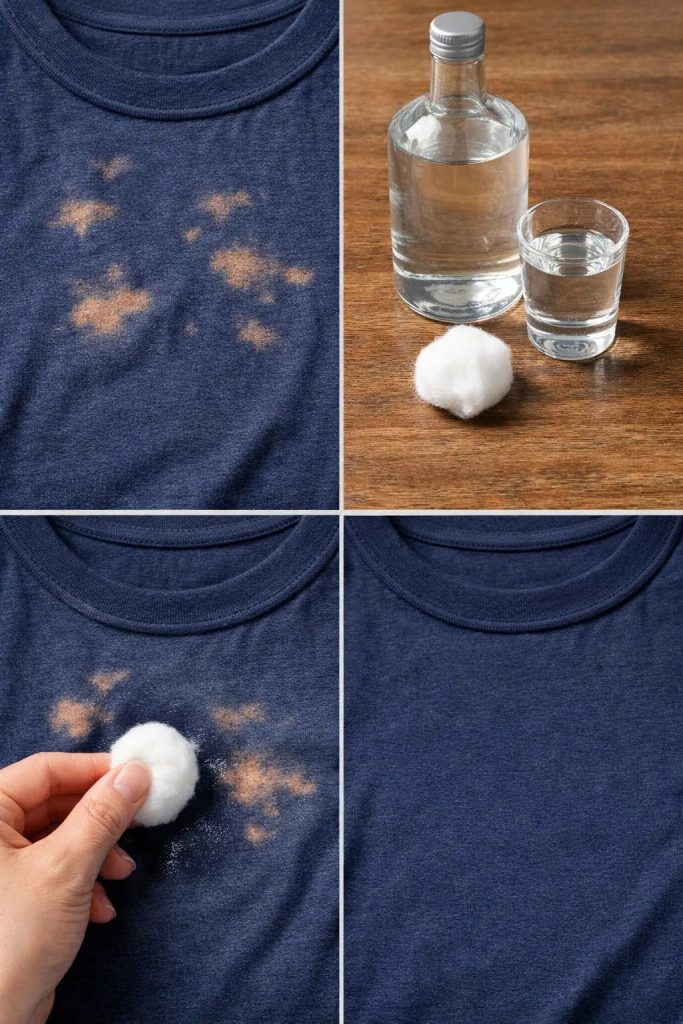
Accidentally spilling household bleach on dark clothing is a frustrating laundry mishap. Social media viral guides often share before-and-after imagery showing bleach spots being easily dabbed away using clear alcohol or cotton balls to restore dark shirts to pristine condition.
Understanding the chemical realities of bleach damage and evaluating effective fabric repair methods can help you salvage discolored clothes and extend the life of your wardrobe.
What Actually Happens When Bleach Touches Fabric?
It is important to understand that bleach spots are not traditional “stains”—they are areas of permanent color loss.
1. Chemical Oxidation of Dyes
Chlorine bleach contains sodium hypochlorite, a strong oxidizing agent that breaks down chemical bonds in fabric dyes (chromophores). Once bleach strips the pigment from cotton or synthetic fibers, the original color is removed from the material permanently.
2. The Clear Alcohol Myth vs. Dye Transfer Realities
Viral graphics often imply that rubbing clear alcohol (such as rubbing alcohol or clear spirits) with a cotton ball magically erases bleach spots. In reality, alcohol acts as a solvent on certain fabric dyes. On dark cotton or denim, dabbing strong alcohol around the edges of a very small spot can sometimes dissolve surplus dye from surrounding dark fibers and push it into the bleached area. However, for large or severe bleach spots, rubbing alcohol will not magically restore lost fabric color.
Comparing Bleach Repair Methods
| Repair Method | How It Works | Best Used For |
| Rubbing Alcohol Dab | Dissolves excess dye from adjacent dark fibers to bleed over tiny spots | Very small, faint bleach spots on dark cotton or denim |
| Fabric Marker / Sharpie | Applies permanent pigment directly over lightened spot | Small bleach spots on solid black or dark navy clothing |
| All-Over Fabric Dyeing | Strips remaining color and redyes the entire garment uniformly | Large bleach splatters or extensive discoloration on natural fibers |
| Fabric Patch / Embroidery | Covers damage with decorative patches, embroidery, or pocket additions | Visible bleach damage on jeans, jackets, or casual shirts |
Practical Steps to Repair or Cover Bleach Damage
If bleach lands on your favorite dark clothes, follow these practical restoration steps:
-
Rinse Immediately with Cold Water: Neutralize the active chemical reaction by rinsing the affected area under cold running water right away to prevent fibers from weakening or burning holes.
-
Try the Alcohol Color-Bleed Technique: For tiny spots on dark cotton, saturate a cotton ball with isopropyl alcohol and gently rub from the outer dark edges inward to blend adjacent dye over the spot.
-
Use Matching Fabric Markers: Touch up small white or orange spots on solid black clothing using a dual-tip black permanent fabric marker.
-
Re-Dye Natural Fabrics: If the garment is 100% cotton, linen, or rayon, use a commercial fabric dye (like Rit or Tulip) in a bucket or washing machine to re-dye the entire item back to its original shade.
-
Embrace Upcycling: Turn heavily bleached garments into custom tie-dye creations, acid-washed designs, or cover spots with fun iron-on patches.
Fascinating Facts About Fabric and Bleach
-
Natural Fiber Sensitivity: Chlorine bleach degrades animal-derived fibers like wool and silk rapidly, causing yellowing and weakening of the protein structures.
-
White Fabric Yellowing: Overusing bleach on white cotton garments can actually turn them yellow over time by stripping away optical brighteners added during manufacturing.
-
Oxygen Bleach Alternative: Oxygen-based bleaches (sodium percarbonate) act more gently than chlorine bleach and are color-safe for most dyed fabrics.
Financial Planning, Household Budgeting, and Wardrobe Care
Learning how to repair damaged clothing or repurpose discolored garments is an essential skill for sustainable living and smart household budgeting. Extending the life of your wardrobe reduces clothing expenses and minimizes textile waste.
Pairing daily resourcefulness with sound financial habits, savings goals, and household budgeting keeps home expenses optimized while supporting a sustainable lifestyle.
Conclusion
While chlorine bleach permanently removes fabric dye, techniques like alcohol dye-blending, fabric markers, or all-over redyeing can save your favorite clothes from the trash. Knowing how to handle laundry accidents protects both your wardrobe investments and your household budget.
Frequently Asked Questions (FAQ)
Can rubbing alcohol really fix bleach spots on clothes?
It only works on small spots on dark, heavily dyed cotton fabrics by dissolving excess dye from neighboring fibers and shifting it over the spot. It will not work on large spots or synthetic materials.
What is the best way to fix bleach spots on a black shirt?
Using a black fabric marker or permanent Sharpie is the quickest and most reliable method for covering small bleach spots on black cotton or polyester clothing.
Does vinegar neutralize chlorine bleach?
Yes! Diluted white vinegar can help neutralize remaining chlorine bleach in fabric fibers after rinsing thoroughly with water, preventing further fiber deterioration.
