
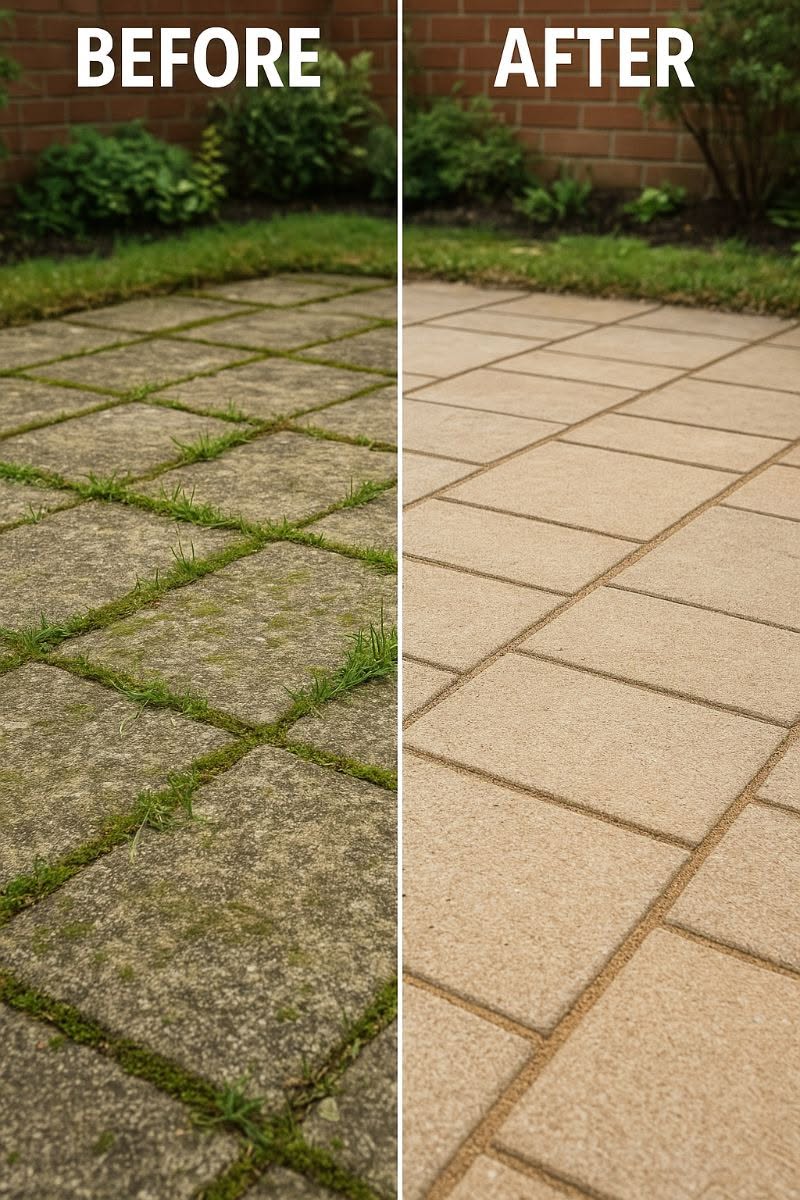
Over time, outdoor stone and concrete paver patios naturally collect windblown dirt, seeds, and organic debris in their seams. Before you know it, bright green weeds, grass, and slick moss transform a pristine patio into an overgrown, unsightly surface.
Restoring your patio doesn’t require replacing stones or paying thousands for professional landscapers. With the right deep-cleaning techniques and polymeric joint sand, you can scrub away stubborn growth and seal paver joints against future weeds for years. In this step-by-step DIY guide, we walk you through restoring dirty pavers to like-new condition.
Step-by-Step Patio Paver Restoration Plan
Follow this 4-step process to deep-clean paver surfaces and permanently lock out weeds:
1. Clear Surface Weeds and Roots
Use a manual weed scraper, stiff-bristled wire patio broom, or pressure washer to blast out all weeds, moss, and loose soil trapped between paver joints. Ensure roots are completely dislodged.
2. Deep-Clean the Paver Surface
Apply a specialized paver cleaner or a eco-friendly solution of equal parts white vinegar and warm water. Scrub stone surfaces thoroughly with a stiff scrub brush to remove surface algae, lichen, and dirt stains, then rinse clean with water.
3. Allow Complete Drying
Let the patio dry completely for at least 24 to 48 hours. Polymeric joint sand requires a 100% bone-dry surface to prevent sticky haze or premature hardening on top of the pavers.
4. Sweep and Lock in Polymeric Sand
Pour polymeric joint sand over the dry pavers and use a push broom to sweep it evenly into every gap. Use a leaf blower on low setting to clear excess dust from paver tops, then mist lightly with water to activate the binding polymer agents.
Comparing Paver Joint Fillers
| Joint Filler Type | Weed Resistance | Longevity | Best Application |
| Standard Play/Mason Sand | Low (Washes away easily) | 1–6 months | Quick temporary touch-ups |
| Polymeric Joint Sand | Very High (Hardens like mortar) | 3–5+ years | Long-term weed & ant protection |
| Crushed Stone Dust | Moderate (Permeable to water) | 1–2 years | Rustic flagstone or gravel paths |
+-------------------------------------------------------------------+
|                        PRO DIY TIP                                |
| Always blow off ALL polymeric sand dust from paver surfaces before |
| misting with water, or it will leave a permanent white film haze!  |
+-------------------------------------------------------------------+
Financial, Health, and Home Value Benefits
Maintaining outdoor stonework protects your home investment and family safety:
-
Preventing Trip & Slip Hazards: Removing slick moss, algae, and uneven root growth prevents painful falls, protecting family health and avoiding costly medical bills covered by health insurance.
-
Boosting Home Equity & Curb Appeal: A clean, well-maintained patio significantly boosts property value, protecting your real estate investment for future retirement or family wealth goals.
-
Saving Thousands on Professional Services: Doing paver maintenance yourself costs a fraction of professional landscaping quotes, keeping money in your pocket for household expenses or higher education funds.
Conclusion
Restoring weed-choked pavers is a deeply satisfying weekend project that completely transforms your outdoor living space. By clearing out organic matter and sealing joints with polymeric sand, you can enjoy a crisp, weed-free patio for seasons to come!
Frequently Asked Questions (FAQ)
What is polymeric sand and how does it prevent weeds?
Polymeric sand is a precise blend of refined sand and polymer binders. When activated with water, the polymers bind together, hardening the joint filler like flexible mortar so weed seeds cannot take root and ants cannot dig tunnels.
Will vinegar damage my patio pavers?
Vinegar is safe for concrete pavers, but its high acidity can etch natural stone like limestone, marble, or travertine. For natural stone, use a pH-neutral cleaner or dedicated paver soap instead.
How often should polymeric sand be replaced?
High-quality polymeric sand typically lasts between 3 and 5 years depending on climate, rain exposure, and surface wear before needing a touch-up top coat.
