
Children do not simply listen to what we tell them; they absorb and replicate what we do every day. From screen time habits to eating choices, the subtle behaviors modeled during early childhood often become the ingrained habits of adolescence and adulthood.
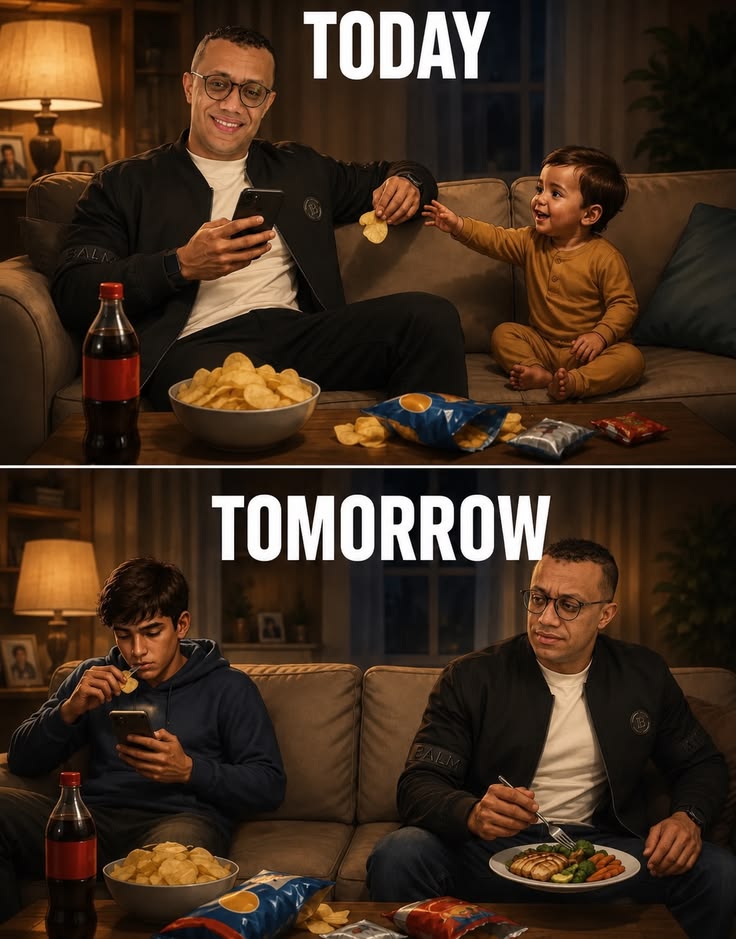
In the thought-provoking comparison image above, two contrasting timeframes titled “TODAY” and “TOMORROW” illustrate this cycle:
TODAY: A young father sits on the couch holding his smartphone and eating potato chips with a soda on the table. Beside him, his happy toddler reaches out, eager to imitate his father’s snack.
TOMORROW: Years later, the roles are flipped. The grown son sits on the couch absorbed in his smartphone, eating chips and drinking soda. Meanwhile, the older father sits beside him eating a balanced, healthy plate of cooked protein and vegetables, looking over at his son with quiet realization.
In this guide, we break down the key takeaways regarding parental role-modeling, digital balance, and lifelong health habits.
Story Overview
+--------------------------------------------------------+
|                Behavioral Reflection                   |
+---------------------------+----------------------------+
                            |
                            v
+--------------------------------------------------------+
|  TODAY (Early Childhood)  |  TOMORROW (Adolescence)    |
|  - Parent glued to phone  |  - Child replicates phone  |
|  - Parent eating snacks   |    and snack habits        |
|  - Child reaching to copy |  - Parent tries to switch  |
|                           |    to healthy habits late  |
+---------------------------+----------------------------+
                            |
                            v
+--------------------------------------------------------+
|  Core Lesson                                           |
|  - Action models behavior far more effectively than    |
|    belated verbal advice.                              |
+--------------------------------------------------------+
Key Themes of the Comparison
-
The Power of Imitation: Children mirror the behaviors, dietary choices, and technology habits they witness at home from an early age.
-
The Passing of Time: Early childhood passes rapidly, turning toddlerhood into teenage years before we realize it.
-
Leading by Example: Trying to teach healthy habits later in life is far harder if early habits were built around screens and unhealthy foods.
Contrast Breakdown Table
| Frame | Father’s Behavior | Son’s Behavior | Reflected Habit |
| TODAY | Holds smartphone, eats chips & soda | Reaches out cheerfully to imitate father | Early habit formation through observation |
| TOMORROW | Eats cooked veggies & healthy meal | Glued to smartphone, eating chips & soda | Replicated behavior deeply established |
Health, Family Dynamics, and Long-Term Wellness
Cultivating mindful habits at home lays the groundwork for emotional well-being and physical balance across generations.
Modeling nutritional discipline and screen moderation actively protects long-term family health and mental focus. Building consistent family routines benefits individuals in personal life and business, helping parents manage screen-life balance, organize personal finance priorities, and secure a balanced lifestyle moving toward retirement.
Essential Steps to Model Better Habits Today
-
Create Screen-Free Meal Times: Keep smartphones away from the dining table to encourage genuine family conversation and mindful eating.
-
Model Balanced Nutrition Early: Offer fresh fruits, vegetables, and whole foods so children grow up viewing wholesome food as the standard.
-
Engage in Active Play: Replace couch-and-screen time with outdoor walks, sports, or family activities to build lifelong fitness habits.
Conclusion
This visual reflection reminds us that the best way to guide our children’s future is by practicing the habits we wish to see in them today.
What is one healthy habit you strive to model for your family? Share your thoughts in the comments below!
FAQ Section
Why do children imitate screen habits so easily?
Children naturally observe adult behavior to learn how to interact with the world, making accessible technology an immediate target for imitation.
Is it ever too late to change family lifestyle habits?
No. While establishing healthy habits early is ideal, introducing small, consistent household changes at any age leads to positive long-term benefits.
