
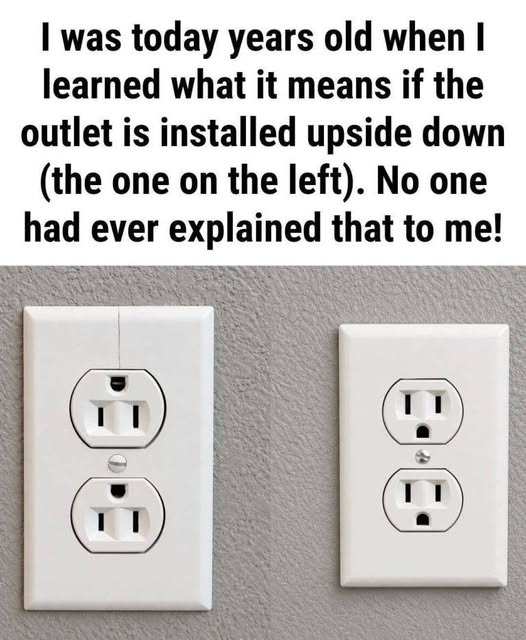
If you have ever walked into a room and noticed a wall outlet installed with the semicircular ground pin at the top—looking “upside down” compared to standard installations—you might have wondered if it was a mistake. Social media graphics frequently spark curiosity around electrical outlet orientations, leading many homeowners to ask what upside-down outlets actually signify.
Understanding electrical standards and electrician practices helps clarify the safety and functional reasons behind different outlet orientations.
Why Are Some Outlets Installed Upside Down?
Electricians install electrical outlets ground-pin up (upside down) for two primary reasons: electrical safety and identifying switched outlets.
1. Enhanced Safety Against Metal Objects
When a plug is partially pulled out of an outlet, the energized metal prongs become exposed. If a thin metal object—such as a fallen metal faceplate, a paperclip, or a coin—slides down the wall, it can land directly across the exposed prongs:
-
Ground-Down Orientation: A metal object falling across the top prongs bridges the active hot and neutral terminals, causing a dangerous short circuit, sparks, or fire hazards.
-
Ground-Up Orientation: A metal object falling from above strikes the solid ground pin first, deflecting safely away without creating a short circuit between the hot and neutral terminals.
2. Identifying Wall Switch Control
In many residential homes, electricians deliberately orient one or more outlets upside down to signal that the receptacle is controlled by a nearby wall switch. This convention helps homeowners easily identify which outlets are intended for standing lamps or room lighting.
Comparing Outlet Orientations
| Orientation | Primary Safety / Design Feature | Common Residential Usage |
| Ground Pin Up (Inverted) | Ground pin shields exposed prongs from falling conductive objects | Switched outlets, commercial buildings, hospitals, and workshop environments |
| Ground Pin Down (Standard) | Traditional aesthetic orientation matching standard consumer plugs | General residential wall outlets for appliances and electronics |
| Horizontal Installation | Neutral slot positioned on top to deflect falling metal | Baseboard installations, kitchen backsplashes, or tight wall spaces |
Practical Tips for Home Electrical Safety
Maintain a safe home electrical system by following these essential practices:
-
Check for Loose Plugs: Ensure appliances are plugged firmly into wall receptacles so metal prongs are never exposed to open air.
-
Install Child Safety Covers: Use protective outlet plugs or tamper-resistant receptacles (TRR) in homes with young children to prevent object insertion.
-
Test GFCI Outlets Monthly: Press the “Test” and “Reset” buttons on Ground Fault Circuit Interrupter outlets in kitchens, bathrooms, and outdoor areas to ensure proper shock protection.
-
Avoid Overloading Outlets: Use power strips with built-in circuit breakers rather than daisy-chaining multiple adapters into a single wall receptacle.
-
Consult a Licensed Electrician: If an outlet feels warm to the touch, shows discoloration, or produces sparks, turn off the breaker and hire a certified electrician.
Fascinating Facts About Electrical Outlets
-
No Code Requirement: The National Electrical Code (NEC) in the United States does not mandate whether the ground pin must point up or down, leaving orientation to electrician preference or local building codes.
-
Commercial Standards: Many commercial buildings and hospitals require ground-up outlet installations by default to maximize safety around medical equipment.
-
Polarized Slots: In a standard 120V outlet, the longer vertical slot connects to the neutral wire, while the shorter vertical slot connects to the hot wire.
Homeowners Insurance, Electrical Maintenance, and Safety Planning
Proper electrical wiring and appliance safety are critical components of protecting property value and preventing home fires. Outdated or faulty electrical receptacles are a leading cause of residential fire claims.
Maintaining comprehensive homeowners insurance provides vital financial protection against unexpected electrical damage or property loss. Combining regular home electrical maintenance with solid insurance coverage ensures long-term safety and peace of mind for your family.
Conclusion
An inverted electrical outlet is not a construction flaw, but a deliberate choice designed for enhanced safety or to indicate wall-switch control. Knowing how your electrical system works allows you to maintain a safe and functional home environment.
Frequently Asked Questions (FAQ)
Is it illegal or against code to install an outlet upside down?
No. The National Electrical Code permits both ground-up and ground-down orientations as long as the outlet is correctly wired to ground, neutral, and hot wires.
Should I flip my outlets upside down for safety?
It is not necessary to change existing outlets unless required by local codes or personal preference, but ensuring firm plug connections and using tamper-resistant outlets is always recommended.
Why do hospitals always use upside-down outlets?
Hospitals often mandate ground-up outlets to prevent heavy metal medical equipment or dropped items from creating short circuits if a plug becomes partially dislodged.
