
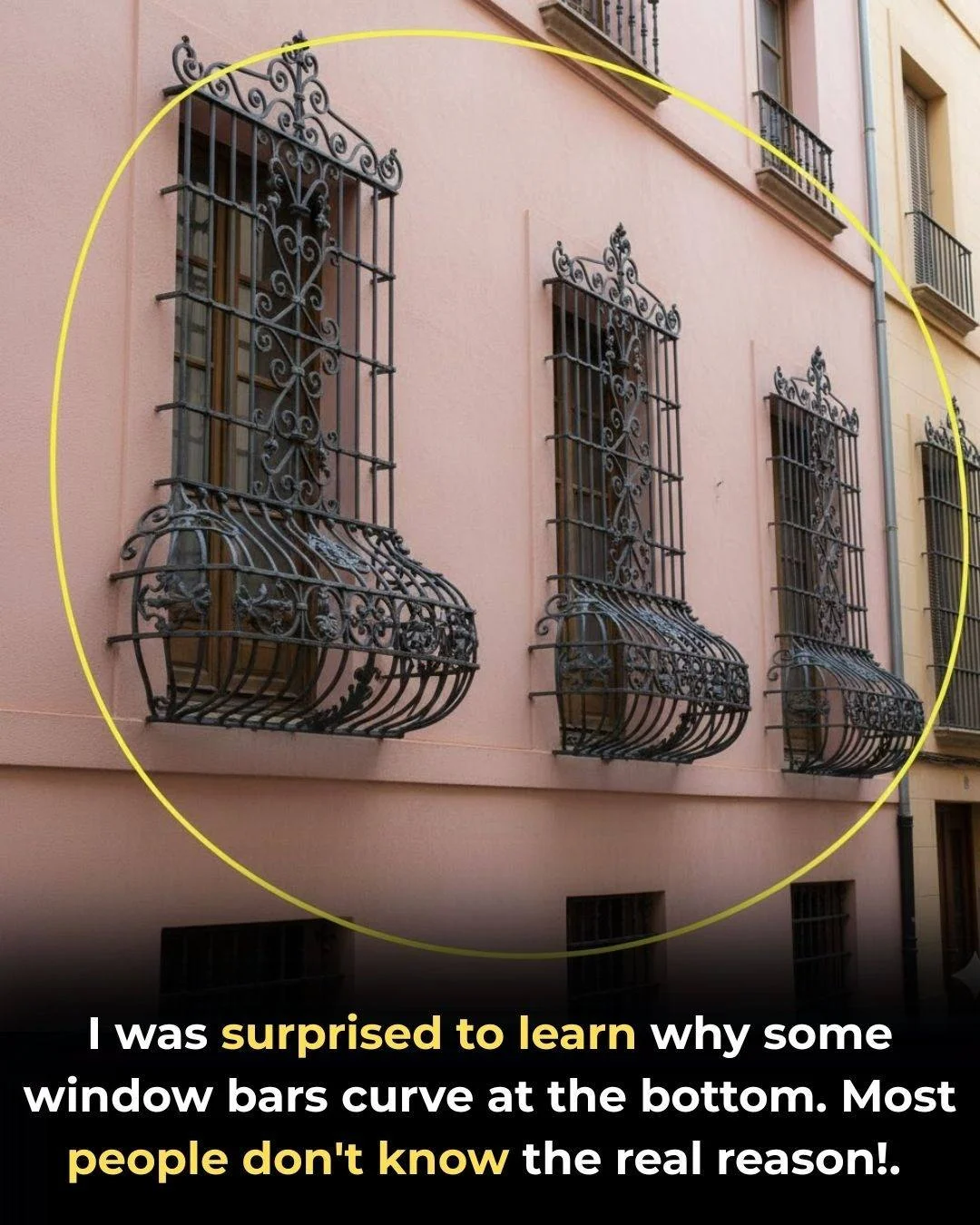
If you have ever strolled through Spanish cities, Latin American historic districts, or Mediterranean towns, you have likely seen ornate wrought-iron window grills (rejas) that feature a distinct, belly-like curve at the bottom.
While many people assume these curved bars are purely decorative ornamental ironwork, this architectural feature—often called a “belly bar” or reja de panza—was engineered for several practical, social, and functional reasons during the Spanish Renaissance and Baroque periods.
Practical Reasons Behind Curved Window Bars
The outward curve at the base of the grill serves several distinct purposes:
-
Accommodating Flower Pots: The curved space creates a built-in shelf or ledge where residents can place potted plants, flowers, and window boxes without taking up interior room.
-
Leaning Out Comfortably: The bulge allows occupants to lean forward, look up and down the street, and converse with neighbors below without bumping their knees or upper body against flat bars.
-
Courtship Traditions (La Reja): Historically in Spanish culture, young men would court women standing inside their ground-floor windows. The outward bulge provided enough physical space for private conversation and hand-holding through the ironwork.
-
Maximizing Sunlight and Airflow: The outward projection catches more sunlight and ambient breeze, channeling better ventilation into tight, ground-floor living spaces.
Curved Window Bars vs. Flat Security Bars
| Architectural Feature | Curved “Belly” Bars (Reja de Panza) | Standard Flat Window Bars |
| Primary Origin | Mediterranean & Spanish Colonial | Modern Urban Security |
| Plant Accommodation | Ideal for flower pots and planter boxes | Blocked; no outward clearance |
| Street Visibility & Comfort | Easy to lean forward and view street | Restricts posture to flat vertical space |
| Aesthetic Impact | High architectural character & historic value | Purely functional, utilitarian look |
+-------------------------------------------------------------------+
|                     HISTORIC ARCHITECTURE FACT                    |
| Known as "rejas de panza" (belly bars), these decorative grills    |
| combined home security with public interaction in Spanish homes!  |
+-------------------------------------------------------------------+
Financial, Health, and Property Value Benefits
Preserving or adding traditional architectural elements provides tangible benefits to home value and quality of life:
-
Enhancing Property Value: Authentic architectural features like wrought-iron rejas elevate home curb appeal, boosting real estate appraisal values to grow personal wealth for investment, retirement, or family education goals.
-
Improving Indoor Air Quality: Maximizing airflow and natural ventilation supports physical health, reducing mold risks and respiratory issues covered under health or home insurance.
-
Combining Security with Aesthetics: Providing ground-floor burglary defense without making a home look like a prison cell preserves safety alongside visual beauty.
Conclusion
The signature curve on traditional wrought-iron window bars is a prime example of historical design blending form with function. Beyond secure defense, these elegant “belly bars” brought fresh air, vibrant flowers, and social connection straight to the window sill!
Frequently Asked Questions (FAQ)
What are curved window bars called in Spanish?
They are commonly called rejas de panza (belly grills) or rejas de pecho (chest grills) due to their distinctive outward bulge.
Are curved window bars as secure as flat window bars?
Yes. When properly anchored into stone or concrete masonry, forged wrought-iron or steel belly bars provide identical security against forced entry as traditional flat bars.
Why were window bars so common in Mediterranean architecture?
Ground-floor windows facing busy public streets needed protection from intruders and stray animals while still allowing cross-ventilation in hot summer climates.
