
The Secret Grandpa Trick to Sharpen Lawn Mower Blades with Effortless Precision
A healthy, vibrant green lawn relies on more than just regular watering and sunlight; the condition of your lawn mower blade plays a critical role in turf health. Over a season of mowing over sticks, hidden stones, and dense grass, mower blades gradually become dull, nicked, and rounded. Cutting grass with a dull blade tears the grass blades rather than slicing them cleanly, leading to frayed, brownish tips, increased susceptibility to lawn diseases, and unnecessary engine strain.
While many homeowners delay sharpening their blades because removing the heavy steel deck bolt feels intimidating or tedious, old-school lawn care hacks simplify the process. In this comprehensive lawn maintenance, DIY home tool care, and outdoor equipment guide, we explore the classic “effortless” lawn mower blade sharpening trick, safety precautions, blade balancing steps, and how keeping your equipment sharp protects your property value.
Why Sharp Mower Blades Matter for Lawn Health
Maintaining razor-sharp mower edges is a foundational requirement for proper turf management. Understanding the physiological benefits of a clean cut helps homeowners appreciate routine blade maintenance.
Key Benefits of a Sharp Mower Blade:
Clean Slices vs. Ragged Tears: Sharp edges slice grass blades cleanly, allowing the plant to heal rapidly and retain its vibrant green color.
Disease Prevention: Frayed, torn grass tips dry out faster and create open entry points for fungal infections, lawn diseases, and pest infestations.
Fuel and Power Efficiency: Sharp blades cut through dense turf effortlessly, reducing engine strain, lowering fuel consumption, and extending the operational lifespan of your mower.
The Effortless Sharpening Trick: Step-by-Step Guide
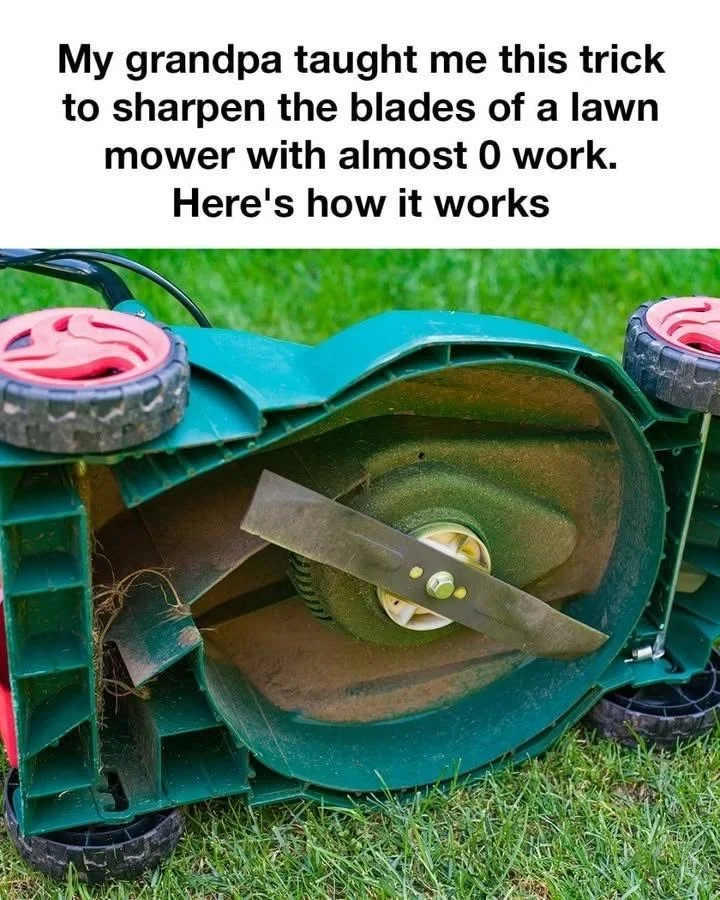
The traditional “grandpa trick” allows homeowners to restore a clean cutting edge quickly using a power drill equipped with a specialized drill-bit lawn mower blade sharpener attachment (or angle grinder guide) directly under the deck or quickly after unbolting.
Step 1: Essential Safety Precautions First
Before touching any mower blade or working near the underdeck, complete these non-negotiable safety steps:
Disconnect the Power Source: For gas mowers, pull the spark plug boot off the spark plug to prevent accidental engine startup. For electric or cordless mowers, remove the battery or unplug the power extension cord.
Tilt the Mower Correctly: Always tilt a gas mower with the air filter and carburetor side facing UP. Tilting it downward can cause engine oil and gas to leak into the air filter and flood the carburetor.
Wear Protective Gear: Wear thick leather work gloves and safety glasses to shield your eyes from flying metal shavings or debris.
Step 2: Securing the Blade and Sharpening
Lock the Blade: Place a heavy wooden block (a scrap 2×4) between the blade and the inner deck wall to wedge and prevent the blade from rotating while you work.
Use a Drill Sharpener Attachment: Chuck a lawn mower blade sharpener bit into a standard power drill. The plastic guide disk automatically rests against the flat side of the blade, keeping the abrasive stone set at the optimal factory bevel angle (typically 30 degrees).
Smooth, Even Strokes: Run the rotating sharpener bit evenly along the existing bevel edge from the inner corner out to the tip. Apply light pressure, taking 4 to 5 smooth passes until a clean, shiny metallic edge appears. Repeat on the opposite end.
The Critical Step: Checking Blade Balance
Sharpening removes steel from the blade edges. If one side loses more metal weight than the other, an unbalanced blade will cause severe vibration during operation, damaging the engine crankshaft and spindle bearings over time.
How to Balance Your Mower Blade:
The Nail Test: Drive a long nail horizontally into a workshop wall or workbench stud.
Hang the Blade: Place the center hole of the mower blade onto the nail.
Evaluate Balance: If the blade stays perfectly horizontal, it is balanced. If one side dips downward, that end is heavier—grind a small amount of metal off the bevel of the heavy side until the blade hangs completely level.
Equipment Maintenance and Home Insurance Considerations
Maintaining outdoor power equipment properly extends beyond yard aesthetics; it protects your financial investment in your home. Keeping mowers, trimmers, and garden tools clean and in good repair reduces the risk of mechanical failures, fuel leaks, or yard accidents.
Furthermore, reviewing your home and property insurance coverage ensures that outdoor sheds, power equipment investments, and property maintenance liability remain fully protected against unexpected loss or accidents.
Frequently Asked Questions (FAQ)
How often should a lawn mower blade be sharpened?
As a general rule, sharpen your mower blade after every 20 to 25 hours of use, or roughly twice per mowing season. If you hit rocks, tree roots, or thick debris, inspect the blade immediately for deep nicks.
Should a lawn mower blade be razor-sharp like a kitchen knife?
No. A razor-thin edge will dull and chip very quickly when hitting tough grass or small twigs. Aim for a “butter knife” level of sharpness that maintains a strong, durable bevel.
When should a lawn mower blade be replaced instead of sharpened?
Replace the blade if it shows severe cracks, deep gouges, heavy rust pitting, or if the metal edge has been worn down too thin from years of repeated grinding.
