
A Grower’s Secret to Picking a Sweet Watermelon: The Belly Button & Ripeness Guide
There is nothing quite like slicing into a crisp, ice-cold watermelon on a warm sunny day. However, choosing a ripe, juicy watermelon at the market can often feel like a guessing game. While many people thump the rind listening for a hollow sound, professional growers and farmers use specific visual indicators to guarantee sweetness before making a cut.
In this complete guide, we reveal the grower’s trick for evaluating the watermelon’s belly button (blossom end), additional field spot indicators, and budget-friendly tips for buying fresh produce.
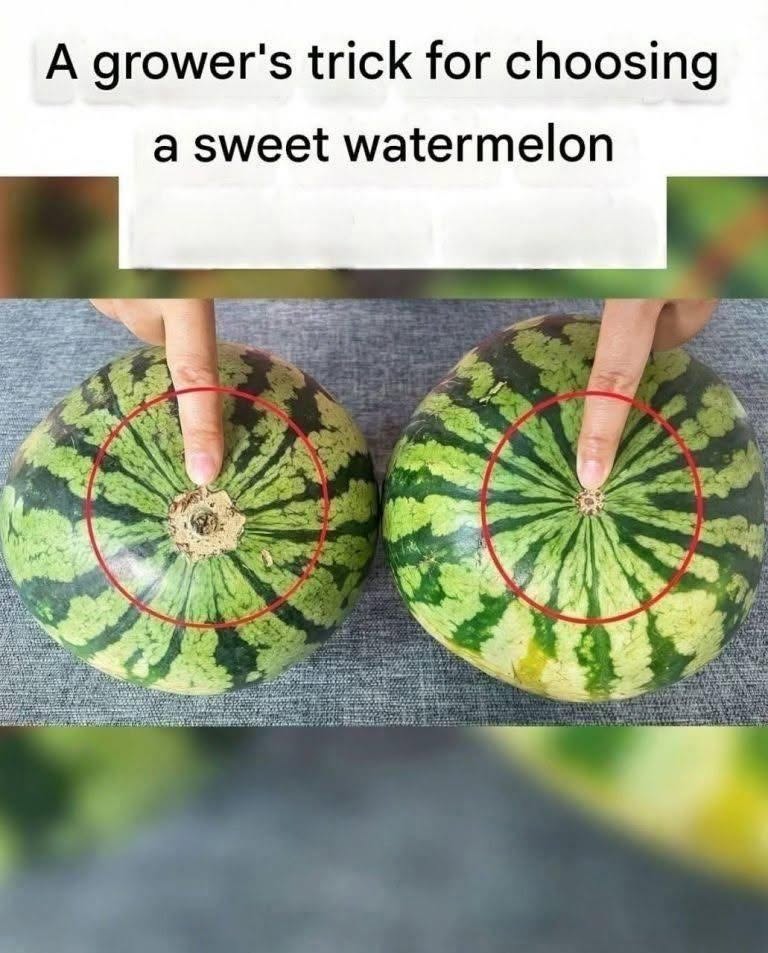
The Grower’s Trick: Small vs. Large Blossom End
When inspecting watermelons side-by-side, always flip the melon over to examine the blossom end—the small circular ring on the bottom opposite the stem end:
1. Small “Belly Button” Ring (Sweeter & Fully Ripened)
A smaller, tight blossom end dot indicates proper pollination and balanced rind contraction during maturity. Watermelons with small belly circles generally feature thinner rinds, higher sugar concentration, and superior sweetness.
2. Wide or Large “Belly Button” Ring
A wide, enlarged blossom end ring often points to irregular growth spurts, thicker rinds, or over-watering during cultivation. These watermelons frequently contain higher water content with less concentrated sugar flavor.
4 Other Proven Signs of a Perfectly Ripe Watermelon
To double-check your selection, combine the blossom end trick with these key ripeness indicators:
-
Look for a Creamy Yellow Field Spot: The field spot is the patch where the watermelon rested on the ground while growing. A dark, creamy yellow or golden spot means it fully ripened in the field, whereas a white or pale green spot means it was picked too early.
-
Inspect for Webbing and Scars: Brown, net-like webbing on the skin indicates where bees touched the flower during pollination. More webbing usually correlates with sweeter fruit!
-
Feel for Heavy Weight: Pick up two watermelons of equal size—the heavier melon contains significantly more juice and natural sugars.
-
Check for a Dull Rind Color: A shiny, glossy rind indicates an underripe watermelon, while a dull, dark matte finish signals a fully mature fruit ready to eat.
Smart Financial and Budget-Friendly Produce Tips
Buying seasonal fruit doesn’t have to strain your weekly food budget:
-
Buy Whole Watermelons Over Pre-Cut Slices: Pre-sliced watermelon containers at the grocery store often cost three to four times more per pound than buying whole melons.
-
Repurpose Leftover Rinds and Juice: Puree leftover melon chunks with a splash of lime juice for refreshing homemade popsicles, or pickle white watermelon rinds for a zero-waste gourmet snack.
-
Shop at Local Farmers’ Markets: Local growers harvest produce at peak maturity rather than early for long-distance transport, delivering sweeter fruit at competitive bulk prices.
Frequently Asked Questions (FAQ)
What is the best sound when thumping a watermelon?
A ripe watermelon produces a deep, hollow “thunk” sound, indicating it is full of juice. A high-pitched dull thud means the melon is either underripe or overripe and mushy inside.
Does a dried stem mean the watermelon is sweet?
Yes! A dry, brown stem indicates the watermelon ripened naturally on the vine before harvest. A green, fresh stem means it was cut prematurely.
Can watermelons continue to ripen after being harvested?
Unlike bananas or avocados, watermelons do not continue to develop sugar or sweeten once harvested from the vine. Their sweetness level remains fixed from the moment they are picked.
Final Thoughts
Mastering the grower’s blossom end trick—alongside checking field spots and weight—takes the guesswork out of produce shopping. By applying these simple selection hacks, you can ensure every watermelon you bring home is packed with crisp, sweet flavor!
