
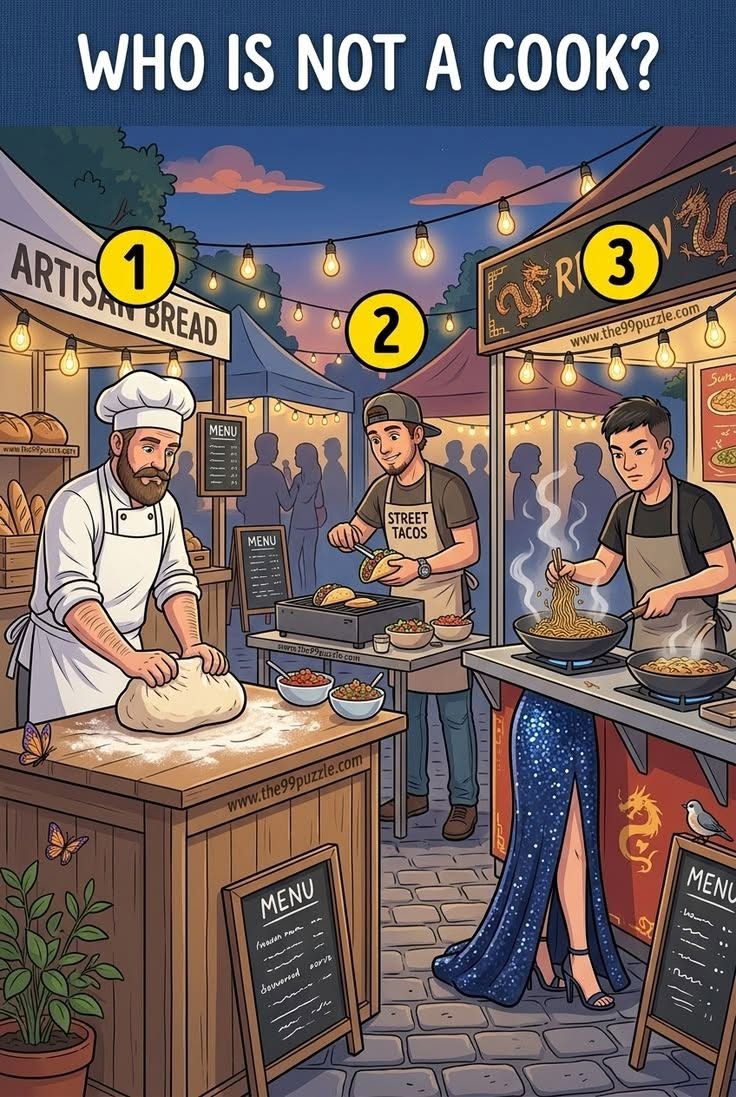
Visual observational puzzles are designed to test your eye for detail by tucking impossible or absurd clues into everyday scenes. The puzzle above presents a bustling night market with three food stalls, asking a straightforward question: “Who is not a cook?”
At first glance, all three men appear busy preparing food in their respective stalls—baking bread, assembling tacos, and tossing stir-fry noodles. However, looking closely at the lower half of stall number 3 reveals an impossible detail.
Analyzing the Clues
To solve this riddle, examine each vendor’s posture, clothing, and environment:
+---------------+-----------------------------------+-----------------------------------+
| Vendor        | Visible Details                   | Status                            |
+---------------+-----------------------------------+-----------------------------------+
| Vendor 1      | Chef hat, apron, kneading dough   | Real Cook (Artisan Baker)         |
| Vendor 2      | Cap, apron, assembling tacos      | Real Cook (Street Tacos)          |
| Vendor 3      | Wearing a sparkling evening dress | FAKE COOK (Disguised Imposter)    |
+---------------+-----------------------------------+-----------------------------------+
1. Vendor 1
Vendor 1 wears traditional chef attire, including a toque hat and white apron, and is actively kneading bread dough on a floured wooden table at the “Artisan Bread” stall.
2. Vendor 2
Vendor 2 stands at the “Street Tacos” stall wearing a casual apron and cap, carefully filling hard-shell tacos with toppings on a flat-top grill prep station.
3. Vendor 3
Look underneath the counter of stall 3. Instead of wearing pants like a food vendor, Vendor 3’s lower body features a sparkling blue sequence evening gown with high heels! The upper male torso and head are merely a mask or puppet setup hiding someone dressed for a formal gala underneath the stall counter.
The Solution
Vendor 3 is not a cook. The person behind the counter is wearing a formal blue evening dress and high heels, making the entire setup a disguise!
Frequently Asked Questions (FAQ)
What makes visual riddles engaging?
Visual riddles rely on selective attention. The brain naturally focuses on prominent focal points (like faces, hands, and food preparation) while glossing over details at the bottom or margins of an image where the trick is hidden.
What are quick tips for solving observational puzzles?
Scan systematically from top to bottom and left to right. Pay special attention to unnatural boundaries, table undersides, reflections, shadows, and out-of-place clothing items.
