
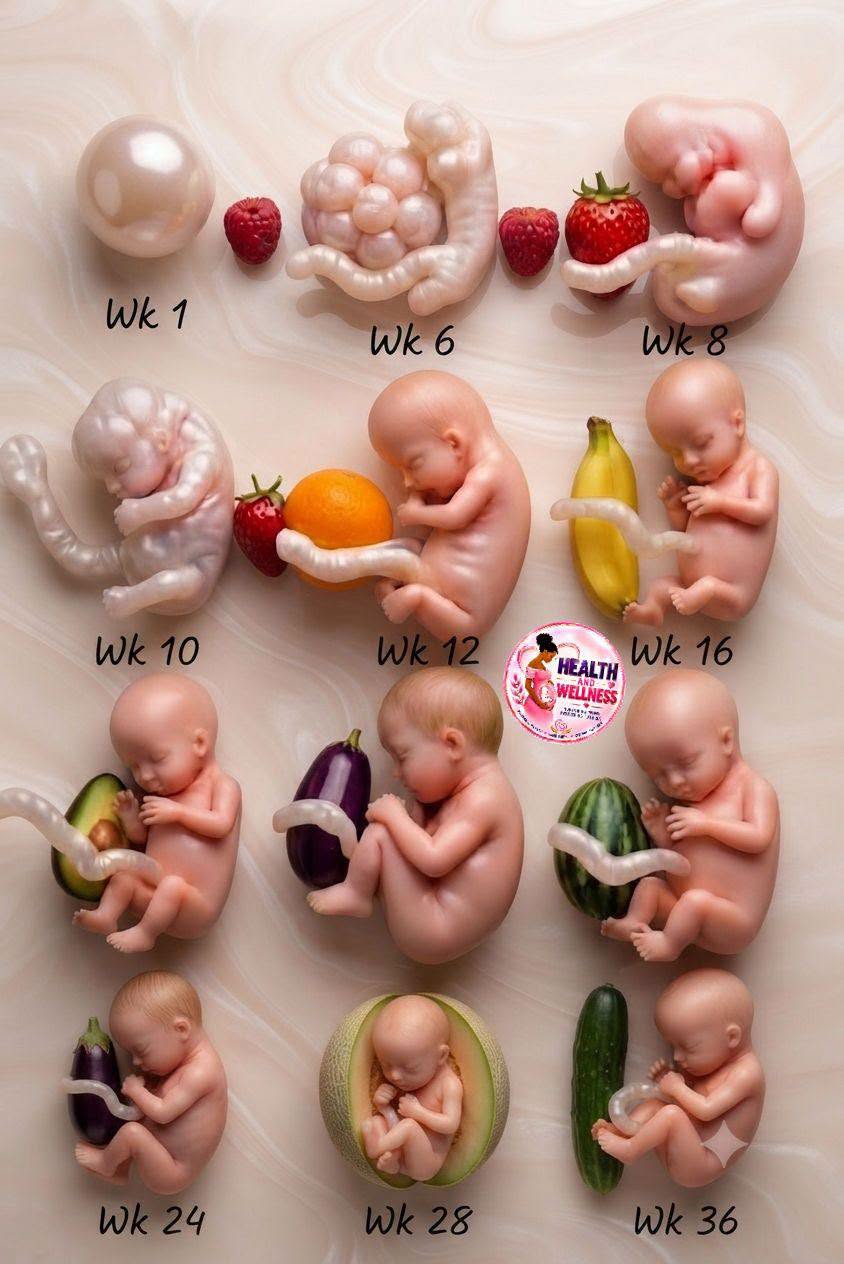
Tracking fetal growth across pregnancy provides an incredible look into the stages of human development. Comparing developmental milestones to everyday fruits offers a helpful visual reference for understanding size and anatomical growth from early conception through full term.
In the medical illustration above, fetal growth is depicted across twelve key stages from Week 1 to Week 36, paired with fruit size comparisons. In this guide, we break down the developmental features at each phase of pregnancy.
Fetal Growth Stages Overview
+--------------------------------------------------------+
|              Pregnancy Development Map                 |
+---------------------------+----------------------------+
                            |
                            v
+--------------------------------------------------------+
|  First Trimester          |  Second Trimester          |
|  - Wk 1–12: Early cells,  |  - Wk 16–24: Organs form,  |
|    limb buds, basic features|   movement & facial detail|
+---------------------------+----------------------------+
|  Third Trimester          |                            |
|  - Wk 28–36: Maturation,  |                            |
|    rapid growth & weight  |                            |
+--------------------------------------------------------+
1. First Trimester (Weeks 1 – 12)
-
Week 1: Microscopic cellular stage following fertilization.
-
Weeks 6–8: Early embryonic features emerge, including early heart activity, basic limb buds, and primary organ foundations.
-
Weeks 10–12: Transition to the fetal stage, where facial features, fingers, and toes become clearly defined.
2. Second Trimester (Weeks 16 – 24)
-
Week 16: Fetus develops distinct facial expressions, hair follicles, and active movement patterns.
-
Weeks 20–24: Hearing develops, vital organs mature rapidly, and regular sleep-wake cycles begin.
3. Third Trimester (Weeks 28 – 36)
-
Week 28: Rapid brain development occurs, and the eyes can open and respond to light.
-
Weeks 32–36: Fat stores accumulate under the skin, lungs complete critical maturation, and the fetus positions for delivery.
Weekly Fetal Development Summary Table
| Stage / Week | Fruit Size Comparison | Key Fetal Development Milestones |
| Week 1 | Small pearl / seed | Fertilization and initial cellular division |
| Week 6 | Raspberry | Limb buds form; primitive heart begins beating |
| Week 8 | Strawberry | Webbed fingers/toes develop; basic facial structures |
| Week 10 | Large Strawberry | Vital organs present; early bone structure forms |
| Week 12 | Orange / Lime | Reflexes develop; fingernails and toes appear |
| Week 16 | Banana | Active kicking/movement; skin becomes covered in lanugo |
| Week 20 | Avocado | Auditory senses awaken; heartbeat audible via stethoscope |
| Week 24 | Eggplant | Taste buds form; lungs develop air sacs (alveoli) |
| Week 28 | Cantaloupe / Melon | Rapid fat accumulation; eyes open and blink |
| Week 36 | Cucumber / Squash | Full term preparation; fully formed organs & skin |
Maternal Health, Family Planning, and Daily Life
Understanding developmental milestones equips expecting families with knowledge to navigate prenatal care with confidence.
Prioritizing structured prenatal care supports maternal and newborn health. Tracking pregnancy stages assists family healthcare planning and parenting business services, empowering households to organize nursery care, leave policies, and personal finance wisely through every family milestone into retirement.
Tips for Tracking Fetal Growth Safely
-
Routine Ultrasounds: Scheduled sonograms provide accurate measurements of gestational age and physical growth.
-
Prenatal Nutrition: Balanced intake of folic acid, iron, and calcium supports healthy tissue and skeletal formation.
-
Healthcare Checkups: Regular visits with an obstetrician or midwife ensure fetal progress remains on track.
Conclusion
From early embryonic cellular formation to full-term readiness, tracking weekly pregnancy milestones reveals the incredible transformation of human life.
Which fetal development week or milestone surprised you the most? Share your thoughts in the comments below!
FAQ Section
When can you usually feel fetal movement?
Most expecting mothers begin feeling first movements (quickening) between 16 and 22 weeks of pregnancy.
Why are fruits commonly used for size comparisons?
Fruit size comparisons give expecting parents a familiar, tangible object to visualize the length and mass of the growing fetus each week.
