
Natural oral care remedies are increasingly popular for those seeking alcohol-free alternatives to commercial mouthwashes. Cloves have been used in dental care for centuries due to their powerful active compounds, making a simple clove infusion an effective, natural option for daily oral hygiene.
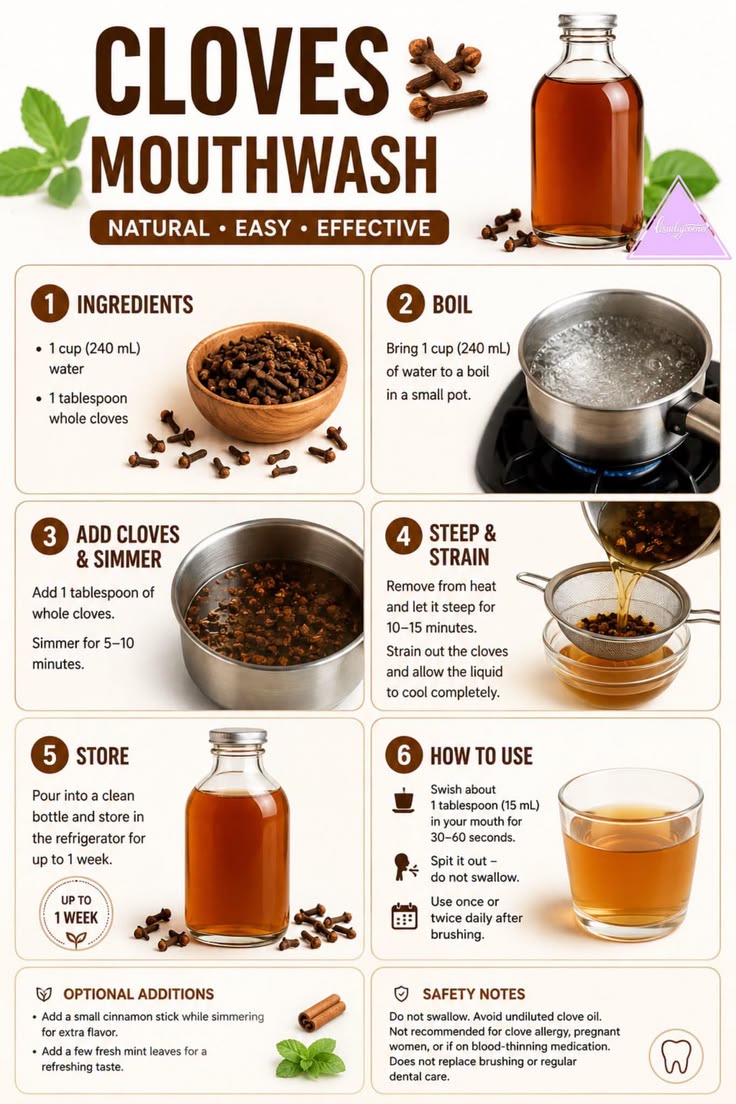
The infographic above provides a clear step-by-step guide to making and using homemade clove mouthwash. Below is a detailed breakdown of the recipe, its active benefits, and important safety considerations.
Recipe & Usage Summary
+-------------------+-----------------------------------+---------------------------------------+
| Recipe Step       | Action                            | Key Details                           |
+-------------------+-----------------------------------+---------------------------------------+
| 1. Ingredients    | 1 cup (240 mL) water & 1 tbsp cloves| Use whole cloves for best results     |
| 2. Boil & Simmer  | Boil water, add cloves, simmer    | Simmer for 5–10 minutes               |
| 3. Steep & Strain | Remove from heat, steep, strain   | Steep 10–15 min; cool completely      |
| 4. Storage        | Pour into clean glass bottle      | Refrigerate and use within 1 week     |
| 5. How to Use     | Swish 1 tbsp (15 mL) for 30–60 sec| Spit out; use 1–2x daily after brush  |
+-------------------+-----------------------------------+---------------------------------------+
Optional Additions & Flavor Boosts
-
Cinnamon Stick: Adding a small cinnamon stick while simmering provides extra antibacterial properties and a warm, spiced flavor.
-
Fresh Mint Leaves: Steeping a few fresh mint leaves enhances the cooling, refreshing taste for long-lasting fresh breath.
The Science of Clove for Oral Health
-
Antibacterial & Antimicrobial Power: Cloves contain eugenol, a natural compound known for combating oral bacteria that cause plaque accumulation, bad breath (halitosis), and gum irritation.
-
Soothes Sensitive Gums: Eugenol acts as a mild natural anesthetic and anti-inflammatory agent, which can help soothe minor gum discomfort or tooth sensitivity.
-
Alcohol-Free Alternative: Unlike many commercial store-bought mouthwashes containing alcohol, homemade clove tea won’t cause dry mouth or a burning sensation.
Important Safety Notes & Best Practices
-
Do Not Swallow: Always spit out the mouthwash after swishing. While small amounts are non-toxic, swallowing mouthwash isn’t recommended.
-
Avoid Undiluted Clove Oil: Essential oils are highly concentrated and can cause chemical burns or mucosal irritation if used undiluted. Sticking to a boiled whole-clove infusion is much safer.
-
Precautions: Individuals with clove allergies, pregnant individuals, or those taking blood-thinning medications should consult a doctor before regular use, as eugenol can influence blood clotting.
-
Not a Replacement for Dental Care: Clove mouthwash is a supportive habit—it does not replace fundamental oral care practices like brushing twice daily, flossing, or receiving routine professional dental checkups.
Frequently Asked Questions (FAQ)
How long does homemade clove mouthwash stay fresh?
When stored in an airtight container in the refrigerator, homemade clove mouthwash stays fresh for up to one week.
Can clove mouthwash cure a toothache?
While eugenol offers temporary soothing relief for minor gum discomfort, it cannot cure tooth decay, infections, or underlying dental issues. Persistent dental pain requires evaluation by a dentist.
