
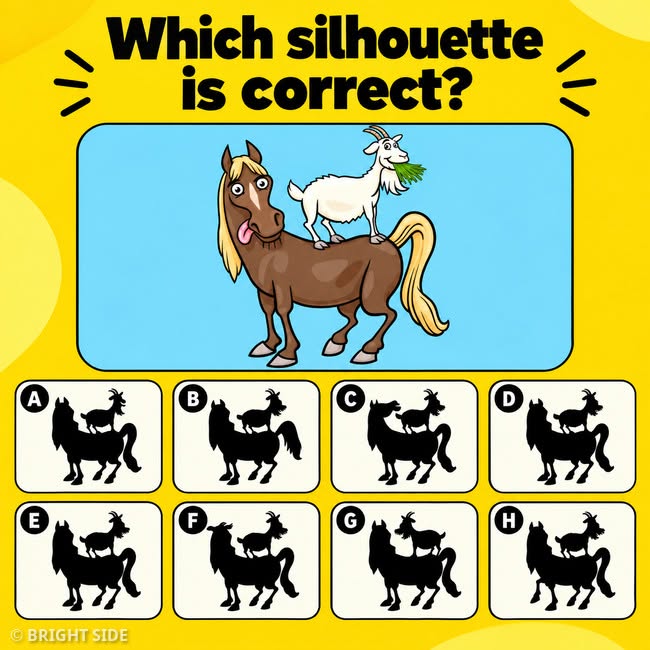
Silhouette and shadow-matching puzzles have become a massive viral trend across social media platforms, capturing the attention of millions of users who love testing their observational skills. These deceptively simple visual brain teasers challenge our cognitive flexibility, forcing us to look past color and texture to focus entirely on shapes, outlines, and spatial proportions. Beyond offering quick entertainment, solving silhouette puzzles provides fantastic benefits for mental acuity, visual processing, and attention to detail. This comprehensive guide explores the psychology of silhouette matching, the science of visual perception, and practical ways to sharpen your cognitive focus.
The Psychology Behind Visual Shadow Matching
Why do shadow and silhouette puzzles generate such high engagement across Facebook, Instagram, and other digital networks? The answer lies in how the human brain processes visual information. When we look at a complex illustration, our visual cortex immediately breaks down objects into edges, contours, and silhouettes.
When subtle variations are introduced across multiple choices—such as a horse’s tail shape, the angle of its head, or the position of a standing animal—our brains have to engage in rigorous comparative analysis. People love testing their visual precision against friends and followers, leading to lively debates in the comments section. This combination of visual challenge and community interaction drives massive virality.
Cognitive Benefits of Visual Perception Training
Engaging regularly with puzzles that test spatial orientation and contour matching offers a powerful workout for the brain’s visual processing centers.
Enhancing Shape Recognition and Detail Filtering
Silhouette puzzles train your brain to filter out distracting surface details, such as patterns, shading, and colors, allowing you to concentrate purely on form. This ability to isolate essential structural features is valuable in many professional and everyday tasks.
Boosting Working Memory and Analytical Speed
When evaluating multiple silhouette options simultaneously, your working memory tracks minute differences between choices. Regularly challenging this mental faculty improves your overall cognitive processing speed, attention span, and visual acuity.
Step-by-Step Breakdown: How to Solve Silhouette Puzzles
To master silhouette matching challenges like the one featured in our image, you must approach the options systematically rather than guessing at random. Let us break down the exact strategy needed to find the correct silhouette:
-
Analyze Key Features of the Original Image: Examine the primary subject closely. Note unique characteristics such as the horse’s head angle, its tongue sticking out, the shape of its mane, and the distinct curve of its flowing tail. Also inspect the goat standing on its back, including its horns and the patch of grass in its mouth.
-
Scan the Options for Major Discrepancies: Eliminate options that have obvious structural flaws. Look closely at tails, ears, and heads. For instance, check whether the horse’s tongue is present in the silhouette or if the tail shape matches the wavy contour of the original image.
-
Cross-Reference Secondary Details: Compare the remaining choices against the goat’s posture and the exact placement of the animals’ legs.
-
Select the Exact Match: Once all distinguishing features align perfectly with the source illustration, you have found the correct silhouette.
Practical Tips to Improve Your Visual Processing Skills
Sharpening your observation skills requires consistent practice and deliberate attention to visual details. Small daily habits can yield noticeable improvements in cognitive sharpness.
-
Isolate One Feature at a Time: When comparing multiple silhouettes, do not look at the whole image at once. Pick a single detail—such as the tail or ears—and check every option against it before moving to the next feature.
-
Use a Grid or Systematic Scan: Review options row by row or column by column to ensure you do not overlook subtle differences.
-
Practice Daily Puzzles: Dedicate a few minutes each day to spot-the-difference games, shadow matching, or logic riddles to keep your neural pathways active.
-
Minimize Visual Fatigue: Take short breaks when scanning complex images to prevent eye strain and maintain high concentration levels.
Interesting Facts About Human Visual Perception
Our visual system is a masterpiece of biological engineering, capable of remarkable feats of recognition and interpretation.
-
Contour Processing: The human visual system is so finely tuned to recognize silhouettes that we can identify familiar objects, animals, or human faces from a purely black outline in milliseconds.
-
Evolutionary Roots In Action: In ancient times, recognizing the silhouette of a predator or prey animal instantly against a horizon was a vital survival skill, shaping the way our brains process shapes today.
-
Digital Virality: Modern puzzle creators leverage these ancient perceptual mechanisms to design engaging social media content that bridges generations and language barriers effortlessly.
Conclusion
Silhouette puzzles combine playful recreation with valuable cognitive exercise. By transforming simple outlines into challenging visual tests, they invite us to slow down, examine fine details, and enjoy the satisfaction of cracking a tough problem. Whether you solve visual riddles in seconds or analyze them carefully option by option, keeping your mind active builds lasting mental agility. Keep challenging your perspective and enjoy the journey of lifelong visual exploration!
Frequently Asked Questions
Why are silhouette puzzles so difficult to solve quickly?
Because silhouettes strip away color and texture, our brains must rely entirely on subtle contour differences, angles, and proportions, which can make multiple options look deceptively similar at first glance.
Do visual puzzles help improve cognitive function?
Yes, regular engagement with visual search, contour matching, and logic puzzles stimulates neuroplasticity, enhances attention to detail, and supports long-term cognitive health.
How can I avoid making mistakes on shadow-matching tests?
The best approach is to focus on unique anchor points—such as distinct curves, angles, or missing elements—and eliminate incorrect options one by one rather than picking a favorite at first glance
